Sonowal: India's river network 22x bigger under Modi
Synopsis
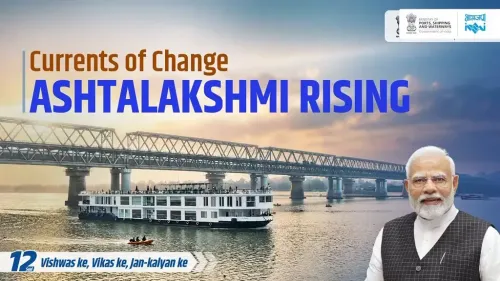
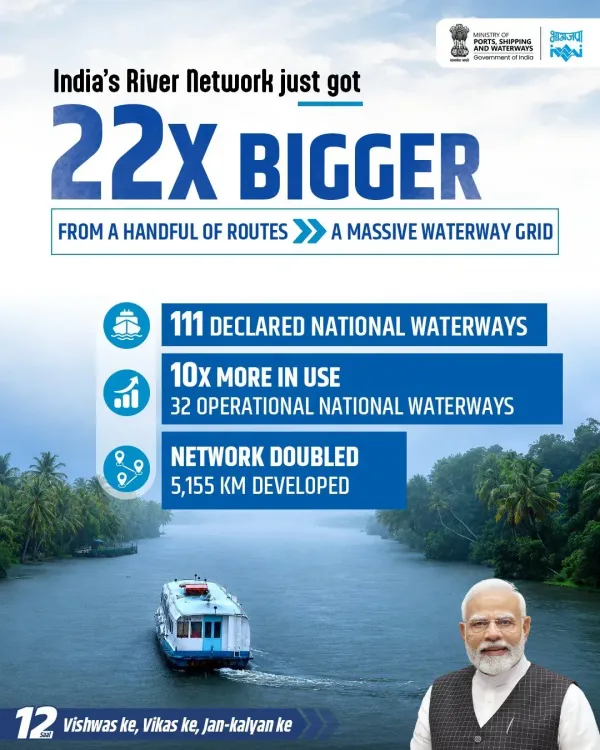
Union Minister Sarbananda Sonowal on 2 July 2026 declared India's river network is 22 times larger than before 2014, pointing to the National Waterways Act 2016 and Jal Marg Vikas Project as defining milestones of PM Modi's infrastructure record.
Key Takeaways
Minister Sonowal posted on 2 July 2026 that India's inland waterway network is now 22 times larger than it was before 2014 .
The National Waterways Act, 2016 expanded notified national waterways from 5 to 111 , forming the legislative backbone of the expansion.
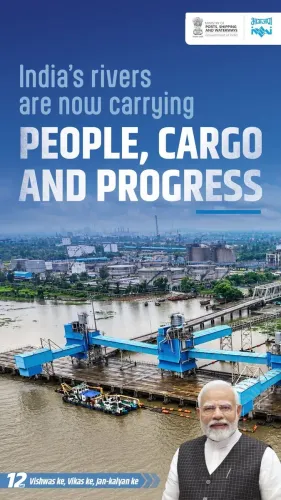
The Jal Marg Vikas Project , sanctioned in 2015 with a Rs 5,369 crore outlay, developed cargo infrastructure on National Waterway-1 on the Ganga .
The Sagarmala Project and PM Gati Shakti plan integrated waterways into broader multimodal and port-led development frameworks.
River corridors in the Northeast and shared systems with Bangladesh and Nepal give the programme strategic and diplomatic significance.
Operationalisation of newly notified waterways and commissioning of logistics parks remain the key benchmarks to watch.
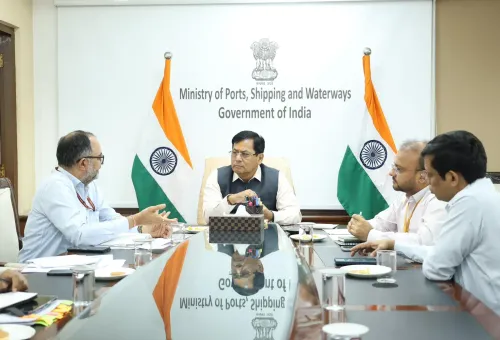
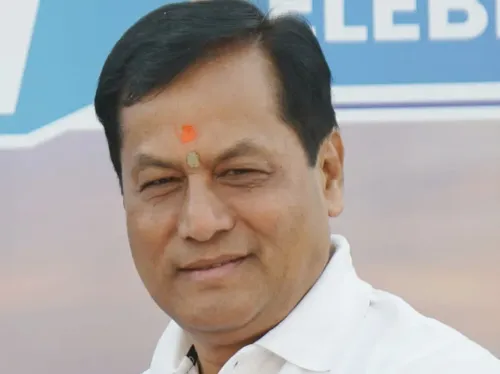
Union Minister of Ports, Shipping and Waterways Sarbananda Sonowal on Thursday, 2 July 2026 credited Prime Minister Narendra Modi's twelve-year governance record for a sweeping expansion of India's inland waterways, saying the country's river network is now 22 times larger than it was before 2014.
Context
Posting under the hashtag #12YearsOfJalmargSeVikas (12 years of growth through waterways), Sonowal wrote that India's waterways revolution has 'unlocked our rivers as the new highways of growth.' He contrasted the 'handful of routes before 2014' with what he described as a dramatically enlarged national river network today.
The minister's post is part of a broader BJP communications drive marking twelve years of the Modi government's infrastructure push, with inland waterways positioned as a flagship achievement alongside highways and railways.
Policy backdrop
The expansion Sonowal references is anchored in the National Waterways Act, 2016, which declared 111 national waterways across India, replacing a prior regime of only five notified operational waterways. The legislation was a cornerstone move that redrew the map of navigable routes available for cargo and passenger movement.
Complementing the Act, the Jal Marg Vikas Project — sanctioned in 2015 with an initial outlay of Rs 5,369 crore and backed by the World Bank — targeted National Waterway-1 on the Ganga, developing cargo terminals and fairways for commercial freight. The Sagarmala Project, also approved in 2015, integrated inland waterways into a larger port-led development framework, while the PM Gati Shakti National Master Plan launched in 2021 wove waterways into multimodal infrastructure corridors.
The Inland Waterways Authority of India (IWAI), the statutory regulator established in 1986, has been the implementing arm for these projects, overseeing dredging, terminal construction, and navigation-aid deployment across the expanded network.
Stakeholders and impact
Freight operators, riverine state governments, and exporters stand to gain most directly from a functional inland waterway network. Policymakers have consistently argued that water transport is a lower-cost, lower-emission alternative to road and rail freight, and that scaling it up can help India meet the targets set under the National Logistics Policy 2022 to reduce overall logistics costs as a share of GDP.
The Northeast, where river systems are extensive and road connectivity remains challenging, is a particular focus. Shared river corridors also feature in bilateral connectivity agreements with Bangladesh and Nepal, giving the waterways agenda a diplomatic dimension beyond domestic freight.
What's next
The critical test for the expanded network lies in operationalisation: notifying a waterway is a legislative act, but making it commercially viable requires sustained investment in dredging, multimodal logistics parks, and last-mile connectivity. Funding timelines and project milestones are typically signalled through successive Union Budgets and parliamentary committee reviews. Observers will watch whether the pace of commissioning keeps up with the scale of the legislative ambition articulated since 2016.
Point of View
Deploying a striking multiplier — a 22-fold network expansion — to frame inland waterways as a signature achievement of twelve years of BJP governance. The claim draws on the verifiable leap from five to 111 notified waterways under the National Waterways Act, 2016, though the gap between legislative notification and commercial operationalisation remains the sector's persistent challenge. The messaging fits a broader pattern of the Modi government rebranding infrastructure investment as nation-building, with waterways joining highways and railways as proof-points. Whether the 22x figure translates into equivalent growth in actual cargo tonnage or passenger movement will be the more substantive test that policy analysts and opposition voices are likely to raise.
NationPress
1 Oct 2026
Frequently Asked Questions
How many national waterways does India have now?
India has 111 notified national waterways following the National Waterways Act, 2016, compared to just five that were operational before 2014.
What is the Jal Marg Vikas Project?
The Jal Marg Vikas Project is a World Bank -assisted scheme sanctioned in 2015 with an outlay of Rs 5,369 crore to develop cargo terminals and navigation infrastructure on National Waterway-1 along the Ganga .
What did Sarbananda Sonowal say about India's waterways on 2 July 2026?
Minister Sonowal said India's river network is now 22 times larger than before 2014 , crediting PM Modi's vision for unlocking rivers as 'the new highways of growth.'
What is the Inland Waterways Authority of India?
The Inland Waterways Authority of India (IWAI) is a statutory body established in 1986 that develops and regulates national waterways, overseeing dredging, terminal construction, and navigation aids.
How do India's waterways connect to the National Logistics Policy?
The National Logistics Policy 2022 aims to reduce India's logistics costs as a share of GDP, and inland waterways are promoted as a lower-cost, lower-emission freight alternative to complement road and rail under the PM Gati Shakti multimodal plan.