Sonowal Reviews Northeast Inland Waterways Progress in Delhi
Synopsis
Union Minister Sarbananda Sonowal reviewed inland waterways project progress across the Northeast with senior officials in New Delhi on June 17, 2026, reaffirming the Modi government's push to harness the region's river network for connectivity, trade, tourism, and livelihoods under the Viksit Bharat vision.
Key Takeaways
Sarbananda Sonowal chaired a comprehensive review of Northeast inland waterways projects in New Delhi on June 17, 2026 .
The meeting involved senior officials of the Ministry of Ports, Shipping and Waterways and the Inland Waterways Authority of India (IWAI) .
The National Waterways Act, 2016 added multiple Northeast river stretches — including the Barak and Subansiri — to the national waterways network.
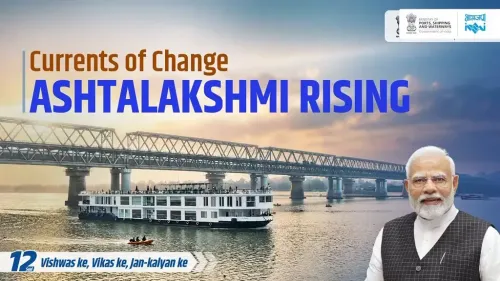
National Waterway 2 on the Brahmaputra is a key artery under active development for cargo and passenger movement.
The government frames Northeast waterways as a lower-emission logistics corridor aligned with the Act East Policy and PM Gati Shakti framework.
Upcoming IWAI progress reports and Union Budget allocations will be key indicators of implementation pace.
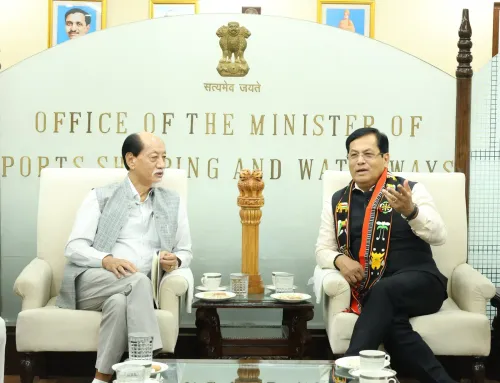
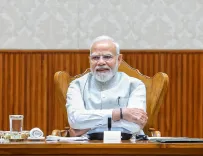
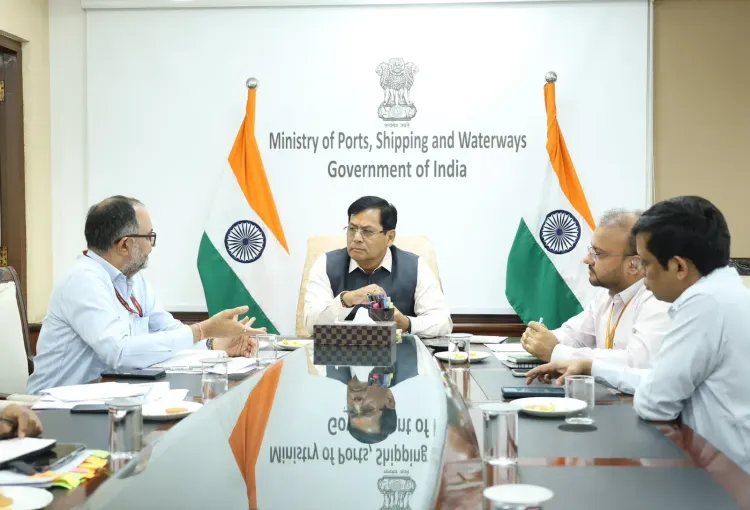
Union Minister of Ports, Shipping and Waterways Sarbananda Sonowal chaired a comprehensive review meeting with senior officials in New Delhi on Wednesday, June 17, 2026, assessing the progress of inland waterways projects across the Northeast region.
Context
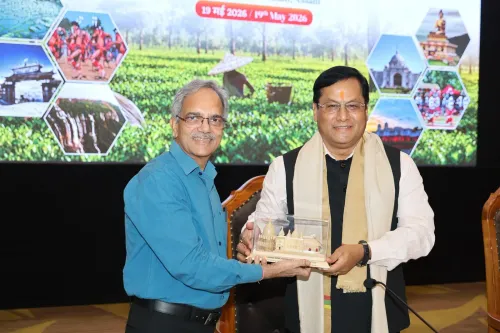
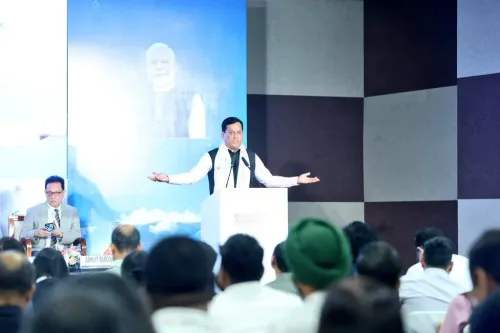
Sonowal stated that the PM Modi government is 'leveraging the region's vast waterways potential to boost connectivity, trade, tourism and livelihoods, paving the way for a Viksit Northeast and Viksit Bharat.' The meeting brought together senior officials to take stock of ongoing infrastructure work on river stretches spanning multiple northeastern states. The minister shared photographs from the review session alongside his post on X.
The Northeast's river network — anchored by the Brahmaputra and Barak valleys — has long been identified as an underleveraged asset for freight movement and passenger connectivity. The review signals continued ministerial attention to translating that potential into operational infrastructure.
Policy Backdrop
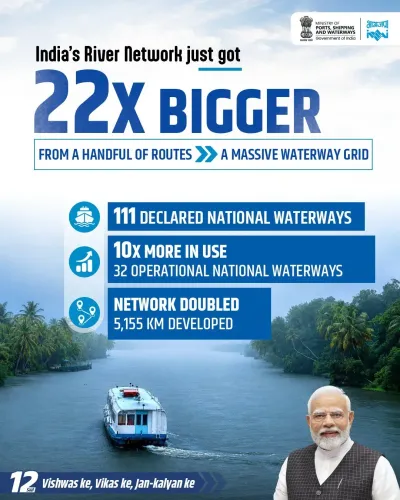
The National Waterways Act, 2016 formally expanded India's national waterways network to 111 waterways, explicitly adding several Northeast river stretches — including the Barak and Subansiri — to the regulated network. National Waterway 2, covering the Brahmaputra, has been under active development for cargo and passenger movement since the previous decade.
The Jal Marg Vikas Project, which provided the template for waterway capacity augmentation, was subsequently extended to Assam and other northeastern states under the PM Gati Shakti national master plan framework. The Inland Waterways Authority of India (IWAI), the statutory body overseeing development and regulation of national waterways, is the principal implementing agency for these projects.
Inland waterways are also positioned within the government's Act East Policy as a lower-emission logistics alternative that reduces transit costs to ASEAN neighbours, making the Northeast a potential gateway for regional trade.
Stakeholders and Impact
The primary beneficiaries of expanded inland waterway infrastructure in the Northeast are riverine communities dependent on river transport, traders moving goods across flood-prone terrain, and the tourism sector seeking to open up scenic river routes. Local employment in terminal construction, vessel operations, and ancillary services is also a stated objective of the programme.
For the broader region, improved waterway connectivity complements ongoing road and rail upgrades, reducing the Northeast's historical dependence on the narrow Siliguri Corridor — commonly known as the 'Chicken's Neck' — for surface logistics. Multimodal integration under PM Gati Shakti aims to bring down logistics costs and improve the competitiveness of northeastern produce in national and export markets.
What's Next
The IWAI is expected to release its next annual progress report on Northeast waterways, which will offer granular data on terminal construction, dredging operations, and cargo volumes. Budgetary allocations for new terminal infrastructure in the region will be closely watched in the upcoming Union Budget and parliamentary session.
Wednesday's high-level review, coming mid-year, suggests the ministry is tracking implementation timelines actively and may use the findings to calibrate resource deployment ahead of the next budget cycle — a critical step in converting the Northeast's waterways from a policy priority into a functioning logistics network.
Point of View
Making it a politically salient priority heading into budget season. The absence of specific project metrics in the public communication, however, leaves the meeting's concrete outcomes open to scrutiny from opposition and civil society stakeholders in the region.
NationPress
17 Sept 2026
Frequently Asked Questions
What did Sarbananda Sonowal review on June 17 2026?
Sonowal chaired a comprehensive meeting with senior officials in New Delhi on June 17, 2026, reviewing the progress of inland waterways projects across the Northeast region.
Which rivers are covered under Northeast inland waterways development?
Key rivers include the Brahmaputra (National Waterway 2), the Barak, and the Subansiri, all of which were formally added to the national waterways network under the National Waterways Act, 2016.
What is IWAI and what is its role in the Northeast?
The Inland Waterways Authority of India (IWAI) is the statutory body responsible for developing and regulating national waterways, and is the principal implementing agency for waterway infrastructure projects in the Northeast.
How does PM Gati Shakti relate to Northeast waterways?
PM Gati Shakti is the national master plan for multimodal connectivity under which Northeast waterway projects are integrated with road and rail networks to reduce logistics costs and improve regional trade links.
Why are inland waterways important for the Northeast?
Inland waterways offer a lower-emission alternative to road transport in flood-prone terrain, reduce dependence on the Siliguri Corridor, and support trade, tourism, and local employment in the Brahmaputra and Barak valleys.