Brahmaputra waterways: Centre plans ₹4,800 crore Northeast push
Synopsis
The Centre is committing nearly ₹4,800 crore to turn the Brahmaputra into a functional economic corridor — not just a flood-management challenge. With ₹751 crore already spent and ₹1,100 crore under execution, this is the most comprehensive waterways push the Northeast has seen, combining cargo logistics, cruise tourism, and GIS-backed river basin science in a single integrated plan.
Key Takeaways
The Centre plans to invest nearly ₹4,800 crore in inland waterways infrastructure across the Northeast over the next five years.
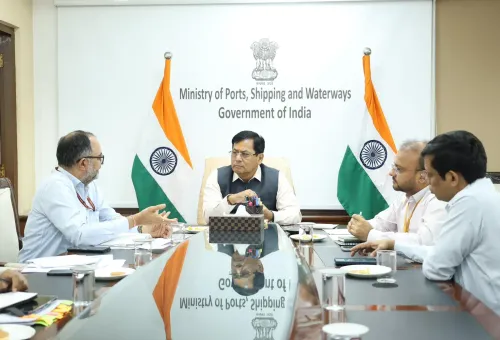
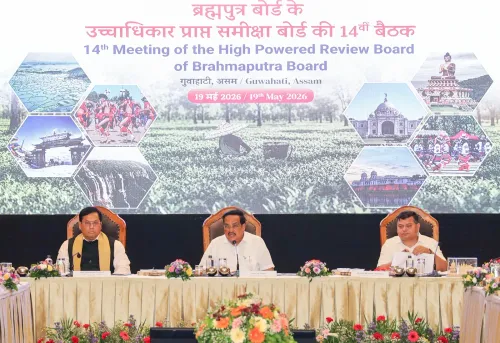
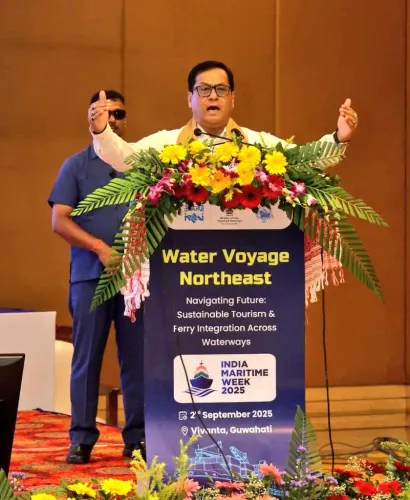
Union Minister Sarbananda Sonowal outlined the plan at the Brahmaputra Board High Powered Review Board meeting in Guwahati on Tuesday .
Projects worth ₹751 crore have already been completed in Assam , including terminals at Pandu , Dhubri , and Jogighopa .
Works worth over ₹1,100 crore are currently under way, including a Regional Centre of Excellence in Dibrugarh .
The Indo-Bangladesh Protocol Route links the Northeast with Kolkata and Haldia ports via National Waterway-2 .
The plan integrates flood control, erosion management, GIS mapping, and LiDAR surveys with traditional water management practices.
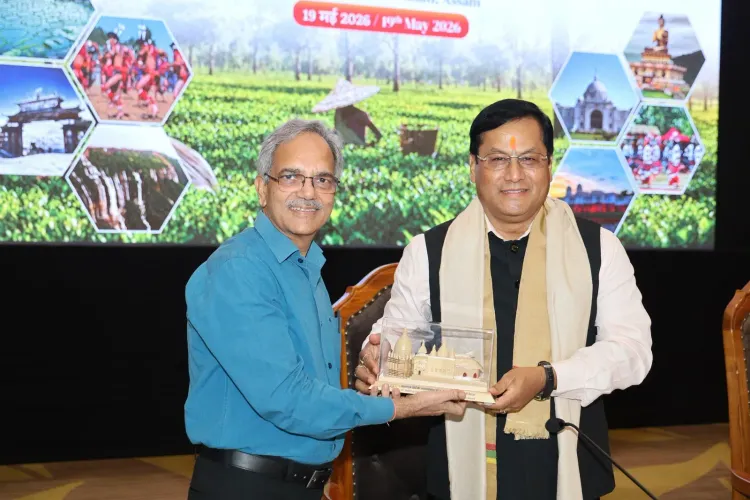
The Centre is set to invest nearly ₹4,800 crore in inland waterways infrastructure across the Northeast over the next five years, with Union Minister Sarbananda Sonowal on Tuesday unveiling an integrated river development strategy for the Brahmaputra that spans transport, trade, tourism, and scientific river basin management. The roadmap was presented at the High Powered Review Board meeting of the Brahmaputra Board in Guwahati, attended by ministers, technical experts, and representatives from northeastern states.
What the ₹4,800 Crore Plan Covers
The proposed outlay will fund community jetties, cruise terminals, dredgers, cargo vessels, and urban water transport systems aimed at improving last-mile connectivity and logistics efficiency in riverine areas. Sonowal described the Brahmaputra — designated as National Waterway-2 — as a 'critical national asset' capable of driving economic growth across the region.
'The Brahmaputra is emerging as an economic lifeline for the Northeast. Inland waterways offer an environmentally sustainable, efficient, and cost-effective mode of transportation that can transform connectivity and commerce in the region,' Sonowal said at the meeting.
Work Already Under Way
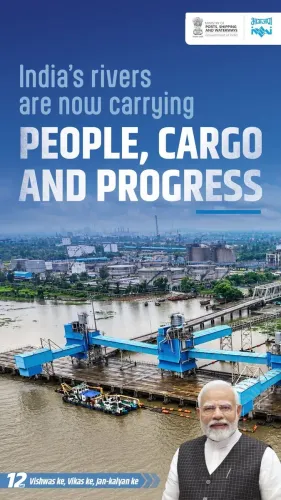
Projects worth nearly ₹751 crore have already been completed in Assam, including terminals at Pandu, Dhubri, and Jogighopa, along with floating jetties and upgraded shore infrastructure, according to officials. A further ₹1,100 crore worth of works are currently in progress, covering fairway development on the Brahmaputra, ship repair facilities, tourist jetties, and a Regional Centre of Excellence in Dibrugarh.
The Inland Waterways Authority of India (IWAI) has been developing the waterway to improve cargo movement and passenger connectivity through the Indo-Bangladesh Protocol Route, which links the Northeast with Kolkata and Haldia ports. This comes amid a broader push by the Centre to reduce the region's dependence on road transport, which remains vulnerable to landslides and seasonal disruptions.
Integrated River Basin Management
Sonowal stressed the need for a holistic approach combining flood management, dredging, erosion control, and infrastructure development while preserving ecological balance. He also called for blending traditional and indigenous water management practices of the Northeast with modern technologies such as Geographic Information System (GIS) mapping, Light Detection and Ranging (LiDAR) surveys, and digital monitoring systems.
The Brahmaputra is one of the world's most flood-prone and erosion-intensive rivers, and managing its flow has long posed a challenge for both state and central governments. The High Powered Review Board meeting is a key institutional mechanism for coordinating flood control and water resource planning across the northeastern states.
Who Was at the Meeting
The Guwahati meeting was attended by Union Jal Shakti Minister C. R. Paatil, ministers from northeastern states, and senior officials of the Brahmaputra Board. The multi-ministry, multi-state composition of the gathering signals the Centre's intent to treat the Brahmaputra corridor as a shared regional priority rather than a single-state concern.
With guidelines and project timelines expected to be firmed up in the coming months, the initiative could significantly reshape freight and passenger movement across one of India's most geographically challenging regions.
Point of View
800 crore figure is significant, but the real test is execution in a region where infrastructure timelines routinely stretch. The Brahmaputra's combination of extreme flooding, rapid channel migration, and cross-border hydrology makes it uniquely difficult to engineer — past investments have often been undone by a single monsoon season. What is new here is the explicit integration of flood management with commercial waterway development, a pairing that previous plans kept separate. If the Indo-Bangladesh Protocol Route can be made reliably operational year-round, the Northeast's freight economics change materially — but that requires diplomatic consistency with Dhaka as much as civil engineering.
NationPress
23 Oct 2026
Frequently Asked Questions
What is the Centre's ₹4,800 crore Brahmaputra waterways plan?
It is a five-year investment plan announced by Union Minister Sarbananda Sonowal to develop inland waterways infrastructure across the Northeast, with the Brahmaputra as the central corridor. The outlay covers community jetties, cruise terminals, dredgers, cargo vessels, and urban water transport systems.
What work has already been completed on the Brahmaputra waterway?
Projects worth nearly ₹751 crore have been completed in Assam, including terminals at Pandu, Dhubri, and Jogighopa, along with floating jetties and upgraded shore infrastructure. A further ₹1,100 crore worth of works are currently under way.
How does the Brahmaputra connect the Northeast to major ports?
The Inland Waterways Authority of India is developing National Waterway-2 through the Indo-Bangladesh Protocol Route, which links the Northeast with Kolkata and Haldia ports. This route offers a cost-effective alternative to road transport for cargo movement.
Who attended the Brahmaputra Board review meeting in Guwahati?
The High Powered Review Board meeting was attended by Union Jal Shakti Minister C. R. Paatil, Union Minister Sarbananda Sonowal, ministers from northeastern states, and senior officials of the Brahmaputra Board.
What technologies will be used in the Brahmaputra river basin management plan?
The plan calls for integrating Geographic Information System (GIS) mapping, Light Detection and Ranging (LiDAR) surveys, and digital monitoring systems with traditional and indigenous water management practices of the Northeast.