Northeast investment crosses ₹7.3 lakh crore in a decade, says Sonowal
Synopsis
India's Northeast has received over ₹7.3 lakh crore in cumulative development spending since 2014 — and Union Minister Sarbananda Sonowal used the NEIINFRA 2026 stage in Shillong to reframe the region not as a welfare recipient but as South Asia's next logistics gateway to Southeast Asia. The numbers are large; the strategic ambition is larger.
Key Takeaways
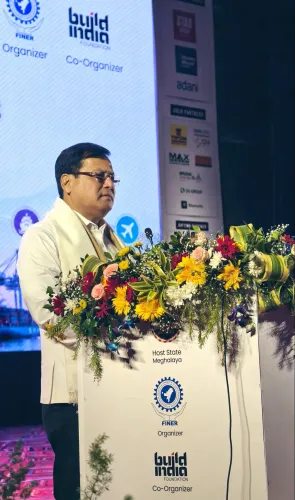
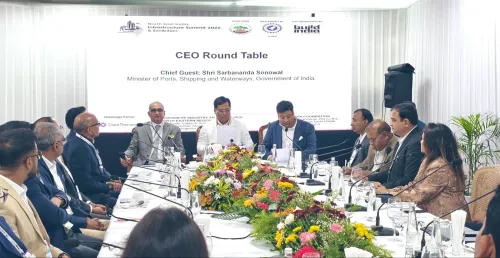
Union Minister Sarbananda Sonowal addressed the NEIINFRA 2026 summit in Shillong on 15 June 2026 .
Cumulative development expenditure in the Northeast has crossed ₹7.3 lakh crore over the past decade.
Gross Budgetary Support rose from ₹20,000 crore in 2014 to over ₹1.08 lakh crore in 2025-26.
Nearly 10,000 km of national highways built since 2014; airports doubled from 9 to 16 ; railway projects worth ₹77,000 crore underway.
96% of villages now have mobile connectivity; over 40,000 villages covered by 4G .
The Brahmaputra and Barak river systems are being developed as international logistics corridors via the Indo-Bangladesh Protocol Route .
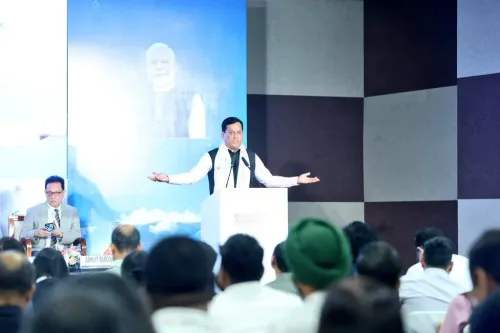
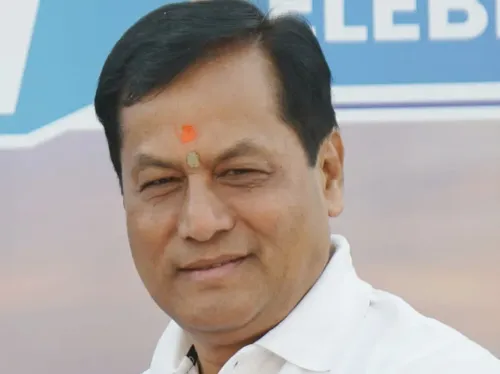
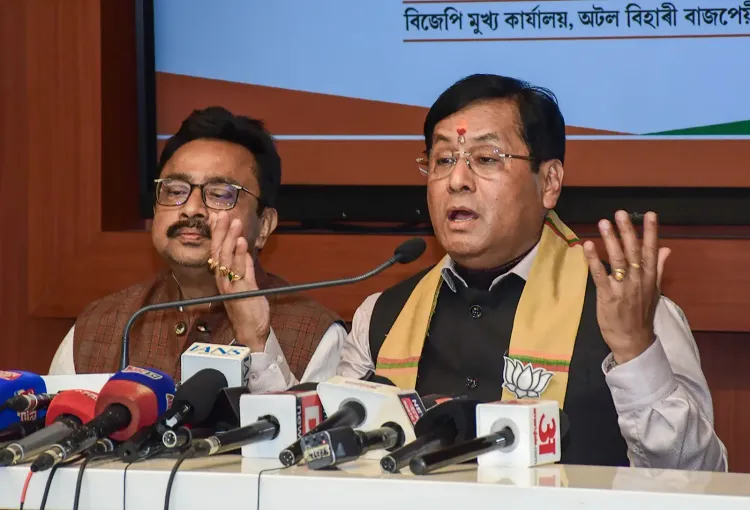
Union Minister for Ports, Shipping and Waterways Sarbananda Sonowal on Monday, 15 June 2026, declared that the Northeast has undergone a defining transformation — from a region burdened by infrastructure deficits to a major economic growth hub — calling it one of India's most significant development success stories under Prime Minister Narendra Modi. He was speaking at the North East India Infrastructure Summit and Exhibition (NEIINFRA) 2026 in Shillong.
Scale of Investment
Sonowal cited striking numbers to underscore the shift. Gross Budgetary Support for the Northeast has surged from approximately ₹20,000 crore in 2014 to over ₹1.08 lakh crore in 2025-26. Cumulative expenditure in the region has crossed ₹7.3 lakh crore over the past decade — a figure that reflects the Centre's sustained policy focus on the region's development.
Connectivity and Infrastructure Push
On the ground, nearly 10,000 km of national highways have been constructed since 2014, backed by an investment exceeding ₹1.07 lakh crore. Railway projects worth approximately ₹77,000 crore are currently under implementation. Operational airports in the region have more than doubled, rising from nine in 2014 to sixteen today. Digital connectivity has kept pace: nearly 96 per cent of villages are now covered by mobile networks, and over 40,000 villages have access to 4G services.
Meghalaya as a Model
Sonowal specifically highlighted Meghalaya's progress, crediting Chief Minister Conrad Sangma for leveraging the state's natural strengths, governance reforms, and strategic location to build an attractive investment climate. Improvements in ease of doing business, growth in tourism, and proactive digital infrastructure policies were cited as key drivers of the state's emergence as an investment destination.
Waterways as Strategic Corridors
The Minister pointed to the Brahmaputra and Barak river systems as emerging logistics arteries, being developed under the Indo-Bangladesh Protocol Route to link the Northeast with mainland India and international markets. 'The Northeast is no longer a landlocked region. It is becoming a logistics, trade and connectivity corridor linking South Asia with Southeast Asia,' Sonowal said. This is a notable strategic reframing — positioning the region not merely as a recipient of welfare spending but as a gateway to the broader Asian economic architecture.
What This Means Going Forward
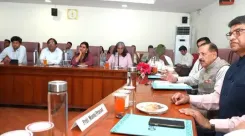
This comes amid growing Centre-level emphasis on the Act East Policy, which positions Northeast India as India's bridgehead into Southeast Asia. With inland waterways, highways, rail, and digital infrastructure converging, the region's integration into national and international supply chains is expected to deepen. Industry stakeholders and state governments attending NEIINFRA 2026 are expected to translate these commitments into investment pledges over the coming months.
Point of View
But aggregate spend alone does not tell us how much of it translated into sustained economic activity versus one-time infrastructure creation. The Northeast's per-capita income and private investment ratios remain below the national average despite a decade of elevated public expenditure — a gap that NEIINFRA 2026 does not directly address. Sonowal's reframing of the region as a South Asia–Southeast Asia logistics corridor is strategically sound, but it hinges on the Indo-Bangladesh Protocol Route and border trade infrastructure performing at scale — both of which face diplomatic and operational variables outside India's unilateral control. The real test of this transformation will come when private capital begins flowing in without sovereign guarantees.
NationPress
15 Sept 2026
Frequently Asked Questions
What is the NEIINFRA 2026 summit?
The North East India Infrastructure Summit and Exhibition (NEIINFRA) 2026 is a government-backed conclave held in Shillong focused on infrastructure investment and development planning for Northeast India. The 15 June 2026 edition saw Union Minister Sarbananda Sonowal outline a decade of development spending and future connectivity plans for the region.
How much has the Centre invested in Northeast India since 2014?
Cumulative development expenditure in Northeast India has crossed ₹7.3 lakh crore over the past decade, according to Union Minister Sarbananda Sonowal. Annual Gross Budgetary Support for the region has grown from approximately ₹20,000 crore in 2014 to over ₹1.08 lakh crore in 2025-26.
What infrastructure has been built in the Northeast since 2014?
Nearly 10,000 km of national highways have been constructed at a cost exceeding ₹1.07 lakh crore, railway projects worth around ₹77,000 crore are under implementation, and the number of operational airports has risen from nine to sixteen. Digital coverage now reaches 96% of villages, with over 40,000 villages having 4G access.
What is the Indo-Bangladesh Protocol Route?
The Indo-Bangladesh Protocol Route is a bilateral inland waterway arrangement being used to develop the Brahmaputra and Barak river systems as strategic logistics corridors. It is intended to link Northeast India with mainland India and international markets, reducing the region's dependence on land-based transit routes.
Why is Meghalaya specifically highlighted at NEIINFRA 2026?
Union Minister Sonowal cited Meghalaya as a model state within the Northeast, crediting Chief Minister Conrad Sangma's governance reforms, ease-of-doing-business improvements, tourism growth, and digital infrastructure investment for positioning the state as an emerging investment destination.