Argentina pitches itself as West's top energy, food and minerals supplier at G20
Synopsis
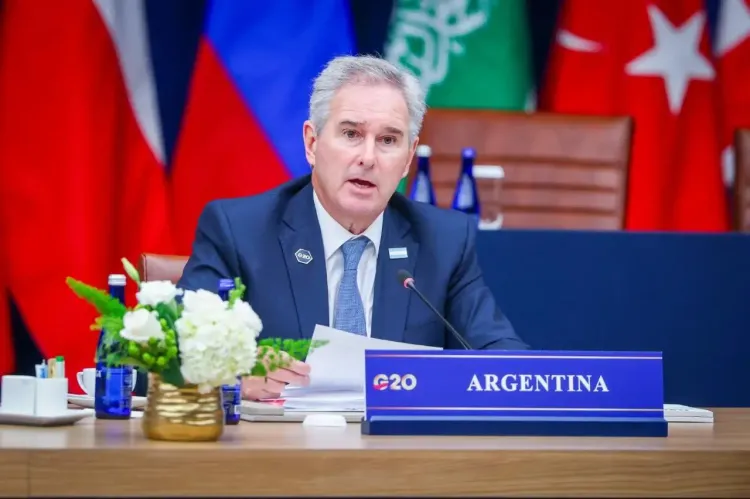
At the G20 Foreign Ministers' Meeting in Atlanta, Argentina under President Javier Milei made a bold pitch to become the West's go-to supplier of energy, food and critical minerals — and tied it to the AI data centre boom. With the Trump administration as its closest partner in Latin America, Buenos Aires is repositioning from economic pariah to strategic resource anchor for the free world.
Key Takeaways
Argentina pitched itself as a reliable Western supplier of energy, food, and critical minerals at the G20 Foreign Ministers' Meeting in Atlanta on 31 October 2026 .
Foreign Minister Pablo Quirno made the case on social media platform X, citing the country's vast untapped natural resources and its deregulatory agenda under President Javier Milei .
Quirno linked Argentina's resource base to the global AI and data centre boom, arguing energy and mineral producers are foundational to the next technological wave.
The pitch aligned closely with US Secretary of State Marco Rubio 's stated agenda — 'maritime and food security drive economic security.' Argentina has no confirmed new supply agreements from the Atlanta meeting, according to Quirno's own remarks.
Critical minerals also featured in separate bilateral talks, including a meeting between German FM Johann Wadephul and Australian FM Penny Wong .
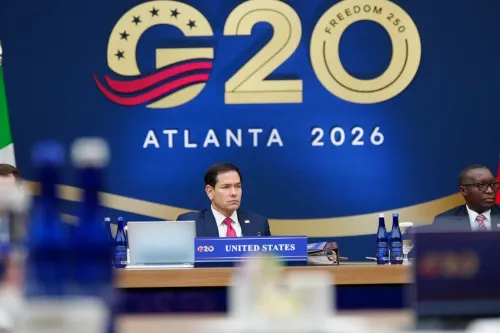
Argentina used the G20 Foreign Ministers' Meeting in Atlanta on 31 October 2026 to position itself as a dependable supplier of energy, food, and critical minerals for Western economies, as ministers convened to debate strategies for protecting global supply chains against mounting geopolitical pressures.
Quirno's Pitch to the West
Foreign Minister Pablo Quirno outlined Argentina's ambitions in a post on social media platform X on Friday, declaring: 'We came to the G20 Foreign Ministers' meeting to show an Argentina that, under the leadership of President Javier Milei, decided to become a prosperous and powerful nation again.'
Quirno elaborated that Argentina was prosperous 'because we have the determination to awaken the enormous potential of our resources, wasted for decades', and powerful 'because we intend to build the strength needed to ensure the survival of our Nation and of the West.' He added: 'The free world needs reliable suppliers of energy, food and critical minerals, capable of guaranteeing supply in the face of geopolitical uncertainty and threats to the main trade routes. We are determined that Argentina will be one of those suppliers.'
The AI and Data Centre Angle
Quirno also tied Argentina's resource pitch to the global artificial intelligence boom, arguing that superintelligence and energy and mineral-producing centres reinforce each other — a dynamic he said could drive a surge in data centre construction. Argentina, he said, intends to be 'a protagonist in that technological race', leveraging its natural advantages in energy, climate, and what officials describe as a deregulatory policy environment under President Milei.
This framing is notable: it positions resource exports not merely as commodity trade but as foundational infrastructure for the next wave of digital industrialisation — a pitch increasingly used by resource-rich nations courting technology investment.
Alignment with the US Agenda
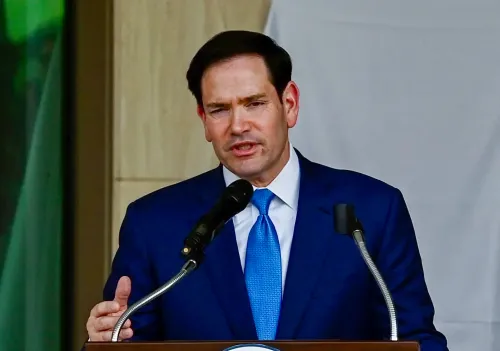
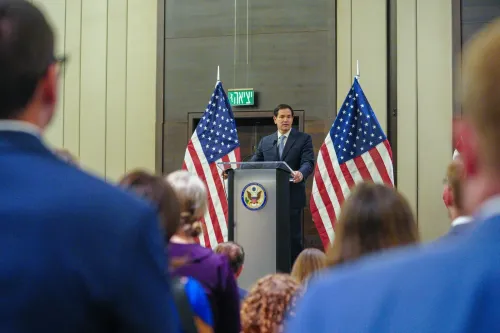
Argentina's pitch closely mirrors the priorities set by meeting host United States Secretary of State Marco Rubio, who told ministers that 'maritime and food security drive economic security.' A State Department media note dated 26 October listed threats to 'freedom of navigation, energy and food security, and supply chains' among the key issues for the Atlanta meeting, underscoring the convergence between Washington's agenda and Buenos Aires's offer.
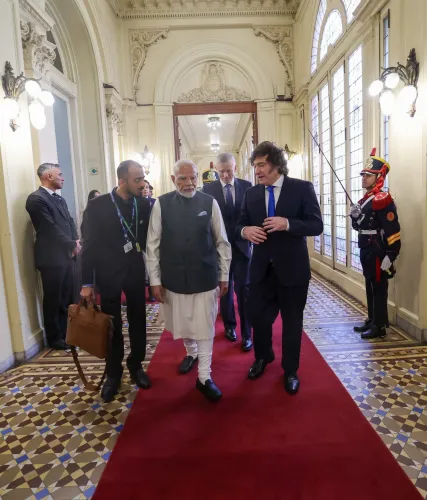
Argentina has emerged as one of the Trump administration's closest partners in Latin America under President Milei, whose economic deregulation agenda and ideological alignment with the US administration have made Buenos Aires a favoured interlocutor in the region.
Critical Minerals in Focus Across the G20
Critical minerals also featured prominently in bilateral meetings on the sidelines of the Atlanta summit. German Foreign Minister Johann Wadephul, after meeting Australian Foreign Minister Penny Wong, posted on X: 'From security in Europe and the Indo-Pacific to critical minerals, Germany and Australia are close friends and partners. The EU-Australia FTA will boost our trade relations, lets make it a reality!' The exchange underscores how critical mineral supply chains have become a central axis of Western diplomatic activity.
Notably, Minister Quirno did not confirm whether Argentina had concluded any new supply agreements during the Atlanta meeting, leaving the commercial substance of the pitch unverified for now.
What Comes Next
Argentina's diplomatic offensive at Atlanta signals a broader strategic repositioning under the Milei government — from a country long associated with economic instability to a self-styled reliable partner for Western supply chain diversification. Whether formal agreements follow will be the measure of whether the pitch translates into deals. Observers will watch for any bilateral energy, mineral, or agricultural supply frameworks announced in the weeks after the summit.
Point of View
The Lithium Triangle, and Pampas grain surpluses as a package deal to a West anxious about Chinese and Russian resource leverage. The AI data centre angle is shrewd: it reframes Argentina not as a raw-material exporter but as critical infrastructure for the digital economy. The gap to watch is between diplomatic rhetoric and commercial reality — Quirno himself acknowledged no new supply agreements were signed in Atlanta, which means the pitch is still a pitch. Whether Western capitals move from applause to actual offtake contracts will determine whether this is a Milei masterstroke or another Latin American resource moment that did not convert.
NationPress
31 Oct 2026
Frequently Asked Questions
What did Argentina propose at the G20 Foreign Ministers' Meeting in Atlanta?
Argentina proposed positioning itself as a reliable supplier of energy, food, and critical minerals to Western economies at the G20 Foreign Ministers' Meeting in Atlanta on 31 October 2026. Foreign Minister Pablo Quirno made the pitch on behalf of President Javier Milei's government, arguing that the free world needs dependable resource partners amid rising geopolitical uncertainty.
What did Argentine Foreign Minister Pablo Quirno say on X about the G20 meeting?
Quirno posted on X that Argentina had come to Atlanta 'to show an Argentina that, under the leadership of President Milei, decided to become a prosperous and powerful nation again.' He argued Argentina's resources had been 'wasted for decades' and pledged the country would be among the West's reliable suppliers of energy, food, and critical minerals.
How does Argentina connect its resources to the artificial intelligence boom?
Foreign Minister Quirno argued that superintelligence and energy and mineral-producing centres reinforce each other, potentially driving a surge in data centre construction. He said Argentina intends to be a protagonist in the global AI race, using its natural advantages in energy and climate alongside the Milei government's deregulatory agenda to attract technology investment.
Did Argentina sign any new supply agreements at the Atlanta G20 meeting?
No. Foreign Minister Quirno did not confirm any new supply agreements from the Atlanta meeting. The pitch at this stage remains a diplomatic and political statement of intent rather than a concluded commercial deal.
Why has Argentina become a close partner of the Trump administration?
Under President Javier Milei, Argentina has embraced sweeping economic deregulation and an ideological alignment with the US administration's priorities, making it one of Washington's closest partners in Latin America. This relationship has provided Buenos Aires with diplomatic backing and a platform to market its resources to Western economies seeking to diversify supply chains away from geopolitically risky sources.