CM Fadnavis Inaugurates EKA Mobility Plant, Eyes 50K E-Buses
Synopsis
CM Devendra Fadnavis inaugurated EKA Mobility's new manufacturing facilities in Maharashtra, announcing a demand for 50,000 electric buses over three years and a state-wide EV charging network along highways, positioning Pune, Nagpur and Chhatrapati Sambhajinagar as India's emerging EV hubs.
Key Takeaways
EKA Mobility inaugurated new manufacturing facilities in Maharashtra, attended by CM Devendra Fadnavis and senior central and state ministers.
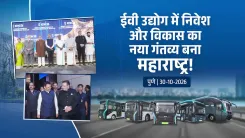
Maharashtra has set a target of 50,000 electric buses over the next three years, urging state industries to scale up production capacity.
Pune , Chhatrapati Sambhajinagar , and Nagpur are being developed as major EV manufacturing hubs under the state's green mobility strategy.
The Maharashtra government will build a highway EV charging network in partnership with vehicle manufacturers, providing land, permissions, and infrastructure.
The initiative builds on India's national FAME scheme (2015) and Maharashtra's Electric Vehicle Policy (2021) , with central-state coordination at its core.
Union Ministers Nitin Gadkari and H.D.
Kumaraswamy , along with BJP leader B L Santhosh , attended — reflecting strong Centre-state alignment on EV policy.
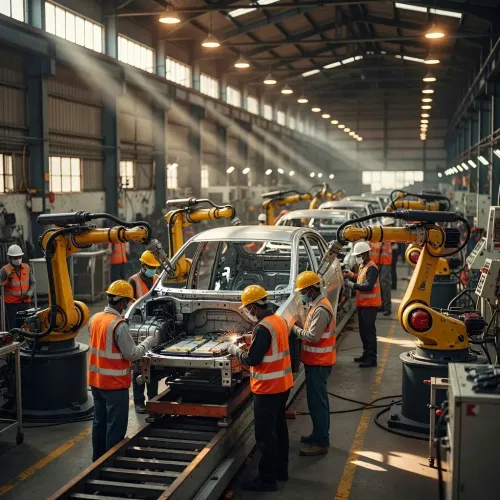
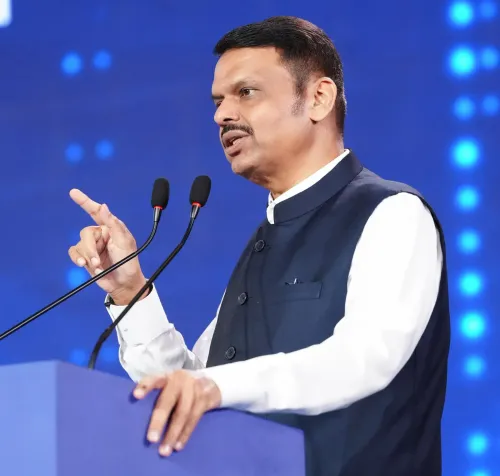
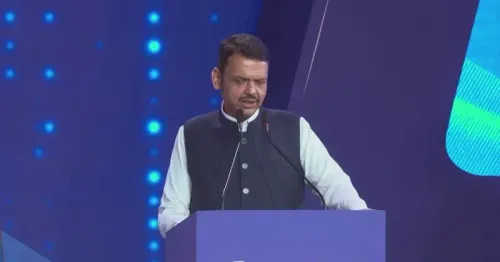
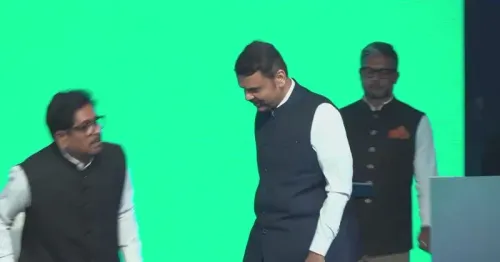
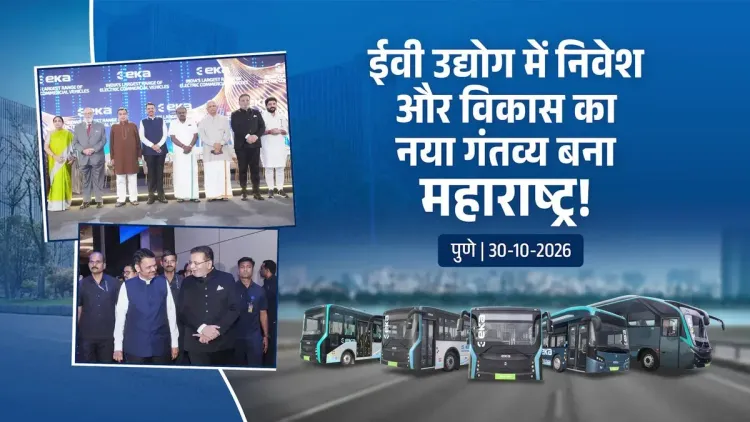
Maharashtra is not waiting for the green transition — it is building the factories that will drive it. Maharashtra Chief Minister Devendra Fadnavis joined the inauguration of the manufacturing facilities of EKA Mobility and its group of companies on Saturday, 1 November 2026, calling it a decisive step toward cementing the state's position at the heart of India's electric vehicle ecosystem.
EKA Mobility's manufacturing milestone in Maharashtra
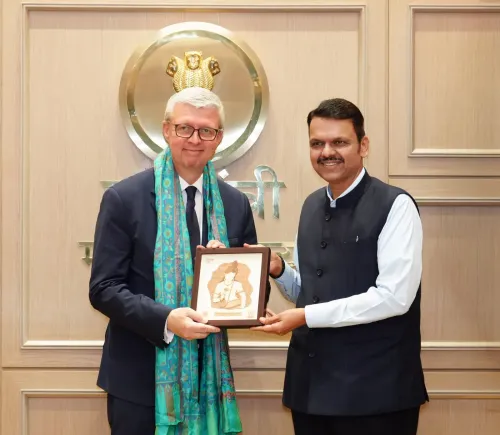
EKA Mobility, led by Founder and Chairman Sudhir Mehta, is expanding its electric vehicle production footprint in Maharashtra at a moment when state and central governments are actively competing to attract EV investment. The new facilities add industrial weight to what Maharashtra has been signalling through policy: that it intends to be the country's leading EV manufacturing state. Alongside Mehta, Dr. Abhay Firodia, Chairman of Force Motors Limited, was present — underscoring the convergence of legacy auto and new-age EV interests under one roof.
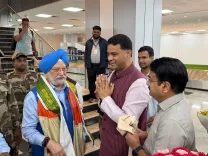
Union Minister for Road Transport Nitin Gadkari, Union Minister H.D. Kumaraswamy, BJP National General Secretary B L Santhosh, Deputy Chief Minister Sunetra Pawar, Minister Chandrakant Dada Patil, and Union Minister of State Murlidhar Mohol were all present — a gathering that signals how seriously both New Delhi and Mumbai are treating this industrial moment.
Pune, Chhatrapati Sambhajinagar and Nagpur's rise as EV hubs
Pune, Chhatrapati Sambhajinagar, and Nagpur are the three cities Fadnavis has identified as emerging EV manufacturing hubs. This is no accident of geography: Pune carries decades of automotive heritage through companies like Tata Motors and Bajaj; Nagpur sits at India's geographical centre with established logistics advantage; and Chhatrapati Sambhajinagar has attracted fresh industrial investment under the Marathwada push. Together, they form a manufacturing triangle the state is now deliberately wiring into a clean-energy corridor.
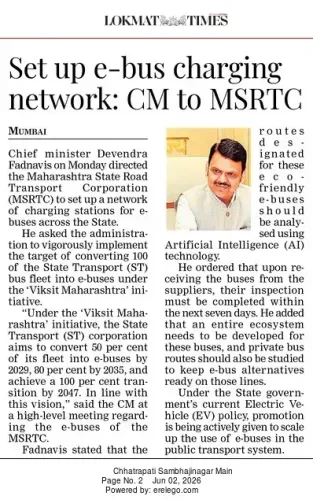
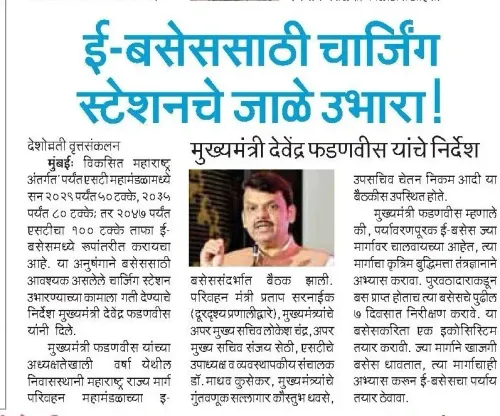
Fadnavis stated that Maharashtra will need 50,000 electric buses over the next three years — a number that frames the urgency behind the production scale-up. State industries have been urged to ramp up capacity to meet this demand. The government has also committed to developing a statewide EV charging network along major highways, with vehicle manufacturers as partners, and will provide land, permissions, and supporting infrastructure to make it happen.
FAME, Maharashtra's 2021 EV Policy, and Modi's national push
The policy architecture behind this moment runs deep. India's FAME (Faster Adoption and Manufacturing of Electric Vehicles) scheme, launched in 2015, seeded early demand and manufacturing incentives for the EV sector. Maharashtra's own Electric Vehicle Policy of 2021 layered state-level incentives on top — attracting investment and beginning the groundwork for what is now a cluster-based manufacturing strategy. Fadnavis explicitly tied Saturday's inauguration to the 'visionary leadership' of Prime Minister Narendra Modi, positioning it within a national strategic arc that links energy security, pollution reduction, and industrial self-reliance.
The broader stakes are clear. India imports the vast majority of its crude oil, and vehicular emissions account for a significant share of urban air pollution in cities like Pune and Mumbai. Every electric bus that replaces a diesel one cuts both a fuel import bill and a lungful of exhaust. Maharashtra is betting that being early and being big in EV manufacturing will pay off on both counts.
The charging network and bus procurement targets are now the ones to watch — the promises made in factory halls must eventually move into highways and depots to count.
Point of View
Nagpur, and Chhatrapati Sambhajinagar, Fadnavis is applying a proven industrial-cluster playbook to clean energy, much as Tamil Nadu did with electronics and Gujarat did with petrochemicals. The 50,000 electric bus target, if matched by procurement policy and charging infrastructure, could give Maharashtra's EV industry the anchor demand it needs to scale. The real test will be whether the highway charging network and bus orders move from announcement to execution before rival states close the gap.
NationPress
31 Oct 2026
Frequently Asked Questions
What did CM Devendra Fadnavis inaugurate at EKA Mobility?
CM Fadnavis inaugurated the new manufacturing facilities of EKA Mobility and its group of companies in Maharashtra, marking an expansion of the state's electric vehicle production capacity.
How many electric buses does Maharashtra plan to procure?
Maharashtra has set a target of 50,000 electric buses over the next three years, and state industries have been urged to ramp up production to meet this demand.
Which cities in Maharashtra are becoming EV hubs?
Pune, Chhatrapati Sambhajinagar, and Nagpur are the three cities the Maharashtra government is developing as major electric vehicle manufacturing and industrial hubs.
What is Maharashtra's plan for EV charging infrastructure?
The Maharashtra government plans to develop a network of EV charging facilities along major highways across the state, in partnership with vehicle manufacturers, and will provide the required land, permissions, and infrastructure.
What national policy supports Maharashtra's EV push?
India's FAME (Faster Adoption and Manufacturing of Electric Vehicles) scheme, launched in 2015, and Maharashtra's own Electric Vehicle Policy of 2021 form the policy backbone supporting the state's current EV investment drive.