CM Fadnavis Urged to Build E-Bus Charging Network Across Maharashtra
Synopsis
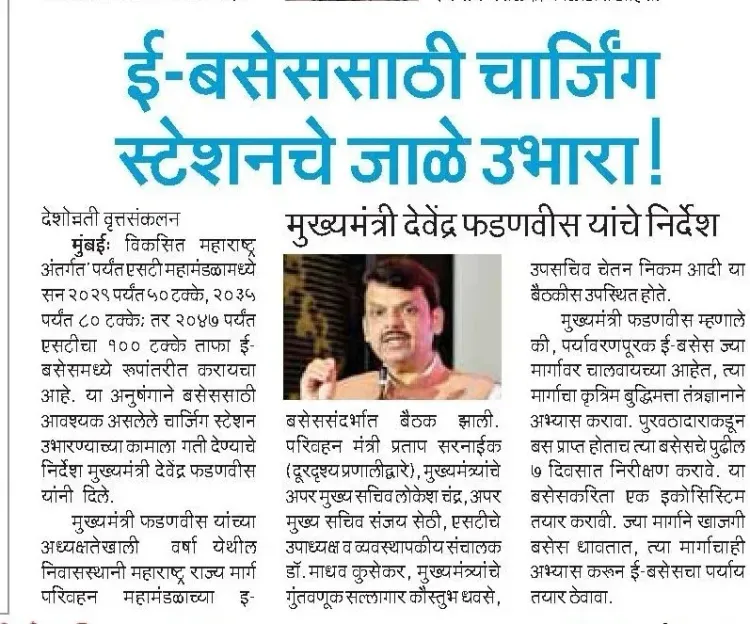
The Chief Minister's Office of Maharashtra amplified a Marathi-language public call on 2 June 2026 urging CM Devendra Fadnavis to build a state-wide charging station network for MSRTC electric buses, pushing e-bus infrastructure to the top of the state's transport agenda.
Key Takeaways
The CMO Maharashtra posted on 2 June 2026 amplifying a demand to build e-bus charging stations across the state.
The call is directed at Chief Minister Devendra Fadnavis and tags MSRTC , the state's principal public bus operator.
The Maharashtra EV Policy 2021 and the central FAME-II scheme provide the existing policy and funding framework for this push.
Peer states including Delhi , Karnataka , and Tamil Nadu have already combined e-bus procurement with charging infrastructure deployment.
Without a charging network, large-scale e-bus induction by MSRTC risks operational disruptions for millions of rural and inter-city commuters.
The next key signals will be MSRTC tendering activity and state budget allocations for transport electrification.
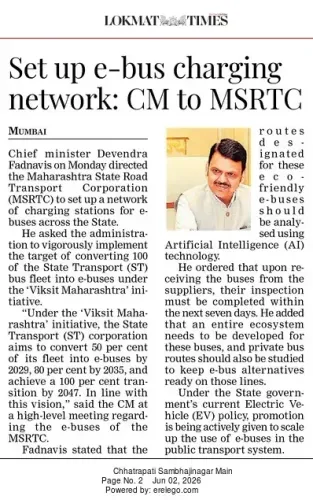
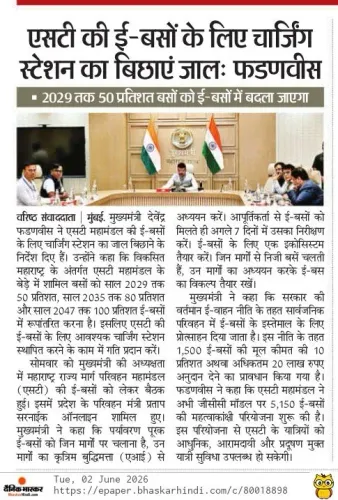
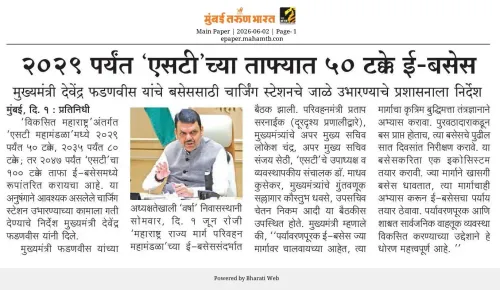
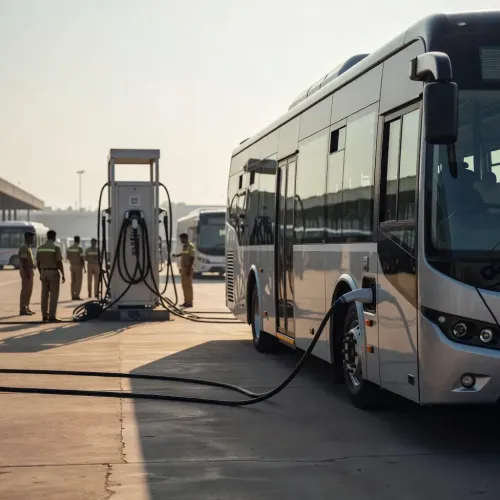
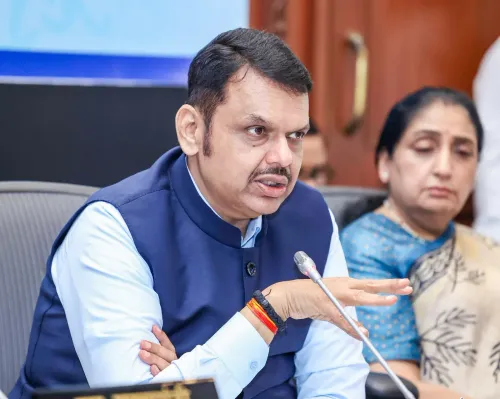
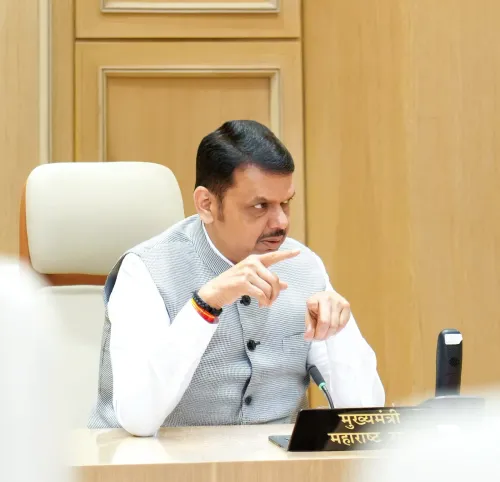
The Chief Minister's Office of Maharashtra posted on X (formerly Twitter) on Tuesday, 2 June 2026, amplifying a public call directed at Chief Minister Devendra Fadnavis to build a network of charging stations for electric buses operated by the Maharashtra State Road Transport Corporation (MSRTC).
Context
The post, written in Marathi, carries the message 'ई-बसेससाठी चार्जिंग स्टेशनचे जाळे उभारा!' ('Build a network of charging stations for e-buses!'), tagging @Dev_Fadnavis and using the hashtags #Maharashtra, #DevendraFadnavis, and #MSRTC. The CMO's decision to amplify the call signals that the demand for e-bus charging infrastructure has entered official discourse at the highest level of state government.
MSRTC is the backbone of inter-city and rural connectivity in Maharashtra, running thousands of routes across the state. Any transition to electric buses requires a parallel, reliable charging infrastructure to make operations viable.
Policy Backdrop
Maharashtra's push for electric public transport is anchored in the Maharashtra EV Policy 2021, which set targets for electric bus adoption and offered incentives for charging infrastructure development. At the national level, the FAME-II scheme (2019) provided central funding for electric buses and associated charging networks across states.
Indian states including Delhi, Karnataka, and Tamil Nadu have combined large-scale e-bus procurement with dedicated charging infrastructure build-outs, offering Maharashtra a tested model to follow. The call to CM Fadnavis reflects growing pressure to move beyond bus procurement and address the charging gap that can stall electrification in practice.
Stakeholders and Impact
MSRTC commuters — particularly those in rural and semi-urban Maharashtra — stand to benefit most from a reliable e-bus network, which promises lower fares over time as fuel and maintenance costs fall. MSRTC as an institution faces operational risk if e-buses are deployed without adequate charging stations, leading to service disruptions.
Private operators and public-private partnership investors in the charging infrastructure space are also watching, as state-level demand signals from a large fleet operator like MSRTC can catalyse significant investment in charging networks across Maharashtra.
What's Next
Attention will now turn to whether CM Devendra Fadnavis and his administration respond with a concrete roadmap — including tendering for charging stations, timelines for installation, and budget allocations in the state transport sector. MSRTC's ongoing procurement plans for e-buses will be closely watched alongside any public-private partnership announcements for charging infrastructure.
With the Maharashtra EV Policy framework already in place, the government has the policy architecture to act; the question is whether political will translates into ground-level infrastructure before the next wave of e-bus inductions begins.
Point of View
Or is responding to pressure it can no longer ignore. Maharashtra's e-bus ambitions have long been constrained by the chicken-and-egg problem of fleet procurement versus charging infrastructure; surfacing this publicly signals an intent to break that deadlock. This fits a broader pattern in Indian state governance where CMOs use X to signal policy priorities ahead of formal announcements, effectively testing public appetite. The real test will be whether a concrete charging infrastructure tender follows within weeks or the post remains a signal without a sequel.
NationPress
18 Oct 2026
Frequently Asked Questions
Why is Maharashtra building e-bus charging stations?
Maharashtra is pushing to build e-bus charging stations to support the electrification of the MSRTC fleet, reduce fuel and operational costs, and meet targets set under the Maharashtra EV Policy 2021 and the central FAME-II scheme.
What is MSRTC and why does it need e-bus infrastructure?
MSRTC (Maharashtra State Road Transport Corporation) is the state-owned operator running inter-city and rural bus services across Maharashtra. Without a dedicated charging network, deploying electric buses at scale risks service disruptions and defeats the purpose of fleet electrification.
What did the Maharashtra CMO post about e-buses on 2 June 2026?
The CMO Maharashtra account posted a Marathi-language call on 2 June 2026 urging Chief Minister Devendra Fadnavis to build a network of charging stations for e-buses, tagging MSRTC in the post.
What is the Maharashtra EV Policy 2021?
The Maharashtra EV Policy 2021 set targets for electric vehicle and electric bus adoption in the state, and offered incentives for charging infrastructure development to support the transition away from diesel-powered public transport.
Which other Indian states have built e-bus charging networks?
Delhi, Karnataka, and Tamil Nadu have already combined large-scale electric bus procurement with dedicated charging infrastructure build-outs, providing Maharashtra with proven models to follow for MSRTC electrification.