CM Fadnavis: 50% of MSRTC Fleet to Be Electric by 2029
Synopsis
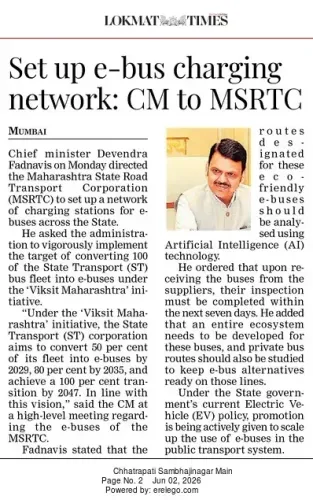
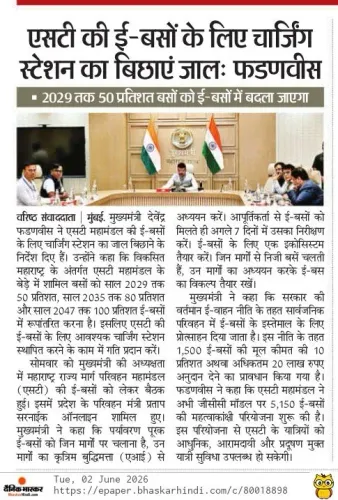
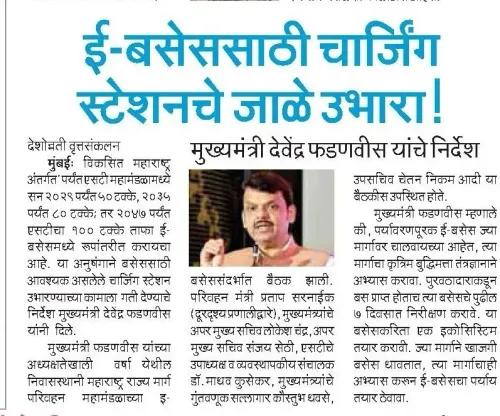
The Chief Minister's Office of Maharashtra announced on 2 June 2026 that CM Devendra Fadnavis has set a target to make 50 per cent of the MSRTC bus fleet electric by 2029, marking a significant step in the state's public transport electrification drive.
Key Takeaways
50% of MSRTC's bus fleet is targeted to be electric by 2029 , as announced by the Chief Minister's Office of Maharashtra .
CM Devendra Fadnavis is the political authority behind the announcement, shared via the official CMO handle on 2 June 2026 .
MSRTC operates one of India's largest public bus networks, making this one of the country's most ambitious state-level e-bus fleet targets.
The move builds on Maharashtra's EV Policy 2021 and aligns with national schemes such as FAME-II for electric bus adoption.
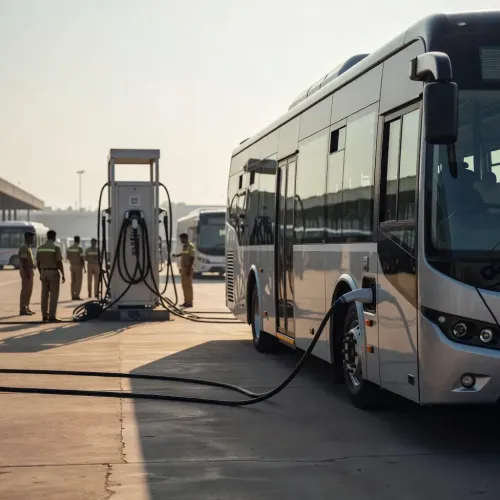
Key next steps include procurement tenders, charging infrastructure rollout at depots, and central funding releases.
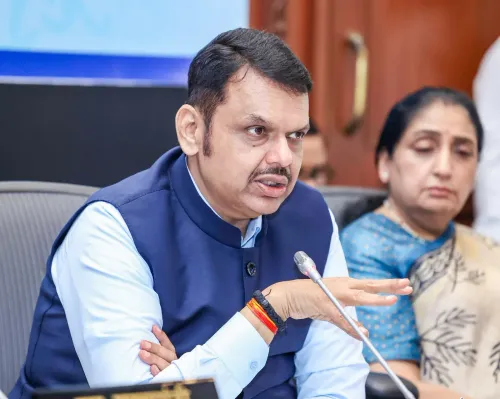
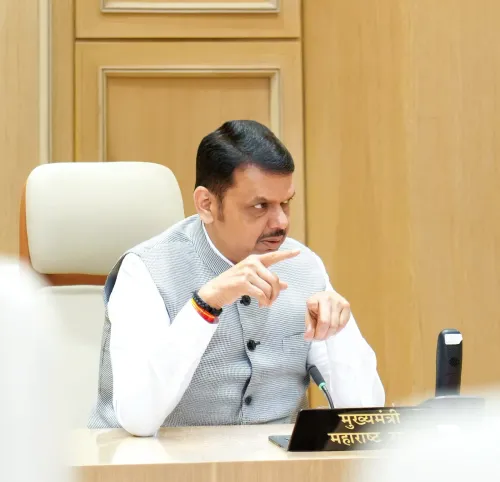
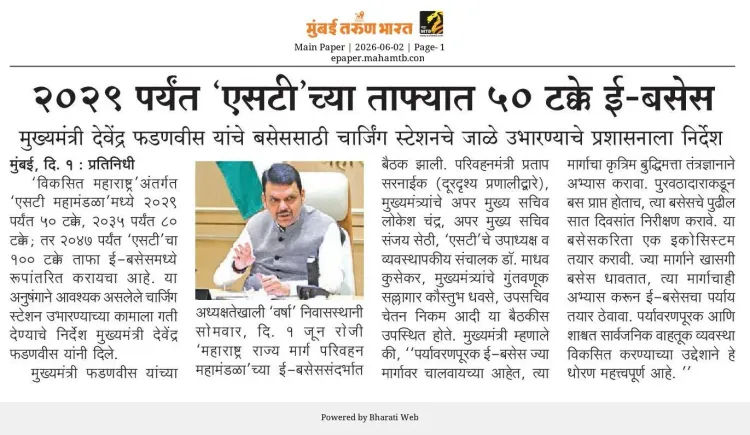
The Chief Minister's Office of Maharashtra announced on Tuesday, 2 June 2026 that the state government has set a target to make 50 per cent of the Maharashtra State Road Transport Corporation (MSRTC) fleet electric by 2029, in a post attributed to Chief Minister Devendra Fadnavis.
Context
The post, shared from the official CMO Maharashtra handle, states in Marathi: '2029 पर्यंत एसटीच्या ताफ्यात 50% ई-बसेस' — meaning '50% e-buses in the ST fleet by 2029'. The announcement signals a firm, time-bound commitment to electrifying the state's public road transport network under CM Fadnavis.
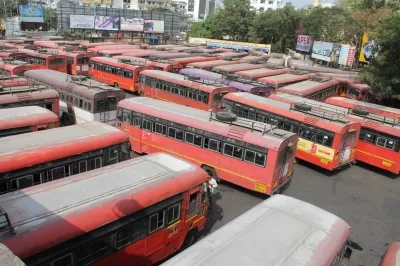
MSRTC, commonly known as the 'ST' (State Transport), operates one of the largest public bus networks in India, connecting urban centres, semi-urban towns, and rural districts across Maharashtra. A shift of half its fleet to electric buses would represent a significant operational and environmental transformation.
Policy Backdrop
Maharashtra introduced its EV Policy in 2021, which laid out incentives and targets for electric vehicle adoption across segments including public transport. The current announcement builds on that framework, extending its ambitions specifically to the MSRTC fleet with a concrete 2029 deadline.
At the national level, Indian states have pursued phased electrification of state transport corporation buses under central schemes such as FAME-II (Faster Adoption and Manufacturing of Hybrid and Electric Vehicles), which subsidises electric bus procurement and charging infrastructure. Several states have announced similar phased fleet targets aligned with broader net-zero commitments.
Stakeholders and Impact
The transition directly affects MSRTC fleet operators, drivers, and maintenance staff, who will require retraining for electric vehicle operations and upkeep. Commuters — particularly in rural and semi-urban Maharashtra — stand to benefit from quieter, lower-emission buses and potentially reduced fare volatility linked to diesel price fluctuations.
The shift also carries fiscal implications. While electric buses carry higher upfront procurement costs, they offer lower per-kilometre operational costs over time. The state will need to invest in charging infrastructure at MSRTC depots across the state to support the expanded e-bus fleet.
What's Next
Attention will now turn to the issuance of procurement tenders for electric buses, the release of central funding tranches under applicable bus electrification schemes, and the rollout of depot-level charging infrastructure. Stakeholders will also watch for phased annual targets that break down the overall 50% by 2029 goal into actionable milestones.
If achieved, the target would position Maharashtra among the leading Indian states in public transport electrification, reinforcing the state's broader clean-energy and climate commitments ahead of national and global benchmarks.
Point of View
Leveraging central FAME-II funding while addressing MSRTC's long-running financial and operational challenges through lower fuel costs. The announcement also reflects a broader national pattern where state governments are using fleet electrification as a dual-purpose tool — cutting emissions while modernising creaking public transport corporations. Whether the target translates into action will depend on the pace of tender issuance and charging infrastructure deployment, both of which have historically lagged in similar state-level EV programmes.
NationPress
21 Oct 2026
Frequently Asked Questions
What is Maharashtra's e-bus target for MSRTC?
Maharashtra has set a target to make 50 per cent of the MSRTC bus fleet electric by 2029, as announced by Chief Minister Devendra Fadnavis.
What is MSRTC and why does this matter?
MSRTC (Maharashtra State Road Transport Corporation), popularly called 'ST', operates one of India's largest public bus networks. Electrifying half its fleet would significantly reduce emissions and diesel dependency across the state.
What is Maharashtra's EV policy?
Maharashtra introduced its EV Policy in 2021, providing incentives and targets for electric vehicle adoption including in the public transport sector. The 2029 e-bus target builds on this framework.
How is the central government supporting state e-bus programmes?
The central government's FAME-II scheme (Faster Adoption and Manufacturing of Hybrid and Electric Vehicles) provides subsidies for electric bus procurement and charging infrastructure to state transport corporations.
What needs to happen for Maharashtra to meet the 2029 e-bus target?
The state will need to issue procurement tenders, secure central and state funding, and build out charging infrastructure at MSRTC depots across Maharashtra within the timeline.