CM Fadnavis Sets 2047 Deadline for 100% MSRTC E-Bus Fleet
Synopsis
Chief Minister Devendra Fadnavis has set a three-stage roadmap to fully electrify Maharashtra's ST bus fleet by 2047 — 50% by 2029, 80% by 2035 — directing AI-based route studies, a 7-day bus-inspection protocol, and faster charging-station rollout under the Viksit Maharashtra vision.
Key Takeaways
CM Devendra Fadnavis chaired an MSRTC e-bus meeting in Mumbai on 1 June 2026 .
The phased targets are 50% electric by 2029 , 80% by 2035 , and 100% by 2047 under Viksit Maharashtra .
Fadnavis directed use of AI technology to study routes and map private-bus corridors for e-bus alternatives.
Each new bus must be inspected within 7 days of delivery from the supplier.
Maharashtra's EV Policy offers a subsidy of up to ₹20 lakh per bus for up to 1,500 e-buses .
MSRTC is currently running an ambitious 5,150 e-bus project under the GCC model .
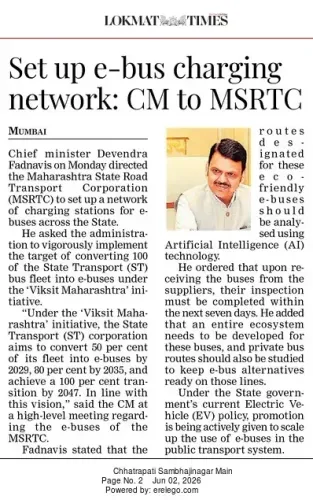
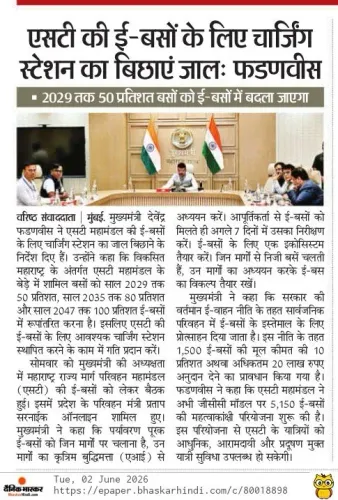
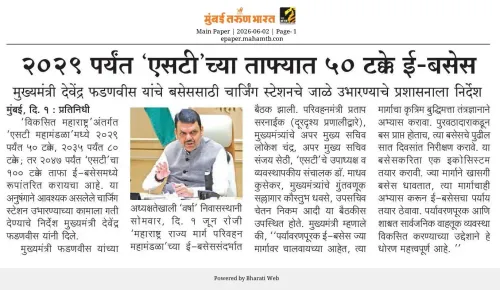
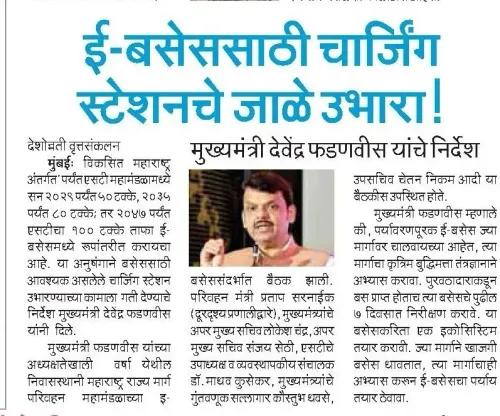
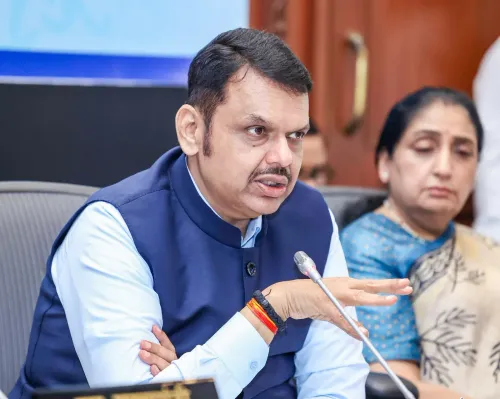
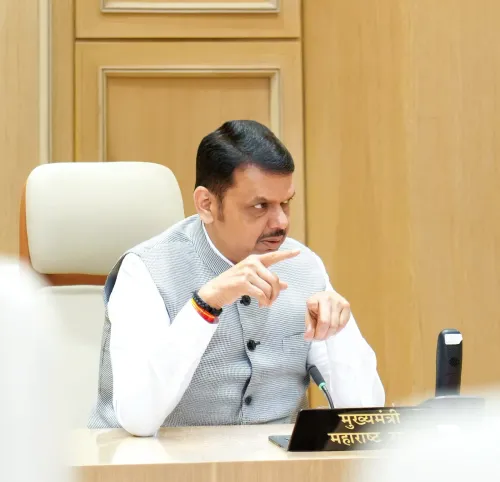
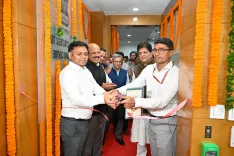
The Chief Minister's Office of Maharashtra announced on Monday, 1 June 2026 that Chief Minister Devendra Fadnavis chaired a high-level meeting in Mumbai on the electrification of the Maharashtra State Road Transport Corporation (MSRTC) fleet, setting a phased roadmap to convert 100% of ST buses to electric by 2047 under the Viksit Maharashtra (Developed Maharashtra) vision.
Context
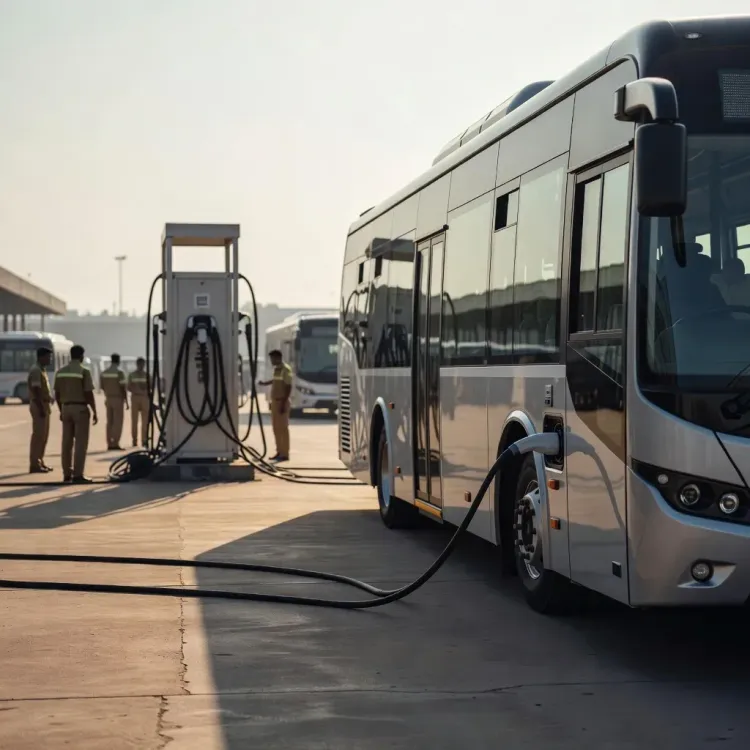
The CMO post states that under Viksit Maharashtra, the MSRTC fleet is to be 50% electric by 2029, 80% electric by 2035, and fully electric by 2047. CM Fadnavis directed officials to accelerate the construction of charging stations required to support the incoming buses. He also instructed that routes planned for eco-friendly e-buses be studied using Artificial Intelligence (AI) technology, and that routes currently served by private buses be mapped to prepare e-bus alternatives.
The post further notes that upon receiving buses from suppliers, each bus must undergo inspection within 7 days, and that a complete ecosystem must be built around the e-bus operations. Minister Pratap Sarnaik and senior officials were present at the meeting.
Policy Backdrop
Maharashtra notified its Electric Vehicle Policy in 2021, which provides capital subsidies to promote EV adoption in public transport. Under this policy, a subsidy of 10% of the bus cost or a maximum of ₹20 lakh — whichever is lower — is available for up to 1,500 e-buses. This sits alongside the central government's FAME-II scheme, launched in 2019, which offered financial support to state transport undertakings procuring electric buses.
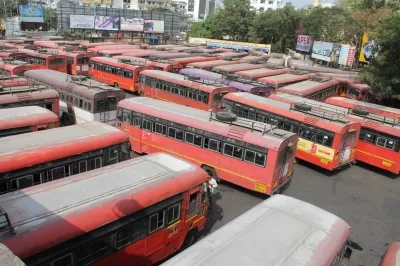
The MSRTC is currently executing an ambitious project to induct 5,150 e-buses under the Gross Cost Contract (GCC) model, wherein a private operator runs the buses on behalf of the corporation, insulating MSRTC from operational risk while expanding its electric fleet.
Stakeholders and Impact
The transition stands to directly benefit millions of inter-city and rural commuters who depend on the MSRTC network — one of the largest state road transport undertakings in India. CM Fadnavis stated that the project will provide passengers with 'modern, comfortable, and pollution-free travel.' EV charging infrastructure providers and bus manufacturers are among the key private-sector stakeholders expected to participate in the rollout.
The AI-based route analysis directive signals an intent to optimise fleet deployment from the outset, potentially improving load factors and reducing operating costs on high-traffic corridors currently dominated by private operators.
What's Next
The immediate priority, as directed by CM Fadnavis, is speeding up the commissioning of charging stations across MSRTC routes. The first major milestone will be the 2029 target of a 50% electric fleet, which will test whether procurement, infrastructure, and ecosystem-building can keep pace with the stated ambition. Progress on the sanctioned 5,150-bus GCC project and the pace of charging network expansion will be the clearest early indicators of whether Maharashtra's phased decarbonisation plan is on track.
Point of View
The 2029 milestone — just three years away — will be the real stress test: charging infrastructure rollout in rural Maharashtra has historically lagged urban centres, and that gap could determine whether the targets remain credible. The announcement also positions Fadnavis ahead of any rival state that has not yet articulated a comparable long-horizon EV transition plan for its road transport corporation.
NationPress
15 Oct 2026
Frequently Asked Questions
What is the MSRTC e-bus target set by CM Fadnavis?
CM Devendra Fadnavis has set a target to convert 50% of the MSRTC fleet to electric buses by 2029, 80% by 2035, and 100% by 2047 under the Viksit Maharashtra vision.
How many e-buses is MSRTC currently procuring?
MSRTC is currently executing a project to induct 5,150 e-buses under the Gross Cost Contract (GCC) model, where a private operator runs the buses on the corporation's behalf.
What subsidy does Maharashtra offer for electric buses?
Under Maharashtra's Electric Vehicle Policy, a subsidy of 10% of the bus cost or a maximum of ₹20 lakh — whichever is lower — is available for up to 1,500 e-buses.
What is the GCC model for MSRTC e-buses?
The Gross Cost Contract (GCC) model is a procurement arrangement in which a private operator runs the e-buses on MSRTC's behalf, reducing operational and financial risk for the state corporation.
What instructions did CM Fadnavis give for the e-bus rollout?
Fadnavis directed officials to use AI technology for route analysis, inspect each new bus within 7 days of delivery, accelerate charging-station construction, and study private-bus routes to prepare e-bus alternatives.