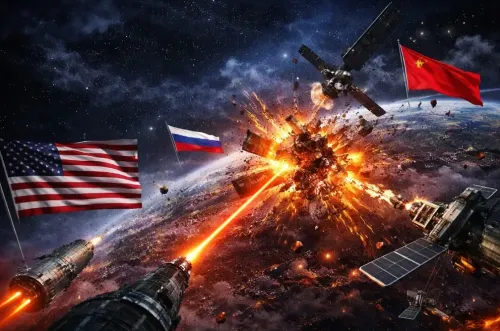
Space Force nominee warns China's space warfare pace is 'breathtakingly fast'
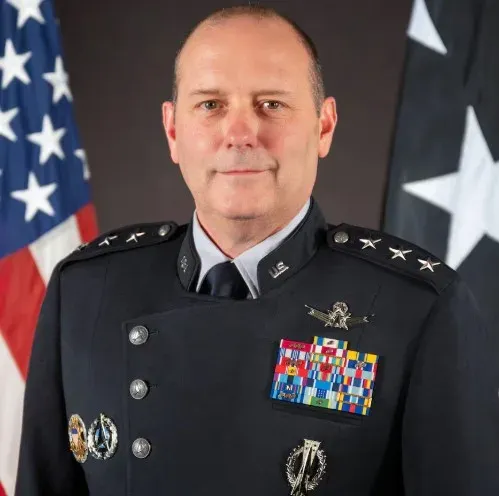
Synopsis
Trump's Space Force nominee Lt Gen Douglas Schiess told the Senate Armed Services Committee that China has built a 'kill chain' capable of tracking US carrier strike groups and bombers at unprecedented ranges — and is doing so at a pace that alarms the Pentagon. With a $71.1 billion budget on the table and space formally declared a warfighting domain, the confirmation hearing signals a fundamental shift in how Washington views orbital security.
Key Takeaways
Lt Gen Douglas Schiess , President Trump 's nominee to lead the US Space Force , testified before the Senate Armed Services Committee on 17 July .
China has conducted anti-satellite tests, developed electronic jamming systems, and built a surveillance 'kill chain' targeting US carrier strike groups and bombers at greater ranges than ever before.
Committee Chairman Senator Roger Wicker warned that both China and Russia are investing heavily in weapons to disrupt US satellites, communications, and navigation systems.
Ranking Member Senator Jack Reed noted that Space Force assets were deployed — and targeted — during recent conflict involving Iran , calling space 'a warfighting domain.' Schiess defended the administration's proposed Space Force budget of $71.1 billion , with most of the increase earmarked for weapon systems, facilities, and training.
Any disruption to US space systems would affect civilian life including GPS , financial transactions, and missile warning systems, Schiess warned.
Lieutenant General Douglas Schiess, President Donald Trump's nominee to lead the US Space Force, told the Senate Armed Services Committee on 17 July that China is developing space warfare capabilities at a “breathtakingly fast” pace, warning that Beijing is actively building systems designed to threaten American satellites, communications, and military forces. The testimony came during Schiess's confirmation hearing, where he pledged to prepare the Space Force for an increasingly contested orbital environment.
China's Counter-Space Build-Up
“China’s threat is real,” Schiess told senators. “What they are doing with what I’ll call counter space and space superiority capabilities is breathtakingly fast.” He said Beijing had studied how the United States uses space to support military operations and was rapidly developing tools to neutralise those advantages.
Schiess detailed that China had conducted anti-satellite tests, expanded electronic warfare systems capable of jamming American space assets, and built a surveillance architecture that could track US carrier strike groups and bombers at far greater ranges than before. “They’ve built a kill chain to be able to see our carrier strike groups, our bombers at much farther pace, speed and distances,” he said, adding that the Space Force must develop capabilities “to deny, degrade that kill web to be able to protect the joint force.”
Senate Committee's Assessment
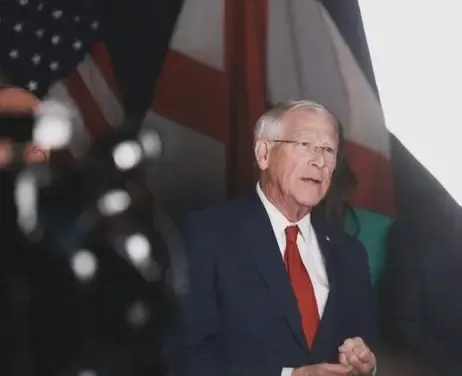
Committee Chairman Senator Roger Wicker said the United States could no longer treat space as a permissive environment, warning that both China and Russia were investing heavily in weapons designed to disrupt the satellites, communications, and navigation systems that underpin US military operations. He said the next chief of space operations would need to ensure the Space Force grew at a pace commensurate with the evolving threat.
Ranking Member Senator Jack Reed noted that recent conflict involving Iran had demonstrated that “space is no longer a support domain — it is a warfighting domain.” Reed pointed out that Space Force assets had been deployed early in that conflict and had themselves become targets, and he pressed Schiess on how he planned to prepare the service for future high-intensity conflicts.
AI, Integration, and the Human-in-the-Loop Debate
Schiess agreed that closer integration with the Air Force and other military branches would be essential, particularly in electronic warfare. He identified artificial intelligence as a critical tool for improving space domain awareness, while stressing the importance of human oversight: “we need to make sure that we have still have a guardian in the loop.”
Budget and Civilian Impact
The nominee defended the administration’s proposed Space Force budget of $71.1 billion, arguing the figure reflected the growing challenge posed by China and Russia. He said most of the increase would be directed toward weapon systems, facilities, and training rather than personnel. “I believe that the $71.1 billion that the President has asked for is exactly what we need,” Schiess said.
He also warned that any hostile disruption of US space systems would extend far beyond the battlefield, affecting GPS, satellite communications, missile warning systems, financial transactions, and everyday civilian services that Americans rely on. The US Space Force was established in December 2019 as the first new branch of the US armed forces since the Air Force was created in 1947. It is responsible for organising, training, and equipping forces to protect American interests in space and to deliver space-based capabilities to the joint force.
Point of View
Framed as a China-and-Russia counter, will face scrutiny over whether Space Force acquisition cycles can match the pace of Chinese development that Schiess himself described as 'breathtakingly fast.' The invocation of civilian GPS and financial systems as collateral risk is also a deliberate political signal — it expands the constituency for space defence spending well beyond the Pentagon. What the hearing did not resolve is whether deeper Air Force integration, which Schiess endorsed, will accelerate capability or reproduce the inter-service friction that slowed US space investment in the first place.
NationPress
15 Oct 2026
Frequently Asked Questions
Who is Douglas Schiess and what position has he been nominated for?
Lieutenant General Douglas Schiess is President Donald Trump's nominee to serve as the next chief of the US Space Force. He testified before the Senate Armed Services Committee on 17 July as part of his confirmation process.
What specific threats did Schiess identify from China?
Schiess said China has conducted anti-satellite tests, developed electronic warfare systems capable of jamming US space assets, and built a surveillance architecture — which he called a 'kill chain' — capable of tracking US carrier strike groups and bombers at far greater ranges than before. He described the pace of Chinese development as 'breathtakingly fast.'
What is the proposed US Space Force budget and what will it fund?
The administration has proposed a Space Force budget of $71.1 billion. Schiess told lawmakers that most of the increase would go toward weapon systems, facilities, and training rather than personnel, reflecting the growing challenge from China and Russia.
Why did Senator Jack Reed call space a 'warfighting domain'?
Senator Reed made the remark in reference to recent conflict involving Iran, during which Space Force assets were deployed early and themselves became targets. He argued this demonstrated that space had moved beyond its traditional role as a support domain.
How would an attack on US satellites affect ordinary Americans?
Schiess warned that hostile action against US space systems would disrupt GPS navigation, satellite communications, missile warning systems, and even financial transactions — services that millions of Americans rely on daily, not just the military.