US Lawmakers Raise Alarm Over Intensifying Space and Nuclear Threats
Synopsis
As global tensions rise, US lawmakers and military leaders are sounding the alarm over increasing threats from China and Russia, emphasizing the critical role of space in future conflicts. This urgent hearing reveals a call for modernization of US strategic capabilities amidst a rapidly evolving geopolitical landscape.
Key Takeaways
Rising threats from China and Russia are reshaping the strategic landscape.
Space is becoming a critical battleground in future conflicts.
The US must upgrade its strategic capabilities to counter adversaries.
Orbital debris is a growing concern with no current solution for removal.
Regulatory frameworks for nuclear forces between the US and Russia are absent, increasing risks.
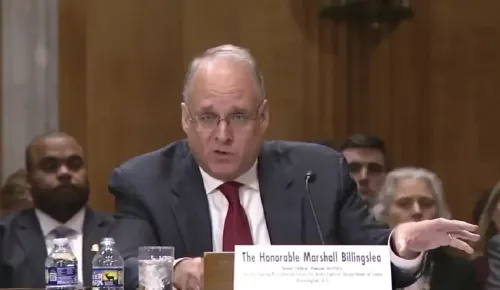
Washington, March 27 (NationPress) – US lawmakers and military leaders have expressed concerns that escalating threats from China, Russia, and other adversaries are swiftly altering the strategic environment, with space becoming a critical battleground in potential future conflicts.
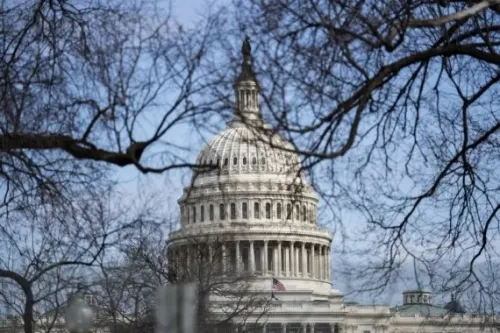
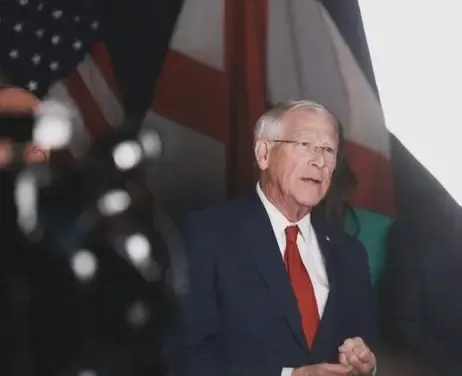
During a Senate Armed Services Committee session, Senator Roger Wicker emphasized the necessity for the United States to “fundamentally enhance our strategic capabilities” in response to advancements made by its rivals. He pointed out that both Russia and China have made substantial progress in their nuclear and space initiatives, while North Korea continues to expand its missile inventory.
General Stephen Whiting, the commander of US Space Command, warned that adversaries are developing capabilities to “restrict our access to space,” noting a significant increase in China’s satellite fleet.
“China’s presence in orbit has surged dramatically, with over 1300 active satellites now in operation, including more than 510 dedicated to intelligence, surveillance, and reconnaissance,” he informed the lawmakers.
He reiterated that Beijing is integrating space-enabled systems within its military forces, making them “more lethal, precise, and far-reaching,” while also deploying weapons aimed at disabling US satellites.
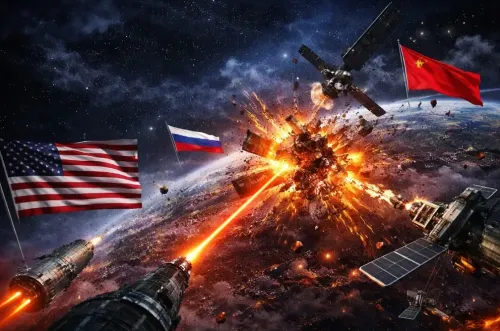
Russia, on the other hand, continues to pursue disruptive space technologies, including the potential deployment of a nuclear anti-satellite weapon. Whiting cautioned that such a system would be “indiscriminate” and could jeopardize all satellites in low Earth orbit.
“If detonated in orbit, [it] would immediately threaten the space capabilities of every nation,” he declared.
Admiral Richard Carroll, head of US Strategic Command, described the overarching challenge as the need to deter “multiple nuclear competitors simultaneously” amidst rapid technological evolution. He highlighted cyber threats, counter-space capabilities, and advanced missile systems as critical risk areas.
“Our nation’s nuclear forces are safe, secure, effective, and credible,” he affirmed, but emphasized the importance of ongoing modernization of the nuclear triad, which includes new bombers, submarines, and intercontinental missiles.
Senator Jack Reed cautioned that, for the first time in decades, there is no formal framework in place to regulate nuclear forces between the US and Russia, raising the likelihood of an unregulated arms race.
Reed indicated that China’s rapid expansion could position it at “rough parity” with the US and Russia by 2030, complicating deterrence and alliance dynamics.
This hearing highlighted the profound reliance of US military operations on space. Whiting stated that the entire joint force operates under the assumption of
uninterrupted access to space-based systems, which include navigation, communications, and missile warning systems.
“The Joint Force’s capability to engage in combat would be immediately and materially affected” if those systems were compromised, he noted.
He also mentioned that in any future conflict, “the initial engagements would take place in cyber and space,” underscoring the vulnerability of vital infrastructure.
Lawmakers also drew attention to the escalating issue of orbital debris, referencing previous anti-satellite tests conducted by China and Russia that generated thousands of fragments remaining in orbit. Currently, the US lacks the ability to remove such debris and must depend on tracking and avoidance strategies.
Point of View
This situation underscores the imperative for the United States to reassess its strategic posture in response to evolving global threats. The focus on space as a vital domain in potential conflicts reflects a significant shift in military strategy that must be addressed with urgency and precision.
NationPress
20 Sept 2026
Frequently Asked Questions
What are the main concerns raised by US lawmakers regarding space and nuclear threats?
US lawmakers are concerned about the rapid advancements in space and nuclear capabilities by adversaries like China and Russia, emphasizing the need for the US to modernize its strategic capabilities to address these threats.
How many active satellites does China currently operate?
China operates over 1300 active satellites, including more than 510 dedicated to intelligence, surveillance, and reconnaissance.
What is the significance of the lack of regulation between the US and Russia on nuclear forces?
The absence of a formal regulatory framework between the US and Russia increases the risk of an uncontrolled arms race, heightening global security concerns.
What did General Stephen Whiting warn about China's capabilities?
General Whiting warned that China is developing capabilities that could restrict US access to space, thereby posing a significant threat to US military operations.
What are lawmakers doing about the issue of orbital debris?
Lawmakers highlighted the growing problem of orbital debris caused by anti-satellite tests and acknowledged the US's current inability to remove such debris, relying instead on tracking and avoidance.