US Senate Hearing Highlights Urgent Nuclear Threats from China and Russia
Synopsis
In a crucial Senate hearing, US lawmakers express growing concerns over the simultaneous nuclear threats posed by China and Russia, urging for rapid modernization of the nuclear arsenal to maintain strategic superiority.
Key Takeaways
Simultaneous threats from China and Russia highlighted.
Urgent modernization of US nuclear arsenal is being pushed.
Lawmakers stress the need to deter two nuclear adversaries .
Investments in infrastructure and capabilities are essential for national security .
Environmental legacy sites are also being addressed.
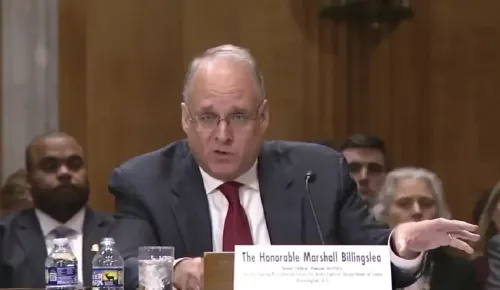
Washington, April 21 (NationPress) The United States finds itself in a “more perilous epoch”, characterized by concurrent nuclear rivalry with both China and Russia, as highlighted by lawmakers and defense officials during a recent Senate hearing. The current administration is advocating for an expedited update of its nuclear arsenal.
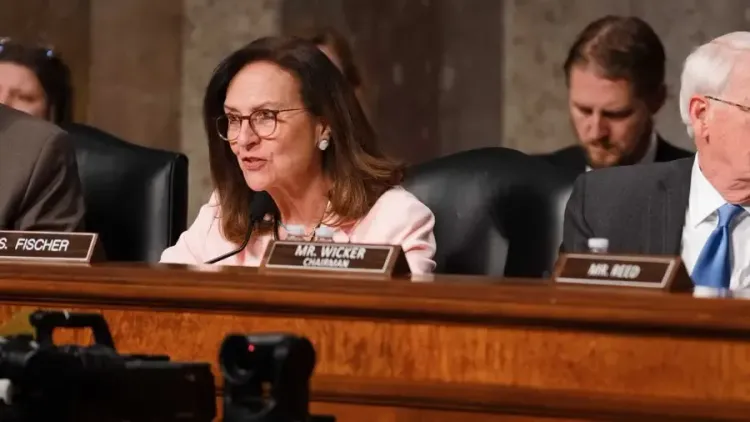
During the Congressional session, Senator Deb Fischer emphasized that the US is now confronted with “the task of deterring two nuclear threats at once”, pointing out that both nations are actively enhancing and modernizing their nuclear capabilities.
Robert Kadlec described the situation as “not a theoretical future issue but a present crisis”, characterizing China’s nuclear expansion as “staggering and unclear”, while cautioning that Russia is integrating new nuclear strategies.
Officials from the Department of Energy and the Department of Defense presented a comprehensive initiative aimed at modernizing outdated systems and infrastructure, some of which trace back to the Cold War.
David Beck informed lawmakers that “Russia and China are involved in an unparalleled nuclear expansion that is swiftly diminishing America's strategic edge”, stressing that the modernization of the nuclear arsenal is of utmost importance.
He noted that the US is “boosting production of plutonium pits, uranium components, high explosives, and other essential materials”, while revitalizing the “aging infrastructure that supports our entire operation”.
Beck acknowledged the magnitude of the undertaking, stating that the US is facing “a significant challenge” due to years of underinvestment in nuclear facilities.
Senator Angus King raised alarms regarding China's swift military advancements, asserting that recent intelligence updates reveal developments that must be taken “extremely seriously”.
At the Pentagon, officials stressed the urgency of deploying next-generation capabilities. Dale White indicated that essential projects, including the Sentinel intercontinental ballistic missile and B-21 bomber, are prioritized for “timely delivery and execution”.
“Our mission operates under three guiding principles… to provide capabilities to the warfighter at the speed of relevance,” he stated.
Military leaders cautioned that current forces are experiencing strain as modernization efforts proceed. A representative from the Air Force Global Strike Command mentioned that operations are conducted “under increasing pressure” with “narrow margins”.
Naval officials underscored simultaneous endeavors to maintain sea-based deterrence. William Houston remarked that nuclear-powered submarines and carriers remain pivotal to “maritime supremacy”, emphasizing the need for ongoing investment in personnel and infrastructure.
In his final address to the panel, Johnny Wolfe Jr. characterized sea-based nuclear forces as “the foundation of our national security” and cautioned that sustaining industrial capacity will be essential for future readiness.
Beyond weaponry, the Department of Energy noted initiatives to tackle environmental risks from past actions. Timothy Walsh indicated that the government is striving to “remediate environmental legacy sites and safeguard our communities”, while transforming these areas into centers for energy and innovation.
The hearing also revealed the substantial investment needed for these upgrades. Kadlec remarked that nuclear modernization constitutes approximately 5.5 percent of the defense budget, emphasizing that “the cost of failure… is a scenario where the risk of catastrophic miscalculation is unacceptably high”.
Lawmakers recognized the financial implications of simultaneously upgrading all three components of the nuclear triad, but insisted it is unavoidable. King described it as a “pig in the budgetary python”, symbolizing the concentration of expenditure over a brief period.
Point of View
Underscoring the necessity for the United States to enhance its nuclear capabilities in the face of growing threats from China and Russia. The urgency expressed by lawmakers reflects a national priority that demands immediate attention and action.
NationPress
19 Sept 2026
Frequently Asked Questions
What was the main concern raised during the Senate hearing?
The main concern was the simultaneous nuclear competition with China and Russia, which lawmakers described as a pressing crisis.
How is the US addressing its nuclear arsenal?
The US is pushing for accelerated modernization of its nuclear arsenal, focusing on upgrading aging weapons systems and infrastructure.
What did Senator Deb Fischer emphasize?
Senator Deb Fischer emphasized the challenge of deterring two nuclear adversaries at once, highlighting the need for immediate action.
What are the implications of underinvestment in nuclear infrastructure?
Underinvestment has led to significant challenges in modernizing the nuclear arsenal, necessitating a heavy lift to rebuild capabilities.
Why is nuclear modernization considered a top priority?
Nuclear modernization is viewed as critical to maintaining America's strategic advantage against rising threats from adversaries.