Is the US Senate Raising Concerns Over China’s Nuclear Expansion and AI Risks?
Synopsis
As tensions escalate in the Indo-Pacific, US Senators are sounding alarms over China's rapid nuclear development and AI integration in military strategies. What are the implications for global security and regional powers like India? Discover the insights from leading experts and the potential shifts in the strategic landscape.
Key Takeaways
China is rapidly expanding its nuclear arsenal.
AI integration in military strategies raises escalation risks.
Implications for Indo-Pacific security are profound.
Increased dialogue is necessary to avoid miscalculations.
Regional powers like India must reassess their strategies.
Washington, Dec 11 (NationPress) Leading American Senators received alarming alerts regarding China's rapid nuclear growth and its advancements in AI-driven command frameworks. Witnesses informed lawmakers that Beijing is advancing at an astonishing speed that could significantly alter the strategic dynamics throughout the Indo-Pacific.
This testimony holds considerable ramifications for Asian security, including for India, as China develops capabilities that extend well beyond regional limits.
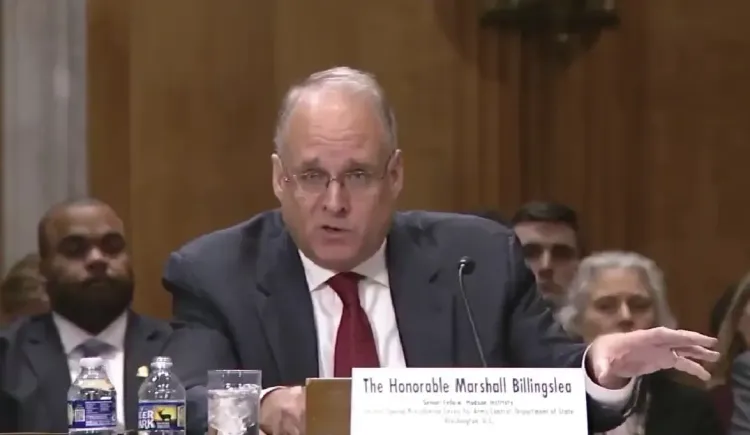
Marshall Billingslea, former Special Presidential Envoy for Arms Control, told the Senate Foreign Relations Committee on Wednesday (local time) that China is on track to have as many operational nuclear weapons as the United States by 2035, or possibly even sooner.
"They are advancing more rapidly than we had previously informed... It is quite concerning," he stated.
Billingslea highlighted that China's expansion is not confined to long-range systems. "China has ensured that nearly all of its missile systems, including intermediate-range ballistic and cruise missiles, are dual-capable," he remarked, pointing out that the People's Liberation Army has constructed thousands of these systems. When asked if China aims for parity or superiority, he responded: "At the very least, they are pursuing parity. Personally, I believe they intend to outpace us."
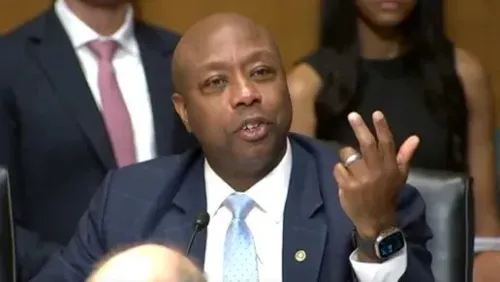
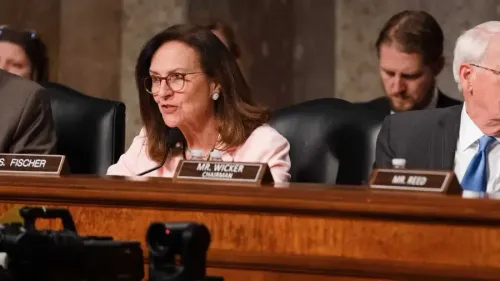
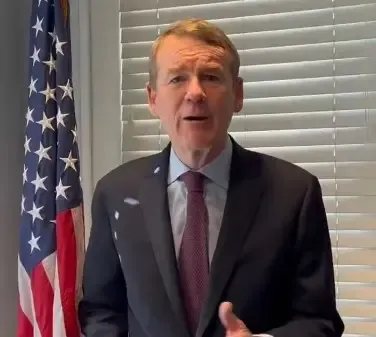
Lawmakers inquired about the emerging connection between artificial intelligence and nuclear escalation risks. Senator Dave McCormick emphasized AI's rising role in enhanced intelligence, surveillance, and reconnaissance, warning that it could have both positive and negative effects on global stability.
Billingslea warned that China's transition to rapid launch decisions is particularly hazardous in an AI-empowered context. "China is shifting to a launch-on-warning stance, and the potential for miscalculation with that approach creates a hair-trigger environment," he explained. He cautioned that if AI is "not completely controlled by humans, it could lead to significant issues."
Rose Gottemoeller, former Undersecretary of State for Arms Control, stated that Washington and Beijing have only taken initial steps. She noted that President Biden and President Xi Jinping agreed that "there should always be a person in the loop for nuclear command and control decisions," a formulation she deemed an important step forward. She stressed that future diplomacy must elaborate on what that entails, as it is technically complex.
Both witnesses conveyed that China has resisted ongoing nuclear discussions, even as it modernizes at an unprecedented rate. Gottemoeller remarked that the Chinese have been "very active in multilateral forums... but not on a bilateral front." Nonetheless, she pointed out signs of movement, mentioning Xi Jinping's agreement to meet President Trump twice in 2026, stating, "This presents new opportunities for engagement, and the door appears to be slightly opening."
For India and other Indo-Pacific nations, senators indicated that the implications are considerable. China's nuclear and missile trajectory, coupled with AI integration, puts new stress on regional deterrence frameworks, crisis management mechanisms, and missile defense planning.
While India was not specified in the testimony, experts assert that any significant alteration in China's nuclear stance inevitably impacts the strategic landscape from the Himalayas to the Western Pacific, particularly as Beijing develops capabilities aimed at both continental and maritime domains.
The Committee also evaluated how Beijing's modernization interfaces with its alliances with Russia and North Korea. Billingslea characterized Russia-China nuclear collaboration as "concerning," adding that Moscow assists Beijing in "acquiring the fissile material essential for its expansion." Senators cautioned that such alliances amplify Chinese capabilities in ways that will resonate across Asia.
Significantly, China already possesses the largest stockpile of ground-launched ballistic and cruise missiles worldwide, many of which have ranges pertinent to South Asia and the Indian Ocean. Its swift expansion of missile silos, hypersonic glide vehicle testing, and reported fractional orbital systems development place it at the center of a new strategic competition influencing Indo-Pacific security discussions.
The United States has consistently maintained that China's reluctance to engage meaningfully on nuclear transparency violates its obligations under the Nuclear Non-Proliferation Treaty, which requires nuclear-armed states to "pursue negotiations in good faith."
For India, which adheres to a declared no-first-use policy outside the NPT framework, China's trajectory—combined with Beijing's advancements in space, cyber, and AI warfare—highlights why the Indo-Pacific is pivotal to the emerging global nuclear order.
Point of View
And the need for dialogue and transparent negotiations is more pressing than ever. The world is watching closely.
NationPress
24 Sept 2026
Frequently Asked Questions
What is the current status of China's nuclear capabilities?
China is reportedly on pace to reach operational nuclear weapon numbers comparable to the United States by 2035, with rapid advancements in missile technology.
How is AI influencing military strategies?
AI is enhancing surveillance, threat detection, and decision-making processes, but it also raises concerns about rapid launch decisions and potential miscalculations.
What does this mean for Indo-Pacific security?
China's nuclear developments and AI integration pose new challenges to regional deterrence and crisis management, impacting strategic balances in the Indo-Pacific.
What actions are being taken by the US government?
US Senators are urging for greater transparency and engagement with China on nuclear issues, emphasizing the need for sustained diplomatic efforts.
How does this impact India?
Any shifts in China's nuclear posture are likely to have significant implications for India's security framework and its strategic considerations in the region.