US Senate flags China-led 'axis of aggressors' in $1.5 trillion defence debate
Synopsis
At a Senate hearing on America's largest-ever proposed defence budget, top US officials branded China the head of an 'axis of aggressors', warned of Beijing's AI military buildup, and flagged crippling supply chain dependence. For India, Washington's unambiguous threat framing is both a strategic validation and a signal to deepen the partnership.
Key Takeaways
Senator Roger Wicker declared the US faces "the most dangerous security environment since World War II" at the 1 May Senate Armed Services Committee hearing.
Secretary Pete Hegseth defended a proposed $1.5 trillion defence budget centred on countering China across multiple theatres.
Joint Chiefs Chairman Dan Caine warned China is aggressively integrating AI into command, intelligence, and combat operations.
China, Russia, Iran, and North Korea were described as an "axis of aggressors" united against US and allied interests.
US supply chain dependence on China was flagged as a critical strategic vulnerability by both lawmakers and Pentagon leadership.
The hearing's framing reinforces US-India strategic convergence in the Indo-Pacific.
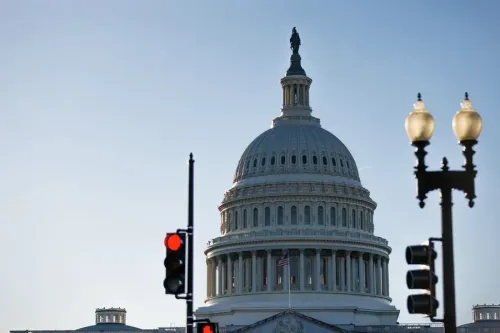
A high-stakes US Senate Armed Services Committee hearing on 1 May placed China's military rise at the centre of America's defence strategy, with senior officials warning of the most dangerous global security environment since World War II. The debate over a proposed $1.5 trillion defence budget carries direct implications for India's strategic posture in the Indo-Pacific.
Wicker's Warning: An 'Axis of Aggressors'
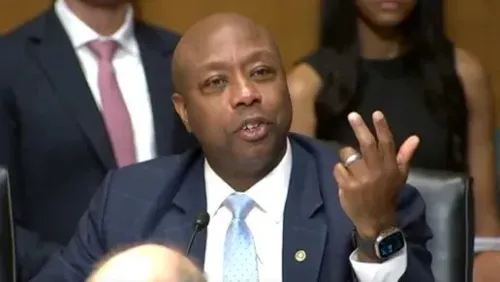
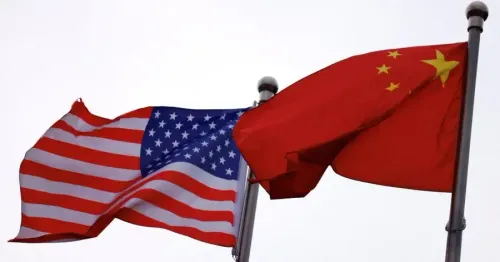
Committee Chairman Senator Roger Wicker opened proceedings with a stark assessment, declaring the United States is locked in its most perilous security moment in eight decades. He described China, Russia, Iran, and North Korea as an "axis of aggressors" united around opposing American interests and those of democratic allies. "We're locked in a competition with Xi Jinping and the Chinese Communist Party," Wicker said, warning the contest would determine whether the 21st century remains "American-led" or is shaped by "authoritarian, autocratic regimes."
Pentagon Defends the $1.5 Trillion Budget
Secretary of Defence Pete Hegseth defended the proposed $1.5 trillion defence budget, describing it as essential to addressing a "complex threat environment across multiple theatres," with China identified as the core challenge. "We're rebuilding a military that instils nothing less than unrelenting fear in our adversaries," Hegseth said, citing major investments in drones, missile defence, and advanced technologies to counter peer competitors. Both senators and Pentagon leadership also flagged deep concern over US reliance on China for critical materials and technologies, with Hegseth stressing the need to "not be dependent on China on anything that's critical to our supply chain."
China's AI Military Integration Raises Alarm
Joint Chiefs Chairman Dan Caine raised alarm over Beijing's aggressive integration of artificial intelligence across its armed forces. "They are attempting to integrate AI across the range of their warfighting functions," Caine said, citing applications in command, intelligence, and combat operations. He cautioned that any erosion of US technological superiority "could put us at risk." Caine also noted that Chinese military analysts are closely monitoring US operations globally, including recent operations involving Iran. "I suspect that my counterpart in China is watching very closely," he said.
Implications for India's Strategic Calculus
For India, the hearing's framing of China as America's primary long-term adversary reinforces the deepening strategic convergence between New Delhi and Washington in the Indo-Pacific. As the US doubles down on countering Beijing — diplomatically, technologically, and militarily — India's role as a key partner in that architecture is likely to grow. The alignment of threat perceptions between the two democracies could accelerate defence technology transfers, joint exercises, and supply chain cooperation in the months ahead. This comes amid broader bipartisan consensus in Washington that supply chain vulnerabilities represent a strategic liability as acute as any military gap.
Point of View
But the more consequential signal from this hearing is doctrinal — the US is institutionalising China not merely as a competitor but as the organising principle of its entire defence architecture. That shift has compounding effects: it accelerates decoupling pressure on allies, reshapes procurement priorities, and raises the stakes of strategic ambiguity in the Indo-Pacific. For India, which has long prized non-alignment, the cost of sitting on the fence is rising. New Delhi must navigate this carefully — deepening defence ties with Washington without being drawn into an alliance framework that constrains its own foreign policy latitude with Moscow and Tehran.
NationPress
15 Sept 2026
Frequently Asked Questions
What was the key outcome of the US Senate defence hearing on 1 May 2025?
The hearing, held before the Senate Armed Services Committee, centred on a proposed $1.5 trillion US defence budget and identified China as the primary long-term security threat. Officials described China, Russia, Iran, and North Korea as an 'axis of aggressors' united against American and allied interests.
Why did US officials warn about China's use of AI in its military?
Joint Chiefs Chairman Dan Caine stated that China is aggressively integrating artificial intelligence across its warfighting functions, including command, intelligence, and combat operations. He warned that any erosion of US technological superiority in this domain could put America at strategic risk.
What is the proposed $1.5 trillion US defence budget intended to address?
Secretary Pete Hegseth described the budget as designed to counter a complex threat environment across multiple theatres, with China at its core. It prioritises investments in drones, missile defence, and advanced technologies to counter peer competitors.
How does the US Senate hearing affect India's strategic position?
Washington's explicit framing of China as its primary adversary reinforces the strategic convergence between the US and India in the Indo-Pacific. It is likely to accelerate defence technology transfers, joint exercises, and supply chain cooperation between the two countries.
What supply chain concerns were raised at the hearing?
Both senators and Pentagon officials flagged US dependence on China for critical materials and technologies as a major vulnerability. Secretary Hegseth stressed the need to eliminate reliance on China for anything critical to the US supply chain.