China fuelling new space arms race, Pentagon warns Congress
Synopsis
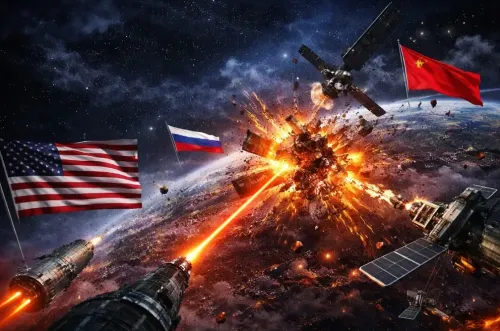
Senior Pentagon officials told Congress that China is driving a new space arms race — and the US is not yet positioned to win it. A proposed USD 71.1 billion Space Force budget, a 27% personnel surge, and warnings about Taiwan-linked conflict scenarios signal that the battle for orbital dominance has moved from strategic theory to urgent policy.
Key Takeaways
Pentagon officials warned US Congress on 22 May that China's space warfare advances pose a critical national security threat.
The proposed FY2027 budget allocates USD 71.1 billion to the Space Force — one of the largest increases since its founding in 2019 .
Space Force Chief General B.
Chance Saltzman called the situation a 'generational shift' in military space competition.
The Space Force plans a 27 per cent increase in personnel strength, along with new squadrons and acquisition offices.
Lawmakers linked future space conflict scenarios directly to Taiwan and Indo-Pacific stability.
Launch facilities at Cape Canaveral and Vandenberg are reportedly nearing capacity under growing demand.
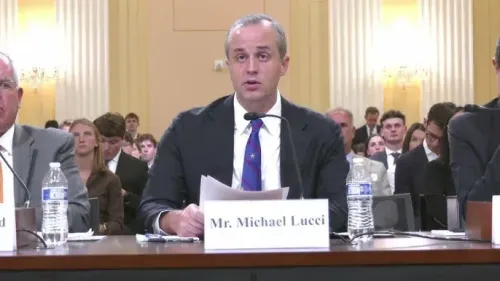
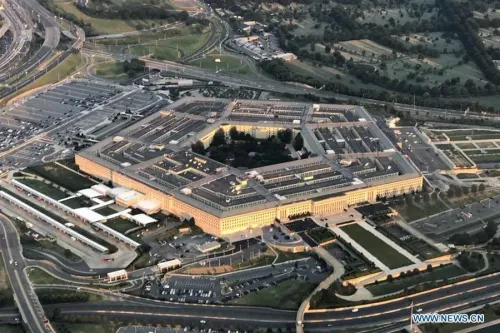
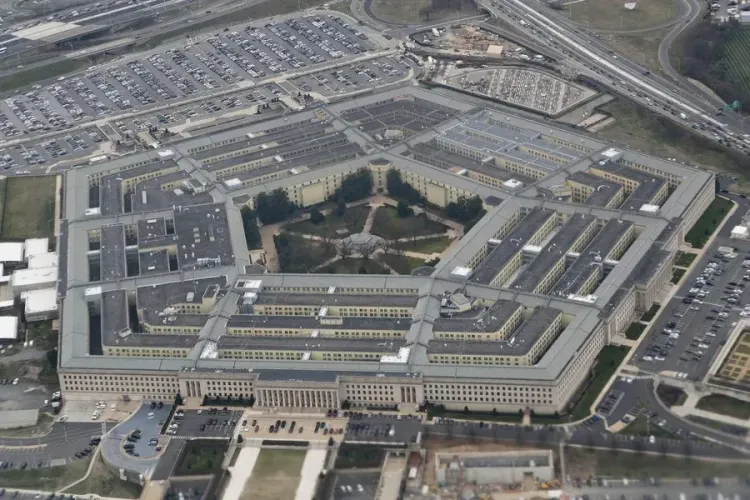
Senior Pentagon officials warned US lawmakers this week that China's accelerating advances in space warfare are forcing the United States to urgently expand its military space capabilities, cautioning that dominance in orbit will determine the outcome of future conflicts. The warnings were delivered before the House and Senate Armed Services Committees in Washington on 22 May.
A Generational Shift in Space Competition
Space Force Chief General B. Chance Saltzman described the current environment as a 'generational shift' in military space competition. 'Our adversaries are constantly working to take away our military and economic advantages in the space domain,' Saltzman told lawmakers. He argued that increases in the Space Force's budget and personnel strength are a 'national security imperative.'
This comes amid broader concerns within the US defence establishment that China's military modernisation — spanning space systems, satellite communications, and missile tracking — is outpacing America's capacity to respond incrementally.
Record FY2027 Budget and 27% Personnel Surge
The proposed FY2027 defence budget includes a landmark USD 71.1 billion allocation for the Space Force, one of the largest increases since the service was established in 2019. The funding is earmarked for new missile warning systems, resilient satellite networks, space-based targeting systems, and counter-space capabilities.
The Space Force also plans to increase its personnel strength by 27 per cent, creating new squadrons and acquisition offices to manage rapidly expanding space missions. Officials said the service is developing satellite constellations designed to survive attacks during active conflict.
China, Taiwan, and the Indo-Pacific Dimension
Air Force Secretary Troy Meink echoed Saltzman's concerns, stating that China's pace of modernisation was compelling the Pentagon to accelerate innovation across all domains. 'China is modernising at a very rapid pace,' Meink said. 'To stay ahead, we must innovate faster in everything we do.'
Lawmakers from both parties repeatedly linked future space warfare scenarios to potential conflict over Taiwan and broader Indo-Pacific stability. General Kenneth Wilsbach drew on the war in Ukraine as a live-fire lesson: 'You have to have space superiority in the 21st century if you hope to achieve air superiority,' he said.
Commercial Technology and Launch Capacity Pressures
The hearings also underscored the Pentagon's growing reliance on commercial space technology. Saltzman highlighted Tactical Surveillance, Reconnaissance and Tracking programmes that integrate commercial satellite imagery and private-sector capabilities into active military missions worldwide.
Officials warned that existing launch infrastructure at Cape Canaveral and Vandenberg could soon face capacity constraints as demand from both military and commercial operators continues to climb.
What Comes Next
Congressional approval of the proposed FY2027 Space Force budget will be a key near-term milestone. If passed, the funding would mark a decisive escalation in the US-China space competition — one that analysts say is increasingly difficult to decouple from terrestrial conflict scenarios in the Indo-Pacific.
Point of View
Not a supporting capability. What the hearings revealed, and mainstream coverage largely glossed over, is the explicit Taiwan framing: lawmakers and generals are no longer treating space warfare as abstract. The Ukraine parallel is instructive but imperfect — Ukraine has no peer space adversary, China does. If Congress approves the full allocation, it will accelerate a space arms dynamic that neither side has a diplomatic framework to manage, raising the risk of miscalculation well before any kinetic conflict begins.
NationPress
15 Sept 2026
Frequently Asked Questions
Why is the Pentagon warning about China in space?
Pentagon officials told Congress on 22 May that China is modernising its space systems, satellite communications, and missile tracking capabilities at a rapid pace, threatening US military and economic advantages in orbit. They argue that without urgent investment, the US risks losing space superiority — which they say is essential for air and battlefield dominance in any future conflict.
How much funding is the US Space Force seeking for FY2027?
The proposed FY2027 budget includes a USD 71.1 billion allocation for the Space Force, one of the largest increases since the service was established in 2019. The funds are intended for missile warning systems, resilient satellite networks, space-based targeting, and counter-space capabilities.
What did General Saltzman say about the space competition with China?
Space Force Chief General B. Chance Saltzman described the current moment as a 'generational shift' in military space competition, warning that adversaries are 'constantly working to take away' US military and economic advantages in the space domain. He called budget and personnel increases a 'national security imperative.'
How does the Space Force plan to expand its capabilities?
The Space Force plans to increase personnel strength by 27 per cent and create new squadrons and acquisition offices. It is also developing more resilient satellite constellations designed to survive attacks, and is integrating commercial satellite imagery through Tactical Surveillance, Reconnaissance and Tracking programmes.
What is the connection between space warfare and a potential Taiwan conflict?
Lawmakers from both parties explicitly linked future space warfare scenarios to potential conflict over Taiwan and Indo-Pacific stability during the congressional hearings. General Kenneth Wilsbach also cited the war in Ukraine as evidence that space superiority is now a prerequisite for achieving air superiority in 21st-century conflict.