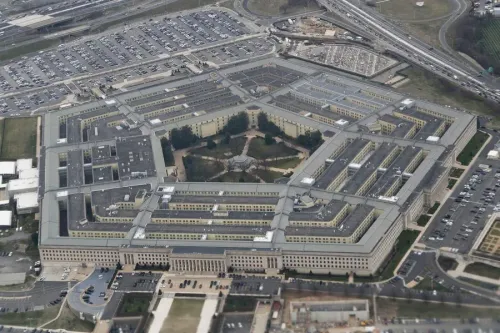
Pentagon AI overhaul: US military targets 6 critical tech areas amid China race
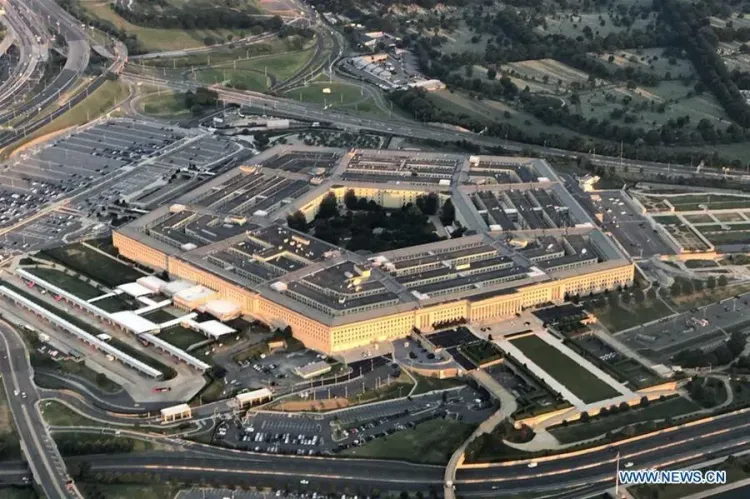
Synopsis
The Pentagon isn't just buying new weapons — it's rewiring how it builds them. By cutting critical tech priorities from 14 to six and deploying AI that struck 13,000 targets in 38 days, US defence chiefs are signalling a fundamental shift: mass, speed, and software now matter more than expensive precision platforms. China's $300 billion AI infrastructure bet is the explicit threat driving every decision.
Key Takeaways
The Pentagon narrowed its critical technology focus areas from 14 to six , including applied AI, quantum systems, and scaled hypersonics.
AI-enabled systems struck more than 13,000 targets in 38 days during Operation Epic Fury , according to Pentagon officials.
China is reportedly investing 'upwards of $300 billion ' in energy and compute infrastructure for sovereign AI development.
The Pentagon's 'Drone Dominance' initiative saw 23 of 25 finalists come from new entrants or start-ups.
The Pentagon signed contracts with five new companies for low-cost munitions under fixed-price — not cost-plus — arrangements.
Lawmakers raised concerns over autonomous weapons oversight; officials maintained human decision-making remains central to use of force.
The Pentagon is aggressively restructuring its science and technology apparatus around artificial intelligence, autonomous systems, and low-cost weapons, as senior US Department of Defense officials warned lawmakers on 15 May that future battlefields will be defined by speed, data dominance, and the mass deployment of affordable combat systems. The warning came at a House Armed Services subcommittee hearing on science, technology, and innovation posture.
Narrowing Focus to Six Critical Technologies
Emil Michael, Under Secretary of Defence for Research and Engineering, told lawmakers that the Pentagon had cut its list of 'critical technology areas' from 14 to six, sharpening focus on what he described as the technologies most likely to define future conflicts. Those six areas are: applied artificial intelligence, contested logistics technologies, quantum systems, battlefield information dominance, directed energy, and scaled hypersonics.
Michael also said the Pentagon was moving away from a fragmented innovation model. 'We're moving from a fragmented, siloed innovation ecosystem to a single, unified model designed to transition technology from the lab to the warfighter,' he said.
AI Already on the Battlefield
Cameron Stanley, Chief Data and Artificial Intelligence Officer at the Pentagon, told the subcommittee that AI-enabled systems had already seen extensive operational deployment during 'Operation Epic Fury', helping US forces strike 'more than 13,000 targets in 38 days.' 'What once took days now takes seconds,' Stanley said.
Stanley pointed to the Maven Smart System — an AI-enabled command-and-control platform — as a live example of battlefield AI already operating across combatant commands and operational theatres. He also warned that China was investing 'upwards of $300 billion in energy and compute infrastructure to develop sovereign AI', framing the global competition over AI infrastructure as an emerging arms race.
Drones, Cost Exchange, and the Ukraine Lesson
Lawmakers from both parties repeatedly referenced the Ukraine war as a proving ground for drones, electronic warfare, and autonomous systems. Owen West, Director of the Defense Innovation Unit, said the Pentagon was deliberately shifting away from expensive 'exquisite' weapons towards a mix that included cheaper, mass-produced systems.
'While we are winning every engagement, we are losing on the cost exchange,' West said. His Pentagon's new 'Drone Dominance' initiative is designed to accelerate deployment of low-cost autonomous systems using commercial technology and venture-backed start-ups. According to West, 23 of the 25 finalists in the programme were new entrants or start-ups.
Michael added that the Pentagon had recently signed contracts with five new companies to build low-cost munitions using fixed-price arrangements — a deliberate departure from traditional cost-plus contracts that have historically inflated procurement costs.
Oversight Concerns and Human Control
Several lawmakers raised concerns about autonomous weapons oversight and civilian harm mitigation as AI systems become more integrated into military targeting operations. Pentagon officials insisted that human decision-making remained central to the use of force, though they did not detail specific safeguards at the hearing.
The Bigger Picture: Indo-Pacific Competition
The hearing reflects growing bipartisan concern in Washington that the US risks losing its technological edge as China rapidly expands investments in AI, autonomous weapons, and military-industrial capacity. US defence planners increasingly view AI, drones, cyber warfare, and autonomous systems as decisive technologies for future conflicts — particularly in the Indo-Pacific — drawing on battlefield lessons from Ukraine and the Middle East. The Pentagon's restructuring signals that the era of slow-cycle, high-cost defence procurement is under direct challenge.
Point of View
A structural vulnerability that China's mass-production doctrine is designed to exploit. Meanwhile, the claim that human decision-making remains 'central' to AI-enabled targeting was left unverified by any concrete oversight mechanism at the hearing. As AI accelerates the kill chain from days to seconds, that assurance will face increasing scrutiny from both allies and international law bodies.
NationPress
16 Sept 2026
Frequently Asked Questions
Why is the Pentagon restructuring its technology priorities?
The Pentagon is restructuring to sharpen focus and accelerate AI integration amid growing military competition with China. Officials cut critical technology areas from 14 to six — including applied AI, quantum systems, and hypersonics — to concentrate resources on what they believe will define future conflicts.
What is the Maven Smart System?
The Maven Smart System is an AI-enabled command-and-control platform already deployed across US combatant commands and operational theatres. Pentagon officials cited it as a live example of battlefield AI that has compressed decision timelines from days to seconds.
What is the Pentagon's 'Drone Dominance' initiative?
It is a Pentagon programme designed to accelerate deployment of low-cost autonomous systems using commercial technology and venture-backed start-ups. According to Defense Innovation Unit Director Owen West, 23 of the 25 finalists in the programme were new entrants or start-ups.
How much is China investing in AI for military purposes?
According to Pentagon Chief Data and AI Officer Cameron Stanley, China is investing 'upwards of $300 billion' in energy and compute infrastructure to develop sovereign AI. Officials described this as a defining element of an emerging global AI arms race.
What oversight exists for AI-enabled weapons systems?
Pentagon officials told lawmakers that human decision-making remains central to the use of force, even as AI systems are increasingly integrated into military targeting. However, specific oversight mechanisms were not detailed at the hearing, and several lawmakers pressed for greater clarity on civilian harm mitigation.