Pentagon Initiates Major Overhaul of Military IT Infrastructure

Synopsis
The Pentagon is launching a significant transformation of its IT systems to combat outdated networks and cybersecurity threats, which could jeopardize military readiness. With a focus on modernizing infrastructure and enhancing security, officials stress the urgent need for reform.
Key Takeaways
Pentagon seeks to modernize its IT infrastructure.
Focus on cybersecurity and workforce development .
Transitioning to a risk-based security model.
Updating legacy IT systems is critical.
Rapid technological advancement is essential for military readiness .
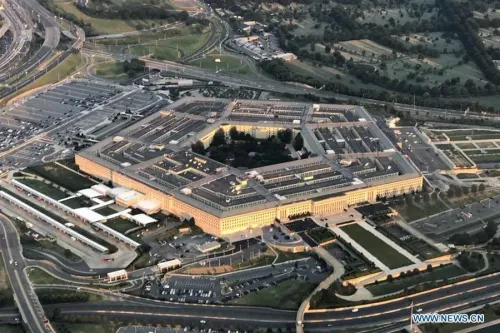
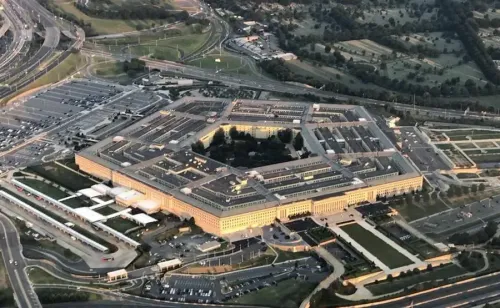
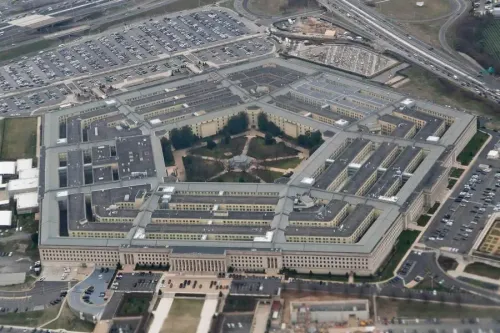
Washington, March 27 (NationPress) The Pentagon is actively seeking to revamp its information technology infrastructure. Officials warn that obsolete networks and cybersecurity threats could adversely impact military preparedness.
At a recent House hearing, Defence Chief Information Officer Kirsten Davies laid out a strategic plan. She emphasized that the department is undertaking a "bold transformation" to leverage technology as a "decisive advantage in warfare."
"Our goal is to achieve data supremacy and decision superiority," she noted.
Legislators underscored the importance of robust networks. "If the networks are not functioning optimally, nothing else can succeed," stated committee chair Don Bacon.
Davies highlighted four key priorities.
Firstly, the Pentagon aims to modernize its network backbone, encompassing cables, satellites, and 5G systems. She highlighted that 5G is already operational at most U.S. military sites.
Secondly, the department plans to replace outdated systems. Davies pointed out that legacy IT continues to be a significant concern. "Legacy IT poses a considerable challenge," she stated.
Many old systems remain unupdated, complicating their security.
Lawmakers echoed her concerns, describing federal systems as sluggish and antiquated, which hampers both efficiency and security.
Thirdly, the Pentagon seeks to enhance cybersecurity. Davies explained that the department is moving away from a "checklist-driven approach" and will adopt a risk-based model that incorporates automation and continuous monitoring. Furthermore, the department is expanding its implementation of a "zero trust" security framework.
Davies warned that cyber threats are not confined to Pentagon networks. She stressed the need to consider risks associated with contractors and supply chains, advocating for a more holistic security approach across the entire defense industrial base.
Fourthly, the Pentagon will prioritize workforce development. Davies announced plans to boost recruitment and training efforts for cyber specialists.
She identified cryptography as a "critical cornerstone" and mentioned preparations for new encryption standards.
Officials also raised concerns about vulnerabilities in operational technology, particularly systems used in shipyards and energy networks. Davies noted that many of these systems were "never designed for direct internet connectivity."
The hearing also scrutinized the sluggish pace of technology approvals. Davies admitted that the approval process is "far slower than necessary."
Lawmakers cautioned that cyber threats are escalating, particularly from nations like China, Russia, Iran, and North Korea.
The Pentagon faces mounting pressure to modernize its systems as officials assert that digital capabilities are now essential to military strength. Recent defense strategies have emphasized cloud computing, artificial intelligence, and improved cybersecurity.
Additionally, the department has been under scrutiny due to outdated systems and audit failures, prompting bipartisan calls for expedited reforms and stronger collaborations with the private sector.
Point of View
It is evident that the Pentagon's push for IT modernization is not merely a technical upgrade but a strategic necessity for national security. The focus on cybersecurity and workforce development reflects a proactive approach to address evolving threats in a digital landscape.
NationPress
29 Sept 2026
Frequently Asked Questions
What is the main goal of the Pentagon's IT overhaul?
The primary goal is to modernize its information technology systems to enhance military readiness and mitigate cyber risks.
What are the four key priorities outlined by the Pentagon?
The priorities include modernizing network backbone, replacing outdated systems, strengthening cybersecurity, and focusing on workforce development.
How is the Pentagon addressing cybersecurity?
The Pentagon is shifting to a risk-based cybersecurity model, moving away from checklist compliance, and expanding zero trust security.
What challenges is the Pentagon facing with legacy IT?
Legacy IT systems remain outdated and unsecure, posing significant challenges to efficiency and security.
Why is recruitment and training for cyber professionals important?
Expanding recruitment and training ensures that the Pentagon has skilled personnel to combat increasing cyber threats.