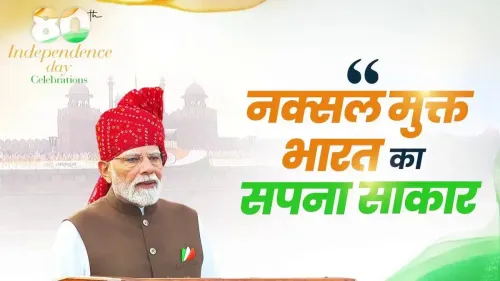
PM Modi: Armed Naxalism weakened, 'dimagi Naxals' must be isolated
Synopsis
Modi's Independence Day address from the Red Fort broke new ground — for the first time, a sitting Prime Minister used the national stage to warn not just about forest-based Maoists but about 'dimagi Naxals': individuals with a Maoist mindset allegedly embedded in government committees and policy circles. The framing marks a deliberate expansion of the counter-insurgency narrative into the ideological and institutional domain.
Key Takeaways
PM Narendra Modi declared on 14 August that armed Naxalism has been significantly weakened since 2014 .
He warned that 'dimagi Naxalism' — ideological Maoism — remains active and is 'looking for an opportunity' to spread violence and anarchy.
Modi alleged that individuals with a Maoist mindset had served as advisors on government committees and shaped public policy.
He called for such ideological Naxals to be identified and isolated to protect India's youth and nation-building goals.
The remarks mark the first time a Prime Minister has explicitly named 'dimagi Naxalism' as a distinct threat in an Independence Day address.
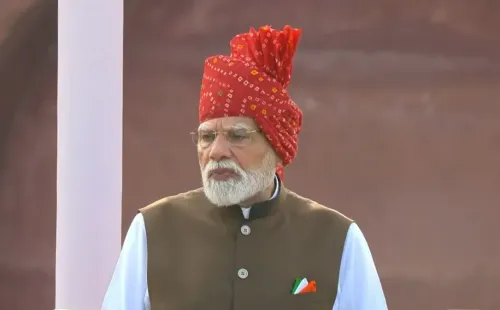
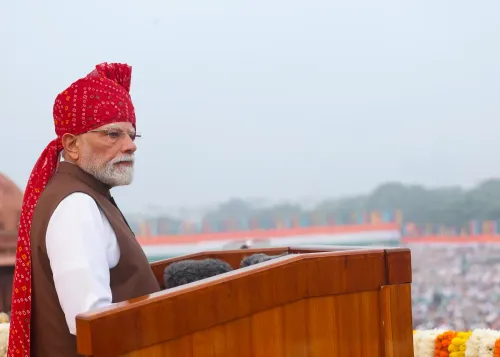
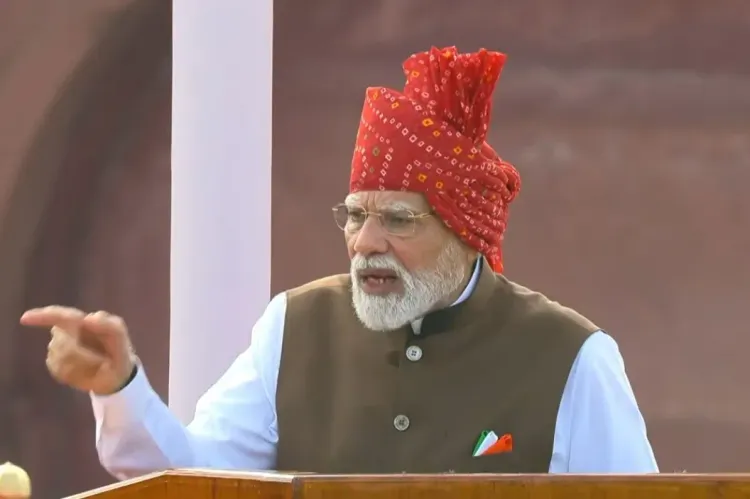
Prime Minister Narendra Modi, speaking from the ramparts of the Red Fort on Independence Day, 14 August, declared that India has largely succeeded in dismantling armed Naxalism — but warned that a subtler, ideological variant he called 'dimagi Naxalism' remains active and must be identified and isolated before it can foment fresh violence and disorder.
Armed Insurgency on the Retreat
Casting his mind back to 2014, when the Bharatiya Janata Party (BJP)-led government came to power, Modi said Naxalism had once 'drenched the earth in blood.' He asserted that the government had since fulfilled its pledge to free the country from Naxal violence, noting that Maoist insurgents no longer possess the strength to sustain themselves in regions that were once hotbeds of armed conflict.
Areas that earlier 'echoed with Naxalite gunfire and bore bloodstains,' he said, now fly what he described as the 'Tricolour of development, trust and effort' — a rhetorical shift that frames counter-insurgency success as a developmental dividend.
The Warning About 'Dimagi Naxalism'
The sharper edge of Modi's address, however, was directed at an ideological strain he alleged still persists within mainstream institutions. He claimed that for years, individuals with a Maoist mindset had occupied influential positions — including as advisors on government committees — and had shaped public policy accordingly.
While forest-based armed Naxals had been largely neutralised, he cautioned that ideological Naxalism remains active and is 'looking for an opportunity' to carve out pathways of violence and anarchy. He called for decisive action to identify and isolate such elements.
The Youth and Nation-Building
Modi linked the warning directly to the future of India's young population, stressing the importance of keeping youth firmly connected to the mainstream path of nation-building and the broader goal of transforming India into a Viksit Bharat — a developed nation. He framed ideological Naxalism as a threat not merely to public order but to the aspirations of an entire generation.
A Broader Shift in the Official Narrative
The remarks signal a notable expansion of the government's counter-Naxal framework — moving beyond armed insurgency in central and eastern India toward what Modi described as an intellectual and ideological ecosystem capable of influencing institutions and policy from within. Notably, this is the first time a sitting Prime Minister has used the Independence Day address to explicitly name and warn against 'dimagi Naxalism' as a distinct category of threat. The framing is likely to intensify debate over the boundaries between legitimate dissent and what the government classifies as ideological subversion.
Point of View
And from the gun to the policy brief. The claim that Maoist-minded individuals have served on government committees is serious and specific, yet no names or committees were cited, leaving the allegation unverifiable. Critics will argue this framing risks conflating ideological dissent with sedition — a line that democratic governance must hold carefully. The more important question the speech leaves unanswered is: if such infiltration occurred, under which administrations did it happen, and what institutional safeguards are now in place?
NationPress
29 Sept 2026
Frequently Asked Questions
What did PM Modi mean by 'dimagi Naxalism'?
'Dimagi Naxalism' is a term used by Prime Minister Modi to describe individuals who hold a Maoist ideological worldview but operate within mainstream institutions — such as government advisory committees — rather than through armed insurgency. He argued this form of ideological Naxalism poses a continuing threat to public order and policy integrity.
Has India succeeded in eliminating armed Naxalism?
According to Prime Minister Modi, armed Naxalism has been significantly weakened since 2014, with Maoist insurgents no longer able to sustain themselves in their former strongholds. However, security analysts have noted that while violence has declined sharply, a complete elimination of the movement has not been officially declared.
Why did Modi raise this issue on Independence Day?
Independence Day addresses from the Red Fort are the Prime Minister's most prominent national platform. By raising 'dimagi Naxalism' here, Modi elevated it from a law-enforcement concern to a matter of national priority, signalling that the government intends to broaden its counter-Naxal strategy beyond armed operations.
Who does the 'dimagi Naxal' warning target?
Modi did not name specific individuals or committees. He described the target broadly as those with a Maoist mindset who have allegedly occupied influential advisory roles and shaped government policy — and called for them to be identified and isolated from mainstream institutions.
How does this change the government's approach to Naxalism?
The remarks signal a shift from a primarily security-and-operations framework — focused on armed insurgents in central and eastern India — to a wider ideological and institutional lens. The government appears to be extending its counter-Naxal narrative to include what it characterises as intellectual and policy influence by Maoist sympathisers.