CR Paatil warns: 'Dimagi Naxal' is the next target
Synopsis
Union Minister C. R. Paatil declared on X that the Naxal threat is not over and named 'Dimagi Naxal' — alleged intellectual supporters of left-wing extremism — as the next target, extending the BJP's dual security-ideological framing of the insurgency.
Key Takeaways
Paatil , Union Minister of Jal Shakti and senior BJP leader, posted on 8 November 2026 that the Naxal danger has 'not yet been fully averted.' He declared 'Dimagi Naxal' — a BJP-coined term for alleged intellectual enablers of left-wing extremism — as the next target.
The post signals a shift in public messaging from kinetic operations to ideological counter-measures against the Naxal movement.
India's anti-Naxal policy since at least 2009 has combined security operations with development programmes in affected districts.
Paatil's Jal Shakti mandate — water supply in Naxal-affected regions — gives his statement a policy dimension beyond party rhetoric.
Watch for follow-up in the winter session of Parliament for any legislative or policy action on this front.
The guns may have quieted in the forests, but Union Jal Shakti Minister C. R. Paatil is signalling that India's anti-Naxal battle is far from won — and that the next front is ideological. On Sunday, 8 November 2026, Paatil posted a pointed warning on X: 'खतरा अभी पूरी तरह टला नहीं है...' ('The danger has not yet been fully averted...') followed by a declaration of the next target: 'Dimagi Naxal' — a term the BJP government uses for those it describes as intellectual enablers of left-wing extremism.
What 'Dimagi Naxal' means — and why it matters now
The phrase dimagi means 'of the mind' or 'intellectual' in Hindi. For several years, senior BJP leaders and security analysts aligned with the ruling dispensation have drawn a distinction between armed Naxals in the field and those they allege provide ideological cover, legal support, or academic legitimacy to the movement from urban centres. The former category — sometimes called 'urban Naxal' — has been a flashpoint in Indian political and legal debates, with critics arguing the label is used to target dissent and supporters contending it describes a genuine ecosystem that sustains insurgency.
Paatil's post arrives at a moment when security forces have reported significant operational gains against Maoist cadres in the so-called Red Corridor, spanning parts of Chhattisgarh, Jharkhand, and Odisha. That operational progress is precisely what his message amplifies: kinetic success, he implies, is only half the battle.
A Jal Shakti minister weighs in on internal security
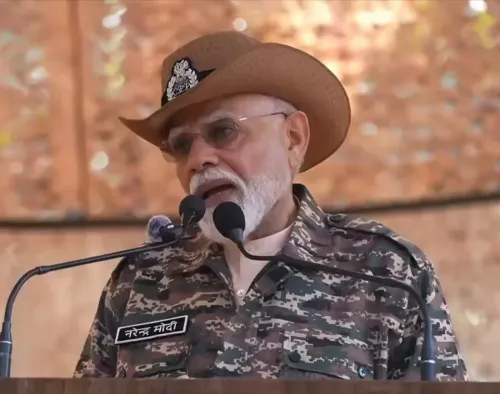
It is notable that the voice here belongs to a Water Ministry portfolio holder, not the Home Ministry. That is not unusual in BJP's communication architecture — senior leaders across portfolios routinely amplify the government's security narrative, especially on social media. Paatil, a former Gujarat BJP state president and one of the party's most recognisable organisational faces, carries significant political weight beyond his ministerial brief. His post, accompanied by a video, is calibrated for wider reach.
The government's long-running dual-track approach pairs security operations with development schemes — roads, schools, and critically, water supply infrastructure in Naxal-affected districts. That second track is squarely within Paatil's own mandate at Jal Shakti, giving his intervention a thematic coherence that goes beyond mere political cheerleading.
The ideological battle ahead
India's anti-Naxal policy, stretching back to at least 2009 under successive central governments, has always acknowledged that guns alone cannot dismantle an insurgency rooted in decades of agrarian grievance and state neglect. The BJP's framing adds an ideological layer: the argument that the movement's survival depends on intellectual and institutional support networks that security operations cannot reach.
Whether that framing translates into specific policy action — legislative, administrative, or otherwise — is the question Paatil's post raises without answering. The winter session of Parliament will be one place to watch for any follow-through.
The danger, he says, has not fully passed. The next target, he says, is the idea itself.
Point of View
The party is demonstrating that its anti-Naxal narrative is a whole-of-government communication strategy, not just a Home Ministry brief. The timing, following reported operational gains in the Red Corridor, is calculated: declare tactical victory, then pivot to the harder, longer ideological war. This framing will almost certainly intensify the ongoing debate over where legitimate dissent ends and what the state calls material support for extremism begins.
NationPress
8 Nov 2026
Frequently Asked Questions
What does 'Dimagi Naxal' mean?
'Dimagi Naxal' is a Hindi phrase meaning 'intellectual Naxal' — used by BJP leaders to describe people they allege provide ideological, legal, or academic support to left-wing Maoist extremists, as distinct from armed cadres in the field.
What did CR Paatil post about Naxals?
On 8 November 2026, Union Jal Shakti Minister C. R. Paatil posted on X warning that the Naxal threat has not fully passed and declaring 'Dimagi Naxal' as the movement's next target, accompanied by a video.
Is CR Paatil the Home Minister of India?
No. C. R. Paatil is the Union Minister of Jal Shakti (water resources). He is a senior BJP leader and former Gujarat BJP state president who periodically comments on broader security and governance issues.
What is India's current policy on Naxalism?
India has pursued a dual-track anti-Naxal strategy since at least 2009 — combining security operations against armed cadres with development programmes (roads, schools, water supply) in affected districts to address underlying grievances.
What is the difference between 'urban Naxal' and 'Dimagi Naxal'?
'Urban Naxal' and 'Dimagi Naxal' are related terms used by BJP leaders to describe alleged non-armed supporters of Maoist ideology operating in cities or institutions; critics argue both labels risk criminalising legitimate dissent and academic criticism.