'Dimagi Naxals' is BJP's newest label for Opposition, says Chidambaram
Synopsis
P. Chidambaram's pushback on 'Dimagi Naxals' is more than a one-day political spat — it maps a years-long pattern. From 'urban naxals' to 'andolanjeevis' to 'tukde tukde gang', the Congress MP argues the BJP has systematically branded dissent as extremism, and the newest coinage is simply the latest iteration of that strategy.
Key Takeaways
Chidambaram criticised PM Modi 's use of 'Dimagi Naxals' in a post on his official X account on 16 August .
Chidambaram called the term the 'new variant' of earlier BJP labels: 'urban naxals' , 'andolanjeevis' , and the 'tukde tukde gang' .
He argued all such labels were directed at Opposition members and civil society critics, not at any clearly defined organised threat.
The Union government has maintained that ideological support for extremism must be confronted and isolated.
The exchange reflects deepening polarisation in Indian political discourse, where terminology itself has become a contested battleground.
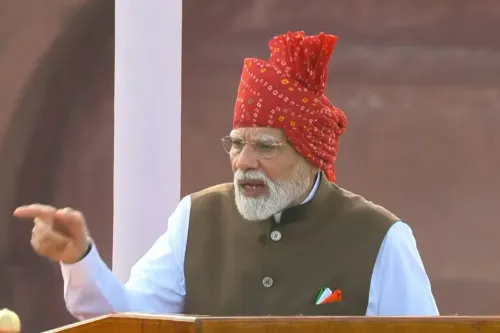
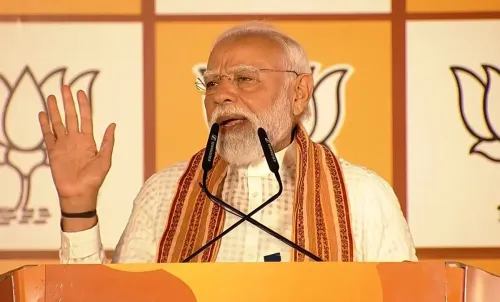
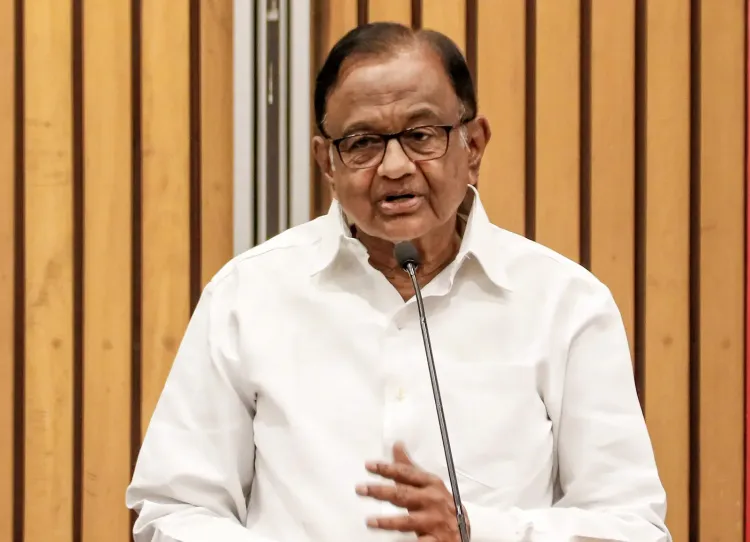
Senior Congress leader and Rajya Sabha MP P. Chidambaram on Sunday, 16 August launched a sharp attack on Prime Minister Narendra Modi's use of the term 'Dimagi Naxals', calling it the latest in a series of politically charged labels that the Bharatiya Janata Party (BJP) has deployed against its critics and the Opposition. Chidambaram made his remarks in a post on his official X account, directly responding to Modi's recent call to isolate those he described as 'Dimagi Naxals'.
The Pattern Chidambaram Identified
The former Union Finance Minister argued that 'Dimagi Naxals' was merely a 'new variant' of accusations the BJP had previously levelled at opponents. He cited earlier coinages — 'urban naxals', 'andolanjeevis', and the 'tukde tukde gang' — as part of the same recurring playbook. In his post, Chidambaram posed pointed questions: 'Who were the urban naxals? Who were the andolanjeevis? Who were the tukde tukde gang?' — implying that none of these terms had ever been applied to a clearly defined, organised threat.
Political Abuse, Not Precise Description
Chidambaram asserted that these labels had functioned as political abuses rather than accurate descriptions of any specific extremist group. He contended that the new expression followed the same logic — to discredit those who disagreed with the Modi-led Union government rather than to address verifiable acts of violence or ideological extremism. According to the Congress MP, such language forms part of a continuing strategy to brand Opposition voices and civil society critics with pejorative tags instead of engaging with their substantive arguments on policy or ideology.
The Government's Position
The Union government has maintained that ideological support for extremism must be confronted and isolated, framing Modi's 'Dimagi Naxals' warning as a call to guard against those who provide intellectual cover to violent movements. Officials have not publicly responded to Chidambaram's specific characterisation. This comes amid a broader pattern in which terminology itself has become a contested political battleground in India.
What This Signals
The exchange underscores the deepening polarisation in Indian political discourse. Notably, each of the labels Chidambaram referenced — from 'urban naxals' onwards — generated significant controversy at the time of its coinage, with civil liberties advocates arguing they were used to target activists, academics, and journalists rather than armed insurgents. Opposition leaders have consistently maintained that such labels are instruments to stifle dissent rather than tools of national security. Chidambaram's remarks are expected to sharpen the debate in the coming days as both sides dig in over the meaning and intent behind 'Dimagi Naxals'.
Point of View
Newsrooms, and academic circles, with limited evidence that the targeted individuals constituted an organised extremist network. The BJP's counter-argument, that intellectual sympathy for violent movements is itself dangerous, is legitimate in principle but loses force when the labels are applied so broadly as to include mainstream Opposition politicians. What is missing from both sides is a precise, legally grounded definition of what 'Dimagi Naxal' actually means — and without one, the term will remain a political weapon rather than a policy tool. The real question Indian democracy needs to answer is where the line sits between ideological dissent and material support for violence.
NationPress
2 Oct 2026
Frequently Asked Questions
What did P. Chidambaram say about 'Dimagi Naxals'?
Chidambaram called 'Dimagi Naxals' the BJP's latest political label for the Opposition, arguing it follows the same pattern as earlier terms like 'urban naxals', 'andolanjeevis', and 'tukde tukde gang'. He made these remarks in a post on his official X account on 16 August.
What is the meaning of 'Dimagi Naxals' as used by PM Modi?
Prime Minister Modi used the term 'Dimagi Naxals' to describe individuals he said provide intellectual or ideological support to Naxal or extremist movements. He called for such individuals to be isolated. The Opposition disputes that the term has any precise or legally defined meaning.
What earlier labels did Chidambaram reference in his criticism?
Chidambaram referenced 'urban naxals', 'andolanjeevis', and the 'tukde tukde gang' — all terms previously used by BJP leaders — arguing they were applied broadly to Opposition politicians and critics rather than to any specific organised threat.
How has the government responded to Chidambaram's remarks?
The Union government has not publicly responded to Chidambaram's specific characterisation. It has maintained that confronting ideological support for extremism is a matter of national security, framing Modi's warning as a legitimate call to action.
Why does the 'Dimagi Naxals' debate matter for Indian politics?
The debate reflects a broader contest over political language in India, where labels like 'urban naxal' have previously been used in legal proceedings against activists and journalists. Critics argue such terminology conflates dissent with extremism, while the government maintains that ideological cover for violence must be named and challenged.