Rahul Gandhi renews debate challenge to PM Modi over 'Dimagi Naxal' remarks
Synopsis
PM Modi's 'Dimagi Naxal' remark to CRPF jawans in Bastar has drawn a sharp, public counter from Rahul Gandhi — who is demanding an open debate on who is truly anti-national. The exchange, with Gandhi directly addressing security personnel, raises the political temperature significantly ahead of upcoming state elections.
Key Takeaways
Rahul Gandhi on 9 November 2026 renewed his public debate challenge to PM Narendra Modi over the 'Dimagi Naxal' allegation.
Gandhi's X post was addressed to CRPF jawans , stating: 'Any time, any place' for the debate.
PM Modi had, on Sunday in Bastar , used the term 'Dimagi Naxals' to describe those allegedly inciting people against the Constitution — widely seen as targeting the INDIA bloc .
Modi cited fulfilled pledges — including abrogation of Article 370 and household toilet construction — while pledging to achieve Viksit Bharat and Atmanirbhar Bharat .
The BJP -Congress confrontation over the 'anti-national' framing is expected to intensify ahead of upcoming state elections.
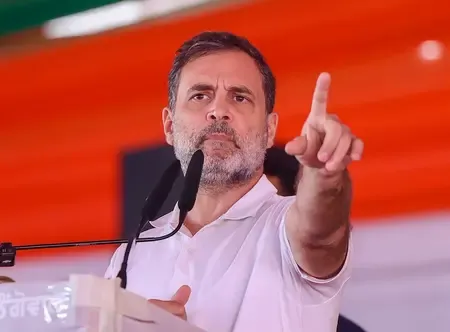
Congress leader and Leader of the Opposition in the Lok Sabha, Rahul Gandhi, on Monday, 9 November 2026, renewed his public challenge to Prime Minister Narendra Modi for an open debate over allegations of being 'Dimagi Naxals' and anti-nationals controlled by foreign entities. The challenge came a day after Modi's remarks to CRPF personnel in Chhattisgarh, which were widely seen as a veiled attack on Gandhi and the INDIA bloc.
Gandhi's Direct Challenge
In a post on X, Gandhi addressed his message to CRPF jawans, writing: 'He called us Naxals. My challenge stands. Let him debate me on who is anti-national and who is controlled by foreign forces. Any time, any place. My guarantee: after the debate, the PM won't have the guts to stand in front of a single jawan again.'
The sharpness of the response signals an escalation in what has become a sustained rhetorical confrontation between the two leaders in recent weeks. Notably, Gandhi's post was explicitly addressed to security personnel — framing the debate challenge not merely as a political one but as a matter of national credibility.
What Modi Said in Bastar
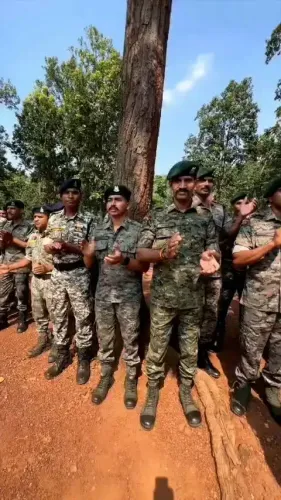
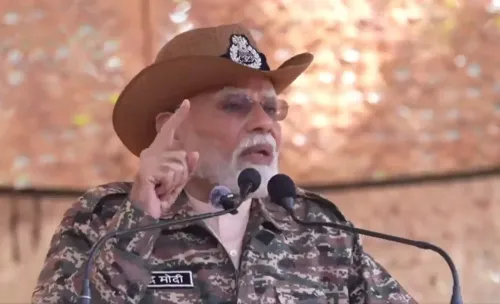
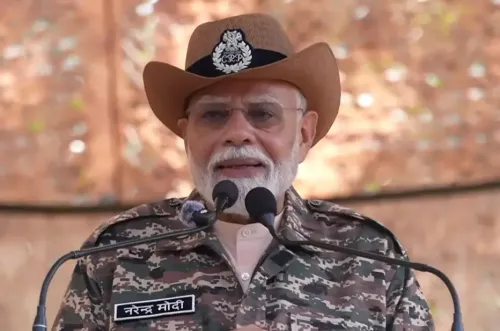
On Sunday, interacting with security forces in Bastar on the occasion of Diwali, Prime Minister Modi said that the elimination of Naxalism was not the final destination and that the country still faces the challenge of 'Dimagi Naxals' — a term he used to describe those who, according to him, have taken control of several organisations.
Without naming Gandhi or the INDIA bloc directly, Modi said: 'Even today, they are inciting people against the country's Constitution and democracy. These 'Dimagi Naxals' have also infiltrated several political parties and different organisations. We must identify them, defeat them and ensure the security of the nation.' The remarks were broadly interpreted as targeting opposition leaders who have questioned the integrity of institutions such as the Election Commission of India (ECI).
Modi's Broader Message to Security Forces
Beyond the political undercurrent, PM Modi used his address to frame recent successes against Naxalism and poverty as a springboard for larger national ambitions. 'Today's achievements inspire us, but this is not the end of the journey — I repeat, this is not the end,' he said.
He invoked the sacrifices of freedom fighters, soldiers at the borders, and personnel who lost their lives fighting Naxalism and terrorism. Modi also cited past government commitments he said had been fulfilled — the abrogation of Article 370 in Kashmir, construction of toilets in every household, and the expansion of the national vaccination drive — as evidence of the government's delivery record.
'Therefore, today, as we speak of eradicating poverty, building a drug-free India, creating a Viksit Bharat and fostering an Atmanirbhar Bharat — rest assured, the nation will achieve these goals as well,' Modi said.
Political Context and What It Signals
The exchange marks a fresh flashpoint in the ongoing confrontation between the Bharatiya Janata Party (BJP)-led government and the opposition Indian National Congress (Congress). The 'Dimagi Naxal' framing appears aimed at recasting the institutional-integrity debate — in which the INDIA bloc has questioned the ECI and other bodies — as a question of anti-nationalism rather than accountability.
Critics argue this conflation of political dissent with ideological subversion is a recurring tactic that narrows the space for legitimate opposition critique. Gandhi's counter-challenge, in turn, attempts to shift the burden of proof onto Modi and dares him to defend the charge in an open forum.
Whether the government responds to the debate challenge — or lets it pass as political theatre — will likely shape the next phase of this war of words ahead of upcoming state elections.
Point of View
A move that forecloses substantive debate before it starts. Gandhi's public dare, addressed to jawans rather than to journalists, is an equally calculated counter: it makes the security establishment the implicit jury. Neither side is seeking a real debate — both are playing to a base that has already decided. The more consequential question mainstream coverage is sidestepping is whether this escalation will further erode the possibility of bipartisan consensus on genuine security and governance challenges.
NationPress
9 Nov 2026
Frequently Asked Questions
What is Rahul Gandhi's debate challenge to PM Modi about?
Rahul Gandhi has challenged PM Narendra Modi to an open public debate on who is truly anti-national and who is controlled by foreign forces. The challenge was renewed on 9 November 2026 via a post on X, addressed to CRPF jawans, following Modi's use of the term 'Dimagi Naxal' at a Diwali event in Bastar, Chhattisgarh.
What did PM Modi mean by 'Dimagi Naxals'?
PM Modi used the term 'Dimagi Naxals' during his interaction with security forces in Bastar to describe individuals he said are inciting people against India's Constitution and democracy, and have infiltrated political parties and organisations. The remarks were widely interpreted as a veiled reference to Rahul Gandhi and the INDIA bloc opposition.
Where and when did PM Modi make the 'Dimagi Naxal' remarks?
PM Modi made the remarks on Sunday while interacting with CRPF and security personnel in Bastar, Chhattisgarh, on the occasion of Diwali. He also addressed forces in Chhattisgarh more broadly, asserting that defeating Naxalism was not the country's final destination.
How has the Congress responded to being called 'Dimagi Naxals'?
Congress leader and Leader of the Opposition Rahul Gandhi called the charge out publicly on X, challenging PM Modi to debate the question 'any time, any place.' Gandhi claimed that after such a debate, Modi 'won't have the guts to stand in front of a single jawan again,' framing it as a matter of national credibility.
What is the broader political significance of this exchange?
The confrontation reflects a deepening BJP-Congress conflict over the 'anti-national' label, which critics argue is being used to delegitimise the opposition's critique of institutions like the Election Commission of India. With state elections approaching, the exchange is expected to intensify the political atmosphere further.