'Dimagi Naxals' remark: NDA rallies behind Modi, Opposition demands clarity
Synopsis
PM Modi's Independence Day coinage of 'dimagi Naxals' — a successor to the contested 'urban Naxals' label — has split the political class sharply. The NDA sees it as a legitimate warning; the Opposition sees a deliberate ambiguity that can be turned against critics, academics, and dissenters. The definitional vacuum is the point of contention.
Key Takeaways
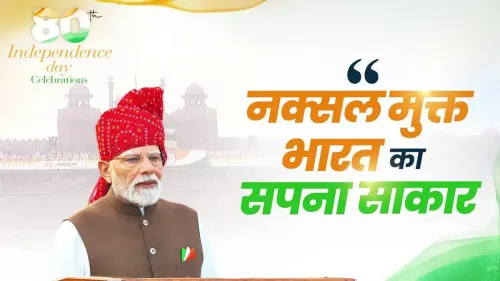
PM Modi introduced the term 'dimagi Naxals' during his 80th Independence Day address at the Red Fort on 15 August .
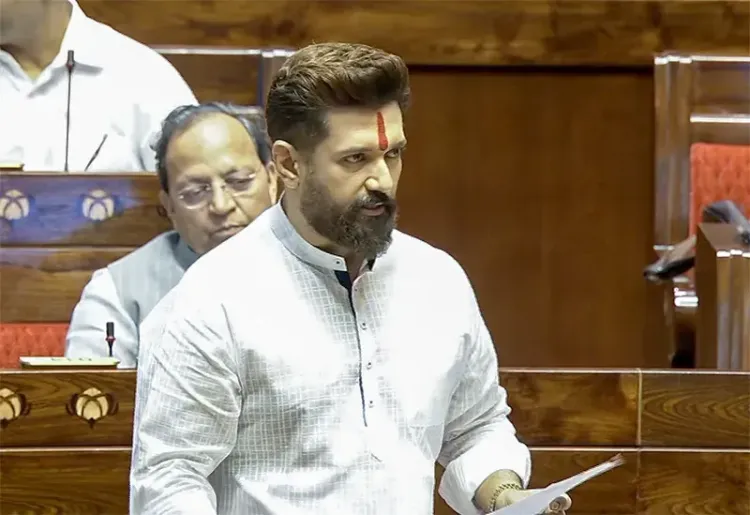
Union Minister Chirag Paswan and Maharashtra CM Devendra Fadnavis backed the remark, calling it an accurate diagnosis of ideological anarchy.
Congress leaders Supriya Shrinate and Jairam Ramesh demanded the Prime Minister clarify whom the term targets.
Jairam Ramesh noted that Home Minister Amit Shah had previously told Parliament that 'urban Naxal' had no official definition.
CPI-M General Secretary M.
Baby called the remarks a 'mischievous and wrong allegation' , citing the imprisonment of academics like DU professor Sai Baba .
NCP-SP spokesperson Naseem Siddiqui alleged the government was conflating intellectuals with terrorists under such labels.
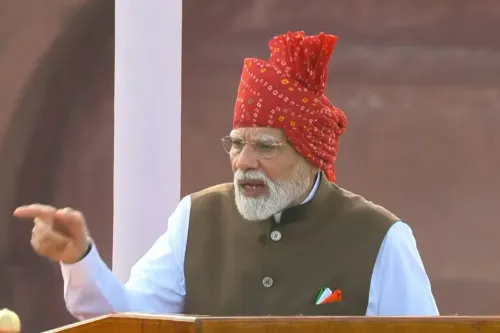
Prime Minister Narendra Modi's coinage of the term 'dimagi Naxals' during his 80th Independence Day address from the Red Fort on 15 August has triggered a sharp political divide, with National Democratic Alliance (NDA) leaders rallying in defence while the Opposition demanded that the Prime Minister clarify exactly whom he was targeting.
What PM Modi Said
In his Independence Day speech, PM Modi declared that India had succeeded in significantly weakening armed Naxalism. However, he cautioned that a more subtle threat — which he described as 'dimagi Naxalism' (Naxalism of the mind) — continues to seek opportunities to foment violence and disorder, and must be identified and isolated.
NDA Leaders Close Ranks
Union Minister Chirag Paswan was among the first to back the Prime Minister, saying: 'While India has eliminated Naxalism on one hand, Prime Minister Modi mentioned about 'dimagi Naxalites' today. These are people who, in some way, seek to create anarchy in society. These are people who possibly cannot envision the creation of a developed India... Prime Minister Modi urged people today to remain cautious of such individuals.'
Maharashtra Chief Minister Devendra Fadnavis echoed the sentiment, stating: 'I believe that he has made a very accurate observation. Naxalism with guns in hand has been brought to an end, but we are now witnessing something even more dangerous, what can be described as 'Naxalism of the mind', where people have anarchy embedded in their thinking.'
Bharatiya Janata Party (BJP) leader and Leader of Opposition in the Jammu and Kashmir Assembly, Sunil Sharma, added that 'mental Naxals' who wish to harm the country should refrain from doing so as India moves toward becoming a global power by 2047.
Opposition Pushes Back
Congress leader Supriya Shrinate questioned the intent behind the phrase, asking: 'Is he calling the youth of the country as 'dimagi Naxals'? When he is using such kind of words then he should clarify who he is exactly referring to.'
Congress MP Jairam Ramesh drew a direct parallel with the earlier controversy over the term 'urban Naxals', noting that Home Minister Amit Shah had previously told Parliament that no official definition of 'urban Naxal' existed. Ramesh argued that the Prime Minister was now using 'dimagi Naxals' from the Red Fort to refer to political opponents, and pointed out that some issues raised by those labelled 'urban Naxals' — such as a caste census — had since been accepted by the government.
Nationalist Congress Party (Sharad Pawar faction) national spokesperson Naseem Siddiqui said the government was effectively equating intellectuals with terrorists, citing the imprisonment of senior professors and researchers under the urban Naxal label. 'If the government is unable to differentiate between intellectuals and terrorists, then it is their fault,' he said.
CPI-M Calls Remarks 'Mischievous'
Communist Party of India (Marxist) General Secretary M. A. Baby described the remarks as a 'mischievous and wrong allegation', adding that he was unsure whom the Prime Minister was targeting. He cited the case of Delhi University professor Sai Baba, who was imprisoned after being labelled an urban Naxal. Baby further alleged that the terms 'extremism' and 'Naxal' were being deployed by both PM Modi and Home Minister Amit Shah to suppress democratic criticism and debate.
The Broader Context
This is not the first time a politically charged phrase has emerged from an Independence Day address. The 'urban Naxal' label gained currency several years ago and sparked sustained controversy over its application to academics, activists, and journalists. The reappearance of a similar formulation — now recast as 'dimagi Naxals' — suggests the government views ideological opposition to its development narrative as a continuing security concern. Critics argue the vagueness of such terms makes them susceptible to misuse. How the government defines and applies the phrase in policy and law enforcement contexts will be closely watched.
Point of View
The government retains the flexibility to apply it selectively. Jairam Ramesh's parliamentary callback is the sharpest riposte: if the Home Minister once told Parliament that 'urban Naxal' had no definition, the new coinage starts from the same definitional vacuum. The real accountability question is not whether 'dimagi Naxalism' exists as a phenomenon, but whether the state will codify it in law or policy — and if so, with what safeguards against misuse against legitimate dissent.
NationPress
30 Sept 2026
Frequently Asked Questions
What did PM Modi mean by 'dimagi Naxals'?
PM Modi used the term 'dimagi Naxals' in his 80th Independence Day speech to describe individuals who, in his framing, seek to foment violence and disorder through ideology rather than arms. He said that while armed Naxalism had been significantly weakened, this subtler, ideological variant needed to be identified and isolated. He did not name specific individuals or groups.
Why is the Opposition demanding clarity on the 'dimagi Naxals' remark?
Opposition leaders argue the term is deliberately vague and could be used to target political critics, academics, and activists — as they allege happened with the earlier 'urban Naxal' label. Congress MP Jairam Ramesh pointed out that Home Minister Amit Shah had previously told Parliament that 'urban Naxal' had no official definition, raising fears the new term carries the same ambiguity.
How have NDA leaders responded to the controversy?
NDA leaders including Union Minister Chirag Paswan and Maharashtra Chief Minister Devendra Fadnavis have strongly backed PM Modi's remark, describing 'dimagi Naxalism' as a real and dangerous threat — an ideological anarchy that seeks to obstruct India's development. BJP leader Sunil Sharma said those who wish to harm the country should step back as India moves toward becoming a global power by 2047.
What is the connection between 'dimagi Naxals' and 'urban Naxals'?
The term 'urban Naxal' was used in earlier years to describe alleged Maoist sympathisers operating in cities, and led to the arrest of several academics and activists. Congress MP Jairam Ramesh has directly linked the two phrases, arguing that 'dimagi Naxals' is a new formulation for the same political purpose — labelling opponents. CPI-M's M. A. Baby cited the case of Delhi University professor Sai Baba, imprisoned under the urban Naxal label, as a cautionary example.
Who is CPI-M's M. A. Baby and what did he say?
M. A. Baby is the General Secretary of the Communist Party of India (Marxist). He called PM Modi's 'dimagi Naxals' remark a 'mischievous and wrong allegation' and alleged that the Naxal label is being used by the government to suppress democratic debate and criticism of the Union government.