Nvidia Unveils GR00T 2, Its Most Advanced Open Robotics Model
Synopsis
Nvidia has unveiled GR00T 2, its most advanced open foundation model for robotics. The model learns from human demonstrations, predicts physical outcomes of its actions, and transfers skills across different robot bodies — slashing the need to retrain each platform from scratch.
Key Takeaways
GR00T 2 is Nvidia's most advanced open System One foundation model for robotics research, announced on 14 November 2026 .
The model learns motor skills directly from human demonstrations , eliminating the need to handcraft robot-specific training pipelines.
A built-in world model lets it predict how its actions will change the physical environment before executing them.
Cross-embodiment transfer means skills learned on one robot body can be applied to another, reducing per-platform training costs significantly.
GR00T 2 continues Nvidia's open-ecosystem strategy first established with Project GR00T at GTC 2024 .
The release targets robotics researchers and AI developers , with commercial robot-platform partnerships expected to follow.
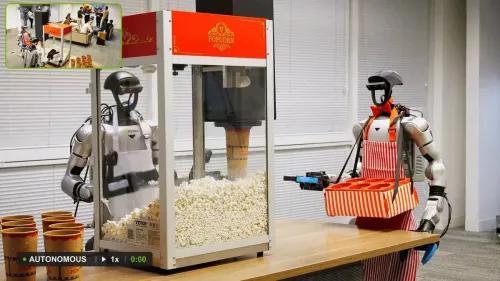
Robots that watch humans and then simply do — that is the promise chip giant Nvidia is now putting to the test with GR00T 2, its most advanced open foundation model for robotics research, announced on 14 November 2026. The model can learn skills from human demonstrations, predict how its own actions will reshape the physical world, and — crucially — carry those skills across entirely different robot bodies.
What GR00T 2 Actually Does Differently
The headline capability is cross-embodiment skill transfer. Until now, training a robot arm and a bipedal humanoid to perform the same task meant teaching each one from scratch — a time-consuming and expensive cycle that has slowed commercial robotics deployment. GR00T 2 breaks that loop by building a shared representation of physical interaction, so a skill demonstrated once can migrate to a new robot body with minimal re-training.
The model also adds world-modelling: it predicts how its own actions will change its environment before committing to them. That predictive layer is what separates a robot that reacts from one that reasons — a distinction robotics engineers have chased for years.
From GTC 2024 to GR00T 2: Nvidia's Robotics Playbook
Nvidia introduced Project GR00T at GTC 2024, framing it as a generalist foundation model that could do for physical robots what large language models did for text. The strategy follows a pattern Nvidia has refined over two decades: seed an open developer ecosystem — first with CUDA, then with cuDNN, now with open model releases — and let the resulting wave of adoption pull hardware demand behind it.
GR00T 2 deepens that bet. By releasing the model openly for robotics researchers and AI developers, Nvidia positions itself as the platform layer for the physical-AI stack, not merely the chip supplier underneath it.
Who Stands to Gain — and What Comes Next
Robotics researchers gain a powerful baseline they do not have to build from scratch. AI developers building manipulation, locomotion, or inspection systems can now fine-tune a world-model-aware foundation rather than training end-to-end on proprietary data. The commercial ripple effect lands on robot manufacturers whose platforms support Nvidia's ecosystem — hardware that can plug into GR00T 2 becomes dramatically easier to bring to market.
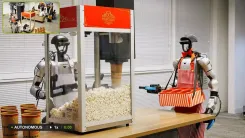
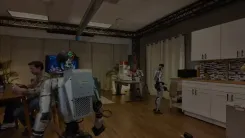
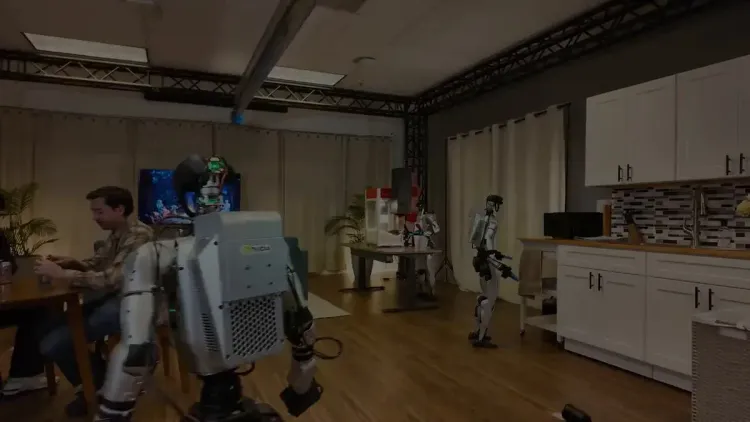
The thread Nvidia posted alongside the announcement promises footage of GR00T 2 in motion, signalling that demonstration hardware is already running the model. Watch for partner announcements pairing the model with commercial humanoid and industrial robot platforms, and for benchmark results likely to surface at a future GTC event.
The age of teaching every robot every task, one painstaking lesson at a time, may have just quietly ended.
Point of View
Switching compute platforms becomes costly, deepening Nvidia's moat well beyond silicon. The move mirrors how AWS commoditised servers while selling higher-margin managed services on top — except here, the managed layer is a world model that understands physics.
NationPress
14 Nov 2026
Frequently Asked Questions
What is Nvidia GR00T 2?
GR00T 2 is Nvidia's most advanced open foundation model for robotics research. It enables robots to learn skills from human demonstrations, predict how their actions will affect the physical world, and transfer those skills across different robot body types without retraining from scratch.
How is GR00T 2 different from the original GR00T model?
The original Project GR00T was introduced at GTC 2024 as Nvidia's first generalist robotics foundation model. GR00T 2 advances that work by adding a world-modelling capability — predicting environmental changes before acting — and stronger cross-embodiment skill transfer across diverse robot platforms.
What does cross-embodiment skill transfer mean in robotics?
Cross-embodiment skill transfer means a robot skill learned on one hardware platform — say, a robotic arm — can be applied to a different robot body, such as a humanoid, without teaching it the entire task again. GR00T 2 makes this possible through a shared physical-world representation.
Is GR00T 2 available for researchers to use?
Nvidia released GR00T 2 as an open model, meaning robotics researchers and AI developers can access and fine-tune it. Full availability details and benchmarks are expected to be detailed at upcoming Nvidia GTC events.
Why is Nvidia investing heavily in robotics AI software?
Nvidia's robotics software push mirrors its earlier CUDA strategy: by seeding an open developer ecosystem around its models, it creates a platform that developers build on — which in turn drives demand for Nvidia's underlying hardware. GR00T 2 deepens that full-stack approach beyond chips alone.