PM Modi's Independence Day 2025: Key quotes on Viksit Bharat, women's quota
Synopsis
Modi's 80th Independence Day address was less a ceremonial speech and more a strategic declaration — invoking ancient civilisational identity through 'Sapta Dhara', pressing all parties on women's reservation, and coining 'dimagi Naxals' as a new political category. The 2047 Viksit Bharat target is now the organising frame for everything the government does next.
Key Takeaways
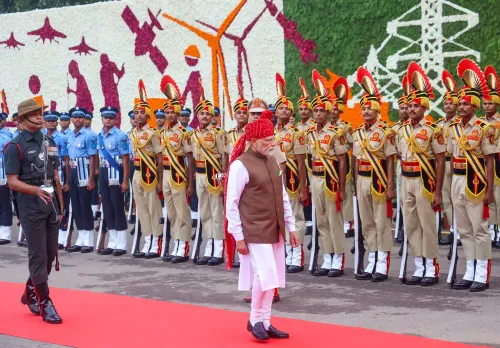
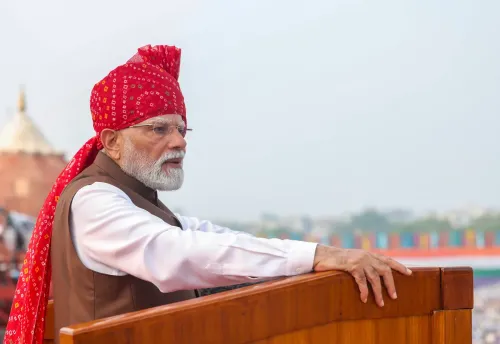
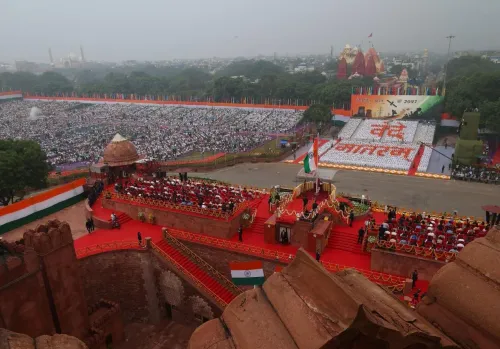
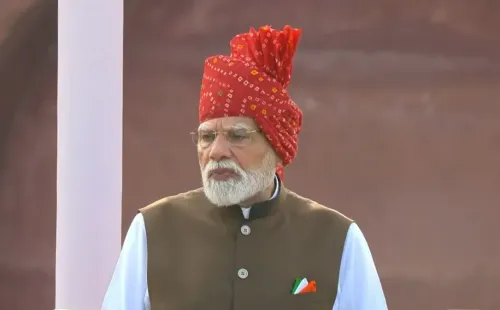
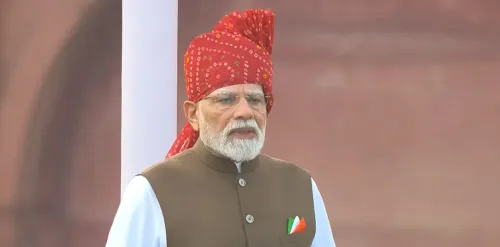
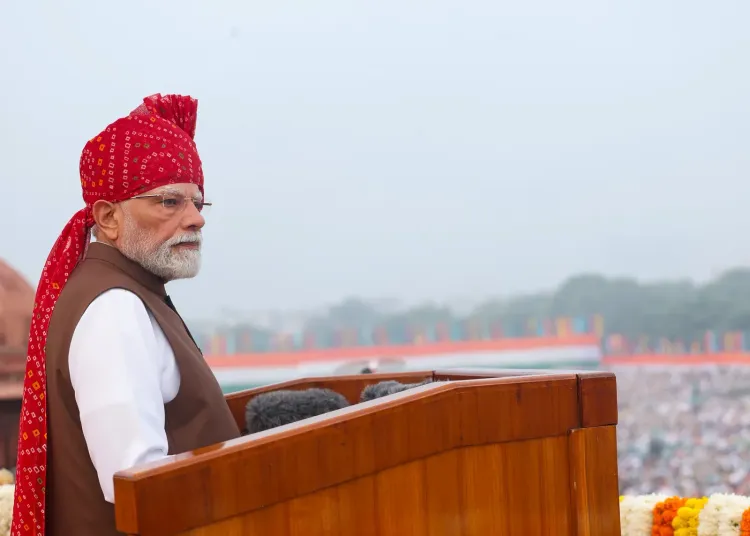
PM Modi addressed the nation from the Red Fort on 15 August 2025 , India's 80th Independence Day .
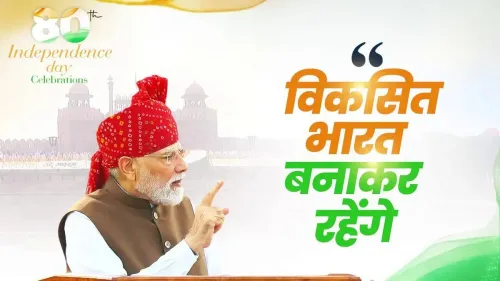
He reaffirmed the Viksit Bharat 2047 goal, saying ' 140 crore Indians' cannot be stopped.
Modi declared India has shed its 'Fragile Five' tag and become the world's fastest-growing major economy in 12 years .
He made a direct appeal to all political parties to ensure women's representation in State Assemblies and the Lok Sabha 'as swiftly as possible'.
He introduced the concept of Sapta Dhara — seven streams of national strength — as a framework for building Viksit Bharat.
Modi warned against 'dimagi Naxals' , calling for their identification and isolation, and urged connecting youth to the mainstream.
Prime Minister Narendra Modi on 15 August 2025 delivered a sweeping address from the ramparts of the Red Fort on India's 80th Independence Day, laying out an ambitious roadmap for a self-reliant, developed India by 2047. From economic resilience to women's political representation and a warning against ideological extremism, the speech covered the full arc of his third-term agenda.
Viksit Bharat 2047: The Central Vision
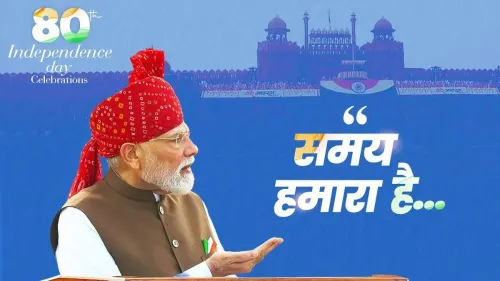
Modi anchored his address in the Viksit Bharat goal — India's aspiration to become a fully developed nation by the centenary of its Independence. 'After Independence, India had big dreams, but progress often fell short of the pace we aspired to achieve. Today, India is moving ahead with unprecedented speed and confidence. And now, no force can stop the resolve of 140 crore Indians,' he said.
He underscored the urgency of the moment: 'One-fourth of the century has already elapsed, and the upcoming one-fourth is exceptionally crucial for us. We cannot afford to pause now. Our momentum must not slow down.' The Prime Minister framed the next 25 years as the defining window for India's transformation.
India's Economic Rise and Atmanirbhar Push
Modi pointed to India's exit from the so-called 'Fragile Five' grouping of vulnerable emerging economies as a marker of structural change. 'We were once counted among the Fragile Five. However, India has, within just 12 years, emerged as the world's fastest-growing major economy,' he said.
He reiterated the importance of Atmanirbhar Bharat — self-reliance — as a strategic imperative. 'Becoming an Atmanirbhar Bharat is crucial. That is why, over the past few years, our conviction has been that India should no longer live in dependence on other nations; we must become self-reliant. We must enhance our own capacities and safeguard our interests ourselves,' Modi said.
Women's Representation: A Direct Appeal to All Parties
In one of the most politically significant passages of the speech, Modi made a direct appeal to all political parties to fast-track women's representation in legislatures. 'I earnestly appeal to and urge all political parties of our nation: Come forward and celebrate the strength and capability of our women. Step forward in honour of our women, and as swiftly as possible, ensure our mothers and sisters receive their due representation in the State Legislative Assemblies and the Lok Sabha so that they can actively contribute to shaping India's policies,' he said.
The appeal comes amid ongoing debate over the implementation timeline of the Women's Reservation Act, passed in 2023, which reserves 33% of seats in the Lok Sabha and state assemblies but is contingent on a delimitation exercise yet to be scheduled.
Sapta Dhara: A New Framework for National Strength
Modi introduced the concept of Sapta Dhara — seven streams of national strength — drawing on India's ancient reference to the Sapta Sindhu (seven rivers). 'Today, from the ramparts of the Red Fort, I invoke the Sapta Dhara of strength before the nation,' he said, framing it as a civilisational call to channel India's historical identity into its development future.
Warning on 'Dimagi Naxals' and Ideological Extremism
Modi issued a pointed warning about what he termed 'dimagi Naxals' — individuals he described as harbouring a Naxalite mindset without taking up arms. 'We have succeeded in getting rid of armed Naxals in the jungles, but dimagi Naxals are looking for opportunities to create violence, unrest... They want to drag society on the wrong path. These dimagi Naxals have to be identified and isolated, and we must connect the youth with the mainstream,' he said.
The remark drew immediate attention as a signal of the government's intent to address what it sees as ideological subversion beyond physical insurgency. Critics are likely to scrutinise the framing, given its potential breadth of application.
A Historic Moment at the Red Fort
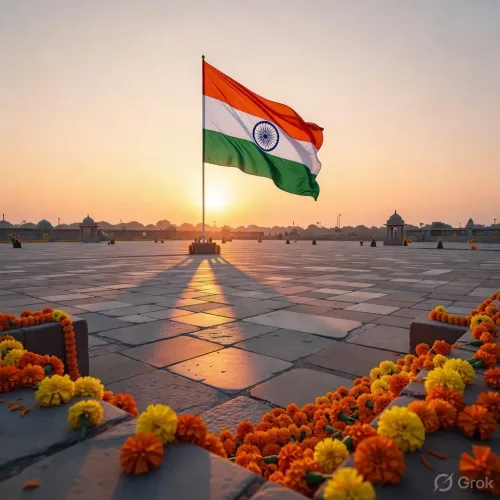
Modi also marked what he called a historic first — the chanting of 'Vande Mataram' from the ramparts of the Red Fort after Independence. 'It is a historic day. After Independence, this is the first time when Vande Mataram has echoed from the ramparts of Red Fort. Today, the chant of Vande Mataram resonates in every heart. Today, the Tricolour flies in every home and dwells in every mind,' he said.
With the 2047 deadline now firmly embedded in national discourse, the speech sets the political and policy tone for the coming year — and the pressure on delivery will only intensify.
Point of View
But the more consequential passage was the women's reservation appeal — a public pressure play on opposition parties ahead of state elections, given that the 2023 Act's implementation remains tied to a delimitation process the Centre controls. Modi's invocation of Sapta Dhara signals a deliberate civilisational framing of development policy, blending cultural nationalism with economic ambition in ways that are increasingly central to BJP's electoral identity. The Fragile Five exit is a real milestone, but the speech offered no new institutional mechanism to sustain the growth momentum — the 2047 target remains aspirational without a mid-term accountability framework.
NationPress
29 Sept 2026
Frequently Asked Questions
What did PM Modi say about Viksit Bharat in his Independence Day 2025 speech?
Modi reaffirmed India's goal of becoming a fully developed nation by 2047 — the centenary of Independence — calling it the collective dream of 140 crore Indians. He said India is now moving at 'unprecedented speed and confidence' and that 'no force' can stop this resolve.
What did Modi mean by 'dimagi Naxals'?
Modi used the term 'dimagi Naxals' to describe individuals he said harbour a Naxalite mindset without taking up arms, seeking to create violence and unrest and pull society off course. He called for their identification and isolation, and urged bringing youth into the mainstream.
What did PM Modi say about women's reservation?
Modi made a direct appeal to all political parties to ensure women receive their due representation in State Legislative Assemblies and the Lok Sabha 'as swiftly as possible'. The appeal is significant given that the Women's Reservation Act of 2023 is yet to be implemented, pending a delimitation exercise.
What is the Sapta Dhara Modi referred to in his speech?
Modi introduced 'Sapta Dhara' — seven streams of national strength — as a new framework for building Viksit Bharat, drawing on India's ancient concept of the Sapta Sindhu (seven rivers). He invoked it from the Red Fort as a civilisational call to harness India's historical identity for its development future.
How did Modi describe India's economic transformation?
Modi said India has shed its 'Fragile Five' label and emerged as the world's fastest-growing major economy within 12 years. He also stressed the importance of Atmanirbhar Bharat — self-reliance — arguing India must build its own capacities rather than depend on other nations.