PM Modi Marks Independence Day With Viksit Bharat 2047 Pledge
Synopsis
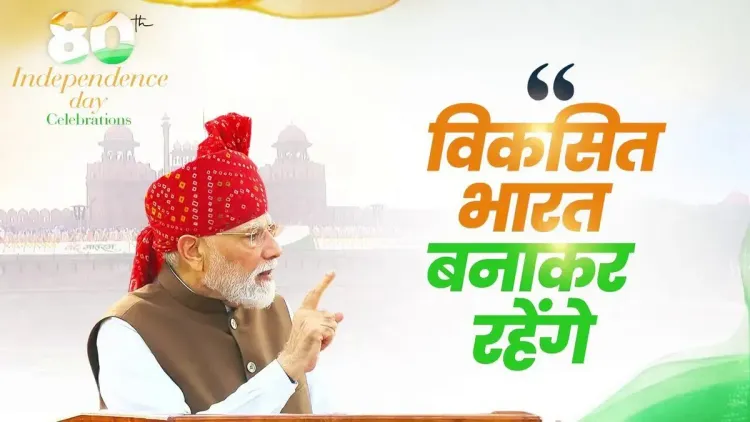
On Independence Day 2026, PM Narendra Modi reaffirmed the Viksit Bharat vision — a developed India by 2047 — citing 12 years of unprecedented national progress and signalling that global attention on India's momentum has never been stronger.
Key Takeaways
PM Narendra Modi posted on 15 August 2026 , Independence Day, reaffirming India's goal of becoming a Viksit Bharat — a developed nation — by 2047 .
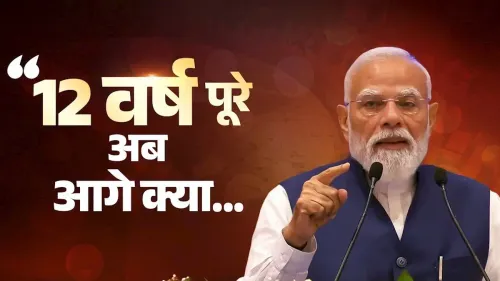
Modi cited 12 years of progress since 2014 as evidence of unprecedented pace and scale of national development.
The Viksit Bharat framework ties together existing schemes in infrastructure, digital public goods, and manufacturing under a single centenary horizon.
The post explicitly noted global attention — 'the world is also witnessing India's momentum' — framing the message for international as well as domestic audiences.
The next concrete test of the vision's operationalisation is expected in the upcoming Union Budget speech and state-level adoption of 2047 planning benchmarks.
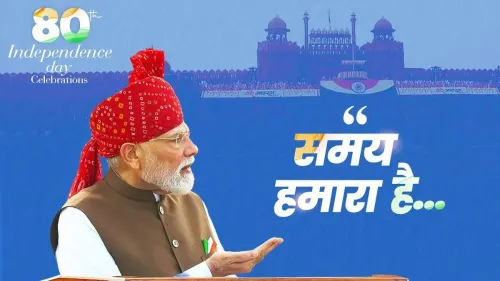
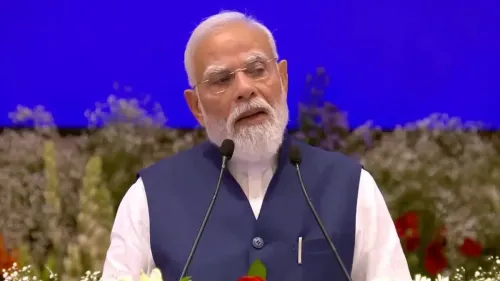
On Independence Day, 15 August 2026, Prime Minister Narendra Modi set the nation's sights on a single, unambiguous horizon — a fully developed India by 2047, the centenary of freedom. Invoking 12 years of what he called unprecedented pace and scale of progress, Modi declared that India is now moving with 'renewed confidence and determination' — and that the world is watching.
The 2047 target and what it means
The Viksit Bharat vision — developed-nation status by the centenary of independence — has been the organising frame of Modi government policy since it was formally articulated. Every major scheme, from Make in India to digital public infrastructure and national infrastructure pipelines, has been presented as a building block toward that 2047 endpoint. Independence Day addresses have become the annual checkpoint where retrospective claims and forward targets converge.
The framing is deliberate: by anchoring ambition to a centenary, the government creates a planning horizon that outlasts any single term and asks citizens — and investors — to think in generational, not electoral, cycles.
Twelve years of momentum — the record being claimed
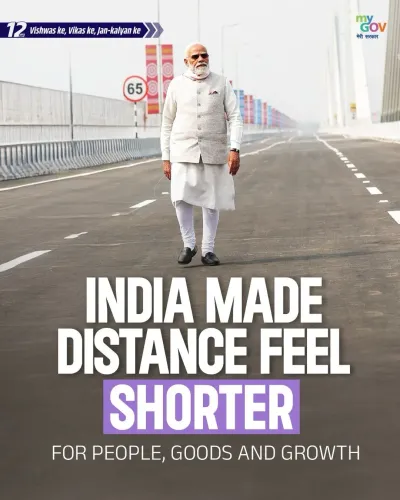
Modi's reference to 12 years stretches the clock back to 2014, when his first government launched the economic and infrastructure programmes that defined the decade. The claim of 'unprecedented' pace covers a period that includes major pushes in highway construction, digital payments adoption, direct-benefit transfers, and manufacturing incentives. The Independence Day stage is where those data points are woven into a single national narrative.
Crucially, the message is also addressed outward — 'the world is also witnessing India's momentum' signals that the audience is not only domestic. It is a statement aimed at global partners, investors, and multilateral institutions at a moment when India's economic weight commands serious international attention.
What to watch as the 2047 clock ticks
The next concrete test of how seriously the Viksit Bharat goal is being operationalised will come in the next Union Budget speech — whether the 2047 milestones translate into specific, measurable allocations rather than aspirational language. State governments adopting their own 2047 planning benchmarks would signal that the vision is genuinely cascading through the federal structure, not remaining a Centre-level slogan.
India has set the goal. The scoreboard starts now.
Point of View
Modi is not merely marking a milestone but building a longitudinal argument: that the policy choices of 2014 are compounding into structural transformation. The outward-facing line — 'the world is also witnessing' — is a signal that India is now confident enough to invite external audit of its trajectory, a posture shift from earlier years when the pitch was primarily domestic. Whether the Viksit Bharat goal retains political salience will depend on whether future Budgets convert the 2047 aspiration into hard, measurable targets that can be tracked and held accountable.
NationPress
29 Sept 2026
Frequently Asked Questions
What is Viksit Bharat 2047?
Viksit Bharat 2047 is India's official national vision to achieve developed-nation status by 2047 , the centenary of independence. PM Modi has consistently framed major government schemes — from infrastructure to digital public goods — as building blocks toward this goal.
What did PM Modi say on Independence Day 2026?
On 15 August 2026 , PM Modi reaffirmed the Viksit Bharat vision, cited 12 years of unprecedented progress since 2014 , and said India is moving with renewed confidence while the world watches its momentum.
When did India set the Viksit Bharat 2047 goal?
The Viksit Bharat vision has been articulated by the Modi government across successive Independence Day addresses and policy documents, with its roots in the broader development agenda launched after 2014 .
What schemes are linked to the Viksit Bharat goal?
Programmes including Make in India , national infrastructure pipelines, digital public infrastructure, and direct-benefit transfer schemes have all been presented by the government as milestones on the road to Viksit Bharat by 2047 .
What is the next milestone to watch for Viksit Bharat?
Analysts will watch the next Union Budget speech for specific, measurable allocations tied to the 2047 target, and whether state governments begin adopting their own Viksit Bharat planning benchmarks.