PM Modi Vows to Accelerate Viksit Bharat 2047 Pace
Synopsis
Prime Minister Narendra Modi on 10 June 2026 called for expanding the speed and scale of India's governance work, stressing that the country must stay one step ahead of the world to achieve the Viksit Bharat 2047 vision of a fully developed India by independence centenary.
Key Takeaways
PM Modi posted on 10 June 2026 calling for wider speed and scale in India's development work.
The post directly references the Viksit Bharat 2047 goal of making India a developed nation by the centenary of independence.
The Amrit Kaal framework was first introduced in PM Modi 's Independence Day address on 15 August 2022 .
The 2023 Union Budget and the Viksit Bharat Sankalp Yatra formalised district-level alignment with 2047 targets.
The government's approach aims to keep India 'one step ahead of the world' rather than merely matching global development timelines.
The next Union Budget and NITI Aayog reports are expected to carry updated implementation benchmarks for the 2047 roadmap.
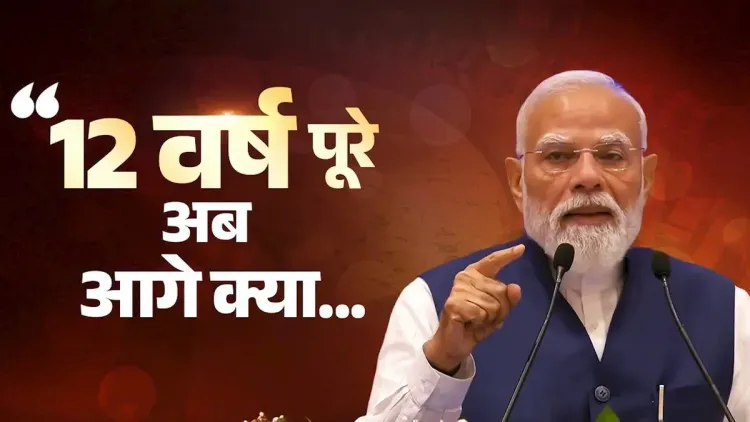
Prime Minister Narendra Modi on Wednesday, 10 June 2026 called for expanding the speed and scale of India's development work, underscoring that the country must stay 'one step ahead of the world' in pursuit of the Viksit Bharat 2047 vision.
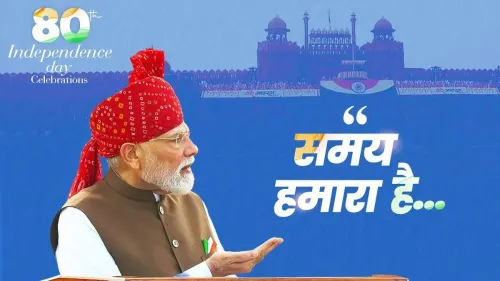
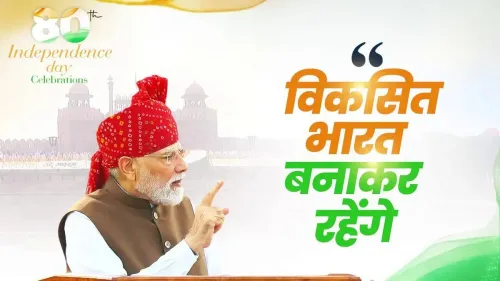
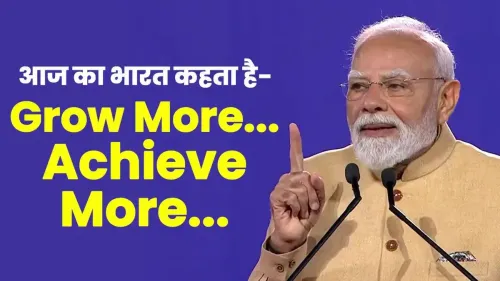
In a post on X, Prime Minister Modi wrote in Hindi: 'हमने अब तक जिस स्पीड और स्केल पर काम किया है, उसे और व्यापक बनाना है।' — 'The speed and scale at which we have worked so far must be made even wider.' He added that, keeping the 2047 goal in view, India must move at a pace that keeps it one step ahead of the world.
Context
Viksit Bharat 2047 is the Modi government's overarching national vision to transform India into a fully developed country by the centenary of independence. The framework spans economic growth, social equity, technological self-reliance and global standing. Prime Minister Modi first articulated the concept of Amrit Kaal — a transformative 25-year period — during his Independence Day address on 15 August 2022.
Since then, the vision has been institutionalised through successive policy instruments. The 2023 Union Budget embedded 2047 milestones into capital expenditure priorities, and the Viksit Bharat Sankalp Yatra carried district-level outreach across the country to align flagship schemes with those long-term targets.
Policy Backdrop
The emphasis on speed and scale is not rhetorical alone. Successive BJP-led governments since 2014 have anchored governance around rapid execution — compressing infrastructure timelines, scaling digital public goods such as UPI and Aadhaar, and accelerating manufacturing through initiatives like Make in India and production-linked incentive schemes.
India's stated ambition to become the world's third-largest economy sits at the centre of this accelerated approach. Policymakers have repeatedly argued that conventional development timelines are insufficient, and that India must leapfrog older models by adopting emerging technologies and deepening self-reliance across critical sectors.
Stakeholders and Impact
The call to widen the pace of work has direct implications for both citizens and the private sector. For citizens, the 2047 roadmap promises measurable improvements in income levels, infrastructure access, healthcare and education quality. For industry, it signals continued policy support for investment, innovation and export competitiveness.
NITI Aayog and various parliamentary standing committees have been tasked with tracking implementation benchmarks. The broader pattern suggests that each successive budget cycle and economic survey is expected to report granular progress against 2047 targets, keeping accountability mechanisms visible.
What's Next
Observers will watch the next Union Budget and the forthcoming Economic Survey for updated 2047 roadmaps and revised implementation timelines. Any new NITI Aayog reports or parliamentary committee recommendations on execution pace are likely to follow. Prime Minister Modi's post, accompanied by a video, suggests a formal communication push around the 2047 agenda may be under way, with further policy announcements potentially on the horizon.
The core message — that India must not merely keep pace with the world but stay ahead of it — sets the political and policy tone for governance decisions in the months ahead.
Point of View
Likely ahead of a major policy announcement or budget cycle. The framing — 'one step ahead of the world' — elevates the vision from a domestic development target to a geopolitical positioning statement, consistent with India's push for a larger role in global governance. This also serves to set a performance benchmark for the bureaucracy and the ruling party ahead of state elections and the next general election cycle. The call for greater scale rather than a course correction suggests the government is doubling down on existing programme architecture rather than introducing structural reforms.
NationPress
26 Oct 2026
Frequently Asked Questions
What is Viksit Bharat 2047?
Viksit Bharat 2047 is the Modi government's national vision to make India a fully developed country by 2047, the centenary of independence, covering economic growth, social equity and technological self-reliance.
What did PM Modi say about the 2047 goal on 10 June 2026?
PM Modi said the speed and scale of work done so far must be made even wider, and that India must move fast enough to stay one step ahead of the world in pursuit of the 2047 vision.
How has the government formalised the Viksit Bharat 2047 plan?
The 2023 Union Budget embedded 2047 milestones into spending priorities, and the Viksit Bharat Sankalp Yatra conducted district-level outreach to align flagship government schemes with the long-term targets.
What should citizens watch for next on the Viksit Bharat 2047 agenda?
The next Union Budget and Economic Survey are expected to carry updated 2047 roadmaps, while NITI Aayog and parliamentary committees are likely to release fresh implementation benchmarks.