PM Modi on 80th Independence Day: 25 crore lifted from poverty, Viksit Bharat by 2047
Synopsis
Modi's 80th Independence Day address was less a celebration and more a scoreboard — 33-fold mobile manufacturing growth, 100-fold digital transactions, 25 crore out of poverty. With Viksit Bharat 2047 as the anchor, and Vande Mataram sung at the Red Fort for the first time, the speech signalled a deliberate shift from welfare optics to development ambition.
Key Takeaways
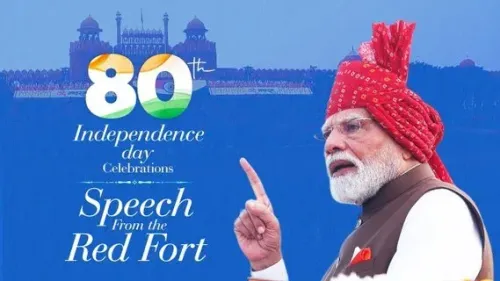
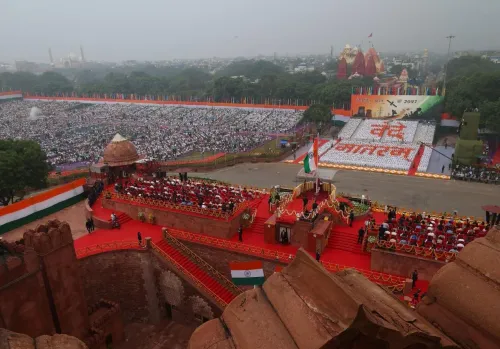
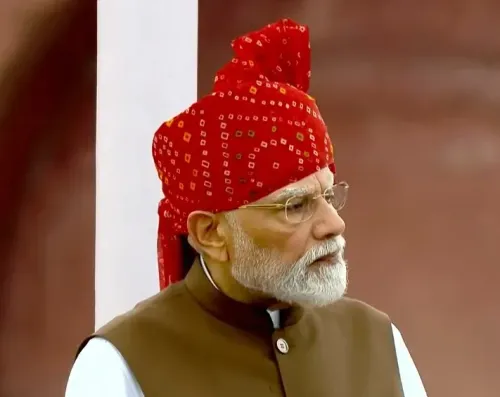
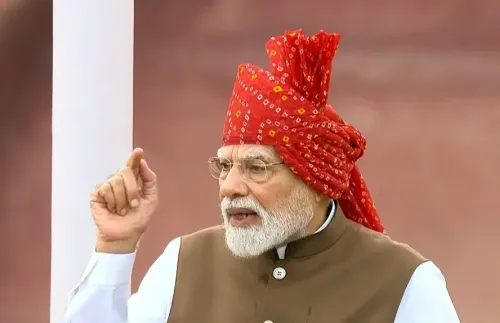
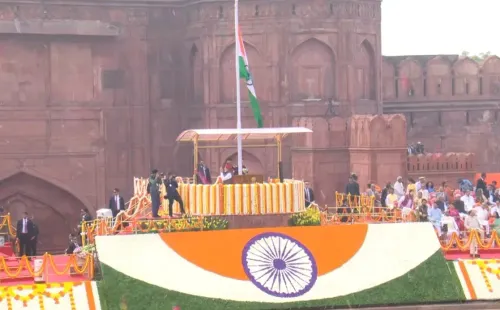
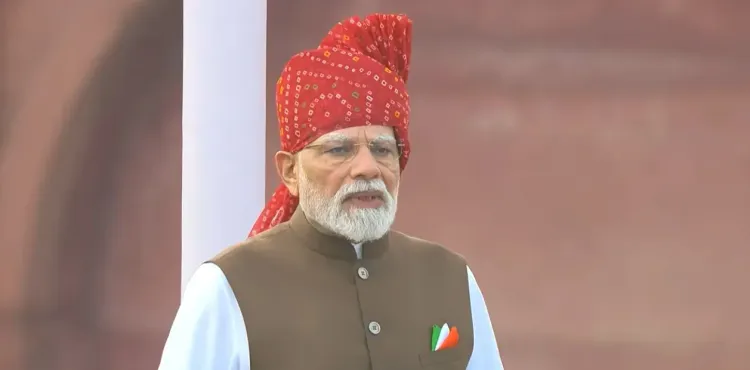
PM Modi addressed the nation from the Red Fort on 15 August 2025 , marking India's 80th Independence Day .
Vande Mataram was rendered at the Red Fort for the first time, coinciding with its 150th anniversary .
Modi cited 25 crore Indians escaping poverty over the past 12 years as a key achievement.
Mobile phone manufacturing grew 33-fold , digital transactions 100-fold , and defence production nearly four-fold over 12 years, according to the address.
The Prime Minister reaffirmed the Viksit Bharat by 2047 goal, calling on 140 crore citizens to drive it.
Modi expressed solidarity with those affected by floods and landslides across several states.
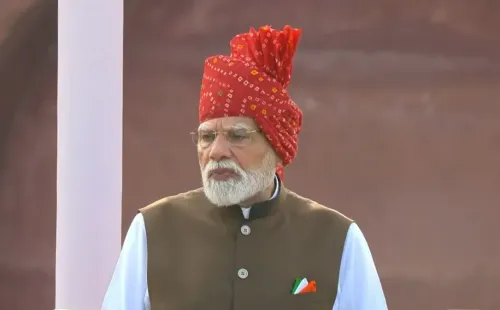
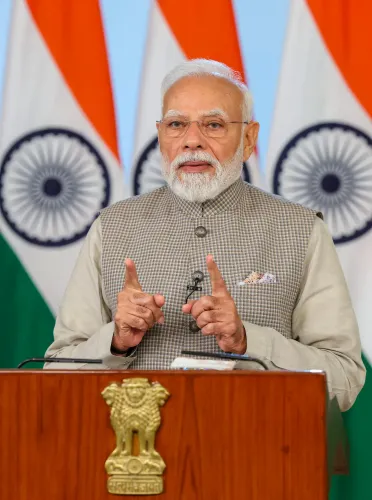
Prime Minister Narendra Modi on 15 August 2025 addressed the nation from the Red Fort on the occasion of India's 80th Independence Day, crediting crores of citizens across every social and regional divide for driving the country's transformation over the past 12 years. In a wide-ranging speech, he cited landmark gains in manufacturing, infrastructure, and poverty alleviation — including 25 crore Indians escaping poverty — while reaffirming the national goal of Viksit Bharat by 2047.
Vande Mataram at the Red Fort
In a historic first, the national song Vande Mataram was rendered during the Independence Day celebrations at the Red Fort. Modi noted that this year marks 150 years of Vande Mataram, calling it a fitting moment for the tradition. 'Today, Vande Mataram is echoing everywhere. Today when we are celebrating 150 years of Vande Mataram, then what will be a more perfect time for this than today,' he said.
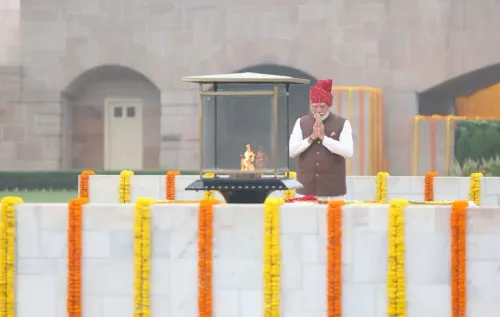
The Prime Minister opened his address by honouring freedom fighters, paying tribute to Mahatma Gandhi and revolutionaries who 'ignited the glorious tradition of sacrifice,' and called on citizens to carry forward that legacy with renewed resolve.
12 Years of Progress: The Numbers
Modi outlined a series of sector-wise growth figures spanning the past 12 years, presenting them as evidence of a broad-based national effort. According to the Prime Minister's address, defence production rose nearly four-fold, Khadi and Village Industries output grew nearly five-fold, and electronic manufacturing expanded nearly seven-fold. Modern railway coach manufacturing reportedly surged 21-fold, while mobile phone manufacturing climbed 33-fold.
On digital and innovation metrics, internet users grew nearly four-fold, patents granted increased four-fold, and digital transactions rose a staggering 100-fold, according to the figures cited in the address. The Prime Minister also highlighted delivery speed improvements in welfare schemes: tap water connections were provided 15 times faster on average each year, gas connections at six times the earlier pace, toilets for the poor at four times the speed, and homes for the poor at three times the pace.
25 Crore Out of Poverty
One of the most cited figures in the address was the claim that 25 crore fellow countrymen have defeated poverty and emerged from it over the past 12 years. Modi attributed this outcome directly to the collective determination of citizens — including Dalits, tribals, rural and urban residents, the poor, the middle class, youth, the elderly, women, and men from every part of the country. 'I acknowledge and pay my respectful tribute to their efforts,' he said.
This comes amid ongoing debates among economists and policy researchers about the methodology used to measure poverty reduction in India, with some independent assessments differing from government figures.
Viksit Bharat 2047: The Road Ahead
Modi reiterated the government's flagship long-term vision: a fully developed India by the time the country completes 100 years of independence in 2047. 'When the world's most populous country takes the resolve to become developed, it becomes a testament to our courage in the eyes of the entire world,' he said. He called for bigger national ambitions, arguing that 'we can no longer proceed with small dreams.'
The Prime Minister also expressed solidarity with those affected by floods and landslides across several states, assuring them of the government's support. He acknowledged that governance reforms had included the elimination of thousands of compliances and the repeal of hundreds of outdated laws, describing them as essential to 21st-century progress.
With the 2047 deadline now a central organising principle of government policy, the next phase of implementation — spanning infrastructure, manufacturing, and social welfare — will be closely watched by both allies and critics.
Point of View
100-fold in digital transactions — are striking, but base effects matter: many of these sectors started from near-zero a decade ago, making large multiples arithmetically easier. The poverty-reduction figure of 25 crore is the most politically loaded claim, and independent economists have flagged methodological divergences between government and non-government estimates. The Viksit Bharat 2047 framing is now so central to BJP's political identity that it functions as both a policy target and an electoral narrative — which makes rigorous, independent benchmarking more important, not less. The first singing of Vande Mataram at the Red Fort is a symbolic move with cultural resonance that will play differently across India's pluralistic electorate.
NationPress
30 Sept 2026
Frequently Asked Questions
What did PM Modi say on the 80th Independence Day?
PM Modi addressed the nation from the Red Fort on 15 August 2025, highlighting 12 years of progress across manufacturing, digital adoption, and poverty alleviation, and reaffirming the Viksit Bharat 2047 goal. He credited crores of ordinary citizens — across caste, class, gender, and region — for the country's transformation.
What is Viksit Bharat 2047?
Viksit Bharat 2047 is the Indian government's goal of achieving developed-nation status by 2047, when India completes 100 years of independence. Modi has framed it as a collective mission for 140 crore citizens, anchored in manufacturing growth, digital expansion, and social welfare improvements.
Why was Vande Mataram sung at the Red Fort for the first time?
The national song Vande Mataram was rendered at the Red Fort's Independence Day celebrations for the first time in 2025, coinciding with its 150th anniversary. PM Modi described the occasion as a historically fitting moment to introduce the tradition.
How many people were lifted out of poverty according to PM Modi?
PM Modi stated that 25 crore Indians have defeated poverty and emerged from it over the past 12 years. The figure has been cited by the government as a key outcome of its welfare and development programmes, though independent assessments of poverty reduction methodology vary.
What growth figures did PM Modi cite in his Independence Day speech?
Modi cited a range of sector-wise growth figures: mobile phone manufacturing up 33-fold, digital transactions up 100-fold, electronic manufacturing up nearly seven-fold, railway coach manufacturing up 21-fold, and defence production up nearly four-fold over 12 years. Welfare delivery speeds also reportedly improved significantly across tap water, gas, toilets, and housing.