Trump Sits With Stephen A. Smith on Black American Policy Record
Synopsis
President Trump sat down with media personality Stephen A. Smith to lay out the administration's claimed accomplishments for Black Americans, with the White House amplifying the interview on X as part of a targeted outreach strategy rooted in criminal justice reform, Opportunity Zones, and pre-pandemic economic data.
Key Takeaways
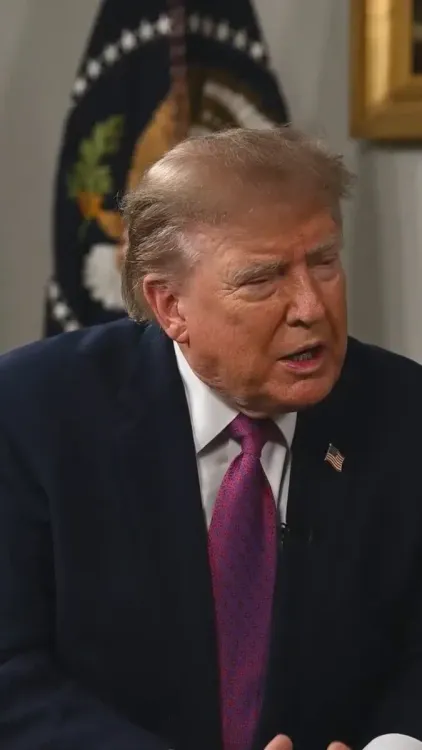
The White House posted a video of President Trump being interviewed by Stephen A.
Smith on his administration's record for Black Americans.
The First Step Act (2018) reformed federal sentencing and created prisoner reentry programmes — a key pillar of Trump's criminal justice outreach to Black communities.
Opportunity Zones , created under the 2017 Tax Cuts and Jobs Act , channelled private investment into low-income, often majority-Black neighbourhoods.
Pre-pandemic Black unemployment rates reaching historic lows remain a central data point in the administration's economic argument.
Publishing the interview directly on X reflects a White House strategy of digital-first, controlled distribution to reach social-media-native audiences.
The specific claims made in the interview cannot yet be independently verified, as the conversation falls outside currently available reporting.
In a direct-to-camera conversation designed to reach Black American voters and viewers, President Donald J. Trump sat down with sports and media personality Stephen A. Smith to walk through what the administration describes as its record of accomplishments for Black Americans — a high-profile interview the White House amplified on X on November 14, 2026.
Why Stephen A. Smith, and Why Now
Stephen A. Smith is one of the most-watched figures in American sports media, with a platform that extends well beyond athletics into culture and politics. Choosing Smith as an interlocutor is a deliberate signal: the administration is pursuing outreach through voices that carry credibility with Black audiences who may not tune in to traditional political programming. It is a format several administrations have used — meeting audiences where they already are.
The Policy Record Being Argued
The conversation draws on a lineage of Trump-era policies that the administration has long pointed to when making its case to Black Americans. The First Step Act, signed in 2018, overhauled federal sentencing guidelines and created prisoner reentry programmes — a bipartisan criminal justice reform that drew genuine cross-aisle support. Separately, the 2017 Tax Cuts and Jobs Act established Opportunity Zones, directing private capital into low-income communities, many of them majority-Black urban neighbourhoods.
During Trump's first term, the administration also repeatedly cited pre-pandemic Black unemployment rates, which hit historic lows in early 2020 before the COVID-19 economic shock. These data points form the backbone of the outreach argument the White House has consistently made.
A Pattern of Demographic-Targeted Media Moments
Presidential administrations across party lines have used targeted media interviews to communicate with specific demographic groups — the format is neither new nor unique to Trump. What shifts cycle to cycle is the messenger, the medium, and the specific policy wins being claimed. Placing this interview on X rather than a traditional broadcast slot also reflects how the White House has prioritised direct digital distribution to control framing and reach younger, social-media-native audiences.
The specific claims and exchanges from this interview have not yet been independently detailed in available records, and the full scope of second-term accomplishments being discussed falls outside verified reporting. What is clear is the strategic intent: use a trusted, high-visibility voice to carry an administration message into a community the White House is actively courting.
Whether the argument lands will depend on what, precisely, is on the tape — and how audiences weigh the record against the moment.
Point of View
Not partisan politics — is a textbook play in demographic outreach: borrow trust from a non-political messenger to carry a political message. It fits a broader second-term pattern of the White House using X as a broadcast network in its own right, bypassing traditional editorial filters. The policy anchors being cited — the First Step Act and Opportunity Zones — are among the most bipartisan achievements of Trump's first term, suggesting the administration is leading with its strongest cross-aisle material. How this translates into measurable political movement among Black voters remains the central open question.
NationPress
15 Nov 2026
Frequently Asked Questions
What did Trump discuss with Stephen A. Smith about Black Americans?
President Trump sat down with Stephen A. Smith to outline the administration's claimed accomplishments for Black Americans, including criminal justice reform, economic investment zones, and employment data from his first term. Specific details of the second-term claims in this interview are not yet independently verified.
What is the First Step Act and how does it relate to Black Americans?
The First Step Act, signed in 2018, reformed federal sentencing guidelines and established prisoner reentry programmes. It disproportionately benefited Black Americans, who are overrepresented in the federal prison system, and has been cited by the Trump administration as a landmark criminal justice achievement.
What are Opportunity Zones and who do they benefit?
Opportunity Zones were created under the 2017 Tax Cuts and Jobs Act to attract private investment into designated low-income communities. Many of these zones are located in majority-Black urban neighbourhoods, making them a policy the administration highlights in outreach to Black Americans.
Why did the White House choose Stephen A. Smith for this interview?
Stephen A. Smith is one of the most-watched sports and media personalities in the United States, with a large following among Black audiences. Using a non-partisan, culturally credible voice is a common administration strategy for reaching communities outside traditional political media.
Where can I watch the Trump and Stephen A. Smith interview?
The White House posted the interview video directly on its official X account. The post was published on November 14, 2026, and is accessible via the White House's X profile.