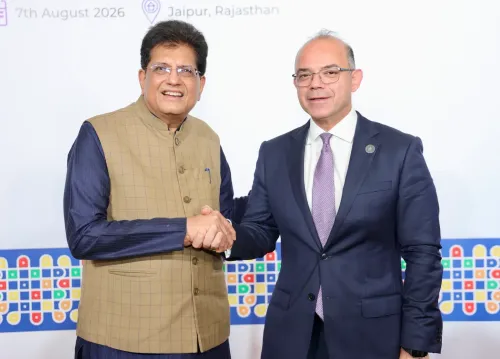
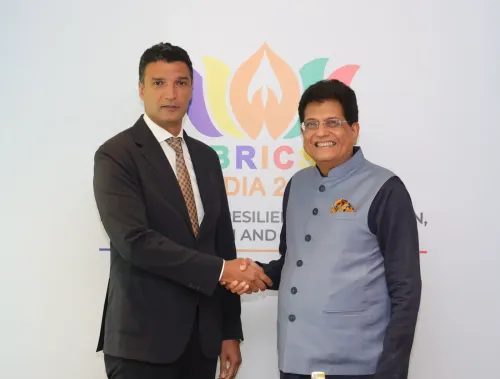
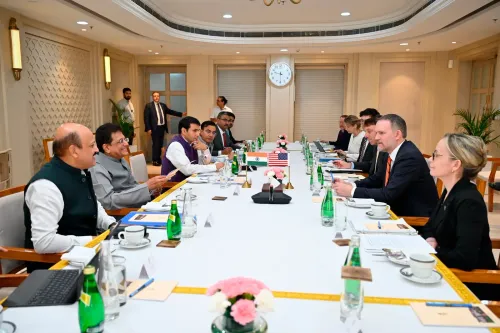
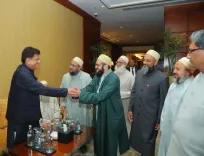
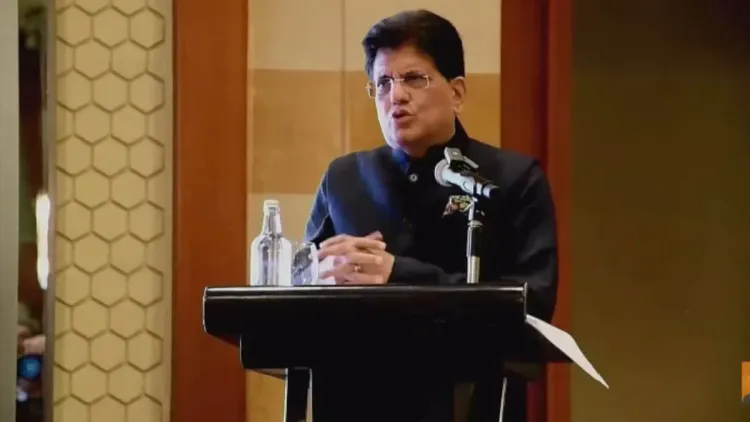
Piyush Goyal highlights India-Egypt's deep civilisational bonds
Synopsis
Union Commerce Minister Piyush Goyal has spotlighted the depth of India-Egypt ties, rooted in civilisational history and the Non-Aligned Movement, calling the friendship 'truly special' and rich with opportunity for further growth.
Key Takeaways
Union Commerce Minister Piyush Goyal described India-Egypt ties as 'truly special, built and nurtured by generations of people.' Both nations were founding members of the Non-Aligned Movement in 1961 , establishing an early framework for South-South cooperation.
Goyal emphasised 'shared history and strong people-to-people connect' as the foundation for deeper bilateral engagement.
Egypt serves as a strategic gateway for Indian trade and investment across North Africa and the Arab world.
India's focus on people-to-people diplomacy reflects its broader Global South outreach strategy.
A friendship forged across centuries — not just decades — is what Union Commerce and Industry Minister Piyush Goyal invoked on Sunday, November 15, 2026, as he underlined the depth and promise of India-Egypt bilateral ties, calling them 'truly special, built and nurtured by generations of people.'
Goyal pointed to a 'shared history and strong people-to-people connect' as the bedrock for deepening the friendship further — framing the relationship not through the narrow lens of trade ledgers, but as a living civilisational inheritance.
From Non-Aligned pioneers to Global South partners
India and Egypt share one of modern diplomacy's more storied origin stories. Both nations were founding members of the Non-Aligned Movement in 1961, that landmark post-colonial assertion that the developing world need not choose between Washington and Moscow. That foundational solidarity seeded decades of South-South cooperation and gave the bilateral relationship a philosophical weight few others carry. Today, Egypt serves as a critical gateway for Indian trade and investment across North Africa and the broader Arab world. Indian exporters, from pharmaceuticals to textiles, have long eyed Egypt's strategic position at the crossroads of three continents. For Cairo, India represents a reliable partner in a neighbourhood where reliable partners are prized.People-to-people ties: the softer architecture of diplomacy
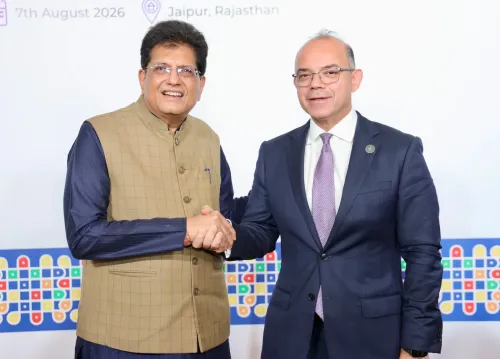
Goyal's emphasis on the 'people-to-people connect' reflects a deliberate strand of India's broader diplomatic strategy — the recognition that durable partnerships are built not just in ministerial chambers but in classrooms, markets, and cultural exchanges. India has increasingly leaned on this softer architecture as part of its Global South outreach, positioning itself as a partner of choice for African and Arab nations rather than a distant patron. For Egypt, that people-to-people thread runs through shared ancient histories — two of the world's oldest civilisations — through student exchanges and diaspora links, and through a growing volume of bilateral commerce that both sides have signalled they want to expand. Whether Goyal's post signals an imminent high-level meeting, a fresh round of the India-Egypt Joint Commission, or simply a reaffirmation of diplomatic warmth, the message lands clearly: New Delhi views Cairo not as a peripheral relationship but as a consequential one — and it wants the world to know it. Two ancient civilisations, one renewed handshake — the question now is what concrete architecture both sides will build on that foundation.Point of View
Not just shared commerce. For a Commerce Minister, the emphasis on people-to-people ties over trade numbers is itself a signal — it suggests the groundwork is being laid for more substantive bilateral moves. Watch for the India-Egypt Joint Commission or a high-level visit to give this diplomatic warmth a concrete institutional form.
NationPress
15 Nov 2026
Frequently Asked Questions
What did Piyush Goyal say about India-Egypt relations?
Goyal described India-Egypt ties as 'truly special, built and nurtured by generations of people,' and said the shared history and people-to-people connect offer immense opportunities to deepen the friendship further.
What is the history of India-Egypt diplomatic relations?
India and Egypt established diplomatic relations shortly after independence and were both founding members of the Non-Aligned Movement in 1961, forging early bonds of South-South cooperation.
Why is Egypt important for India's foreign policy?
Egypt is a strategic partner in North Africa and the Arab world, serving as an important gateway for Indian trade and investment, and aligns with India's broader Global South outreach.
What is the Non-Aligned Movement and why does it matter for India-Egypt ties?
The Non-Aligned Movement, founded in 1961, was a bloc of developing nations that refused to align with either Cold War superpower. India and Egypt were among its founders, giving their bilateral relationship a deep philosophical and historical foundation.
What could be the next steps in India-Egypt bilateral engagement?
Potential next steps include meetings of the India-Egypt Joint Commission and progress on bilateral trade and investment facilitation measures, though no specific event has been announced.