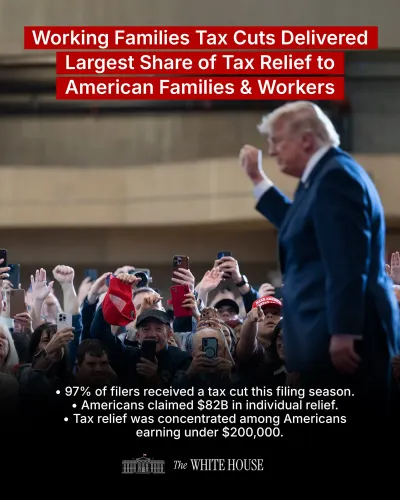
White House Backs Rep. Smith's Working Families Tax Cuts

Synopsis
The White House amplified Rep. Jason Smith's assertion that working families tax cuts are delivering results one year on, reinforcing the administration's pro-tax-relief economic messaging and setting the stage for upcoming congressional debates on tax code extensions.
Key Takeaways
The White House reposted Rep.
Jason Smith's commentary on 8 July 2026 , endorsing his one-year assessment of working families tax cuts.
Jason Smith represents Missouri's 8th Congressional District and has focused on tax and budget issues since entering Congress in 2013 .
The messaging builds on the legacy of the Tax Cuts and Jobs Act of 2017 , which reduced individual rates and expanded the child tax credit.
The White House's amplification reflects a consistent executive communications strategy of highlighting claimed benefits of Republican-backed fiscal legislation.
Treasury and IRS data releases on filing-season results will be closely watched for independent verification of tax-cut impacts.
Congressional debate on extending or allowing key tax provisions to expire is expected to intensify in the months ahead.
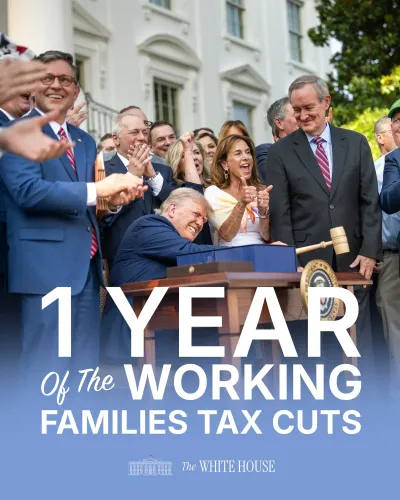
The White House on Wednesday, 8 July 2026 amplified a post by Republican Representative Jason Smith of Missouri, drawing attention to what the congressman described as one year of results from tax cuts aimed at working families.
Context
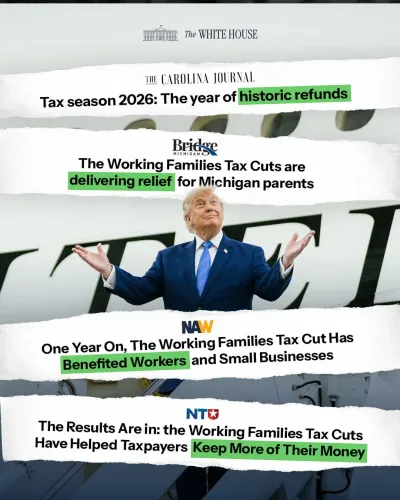
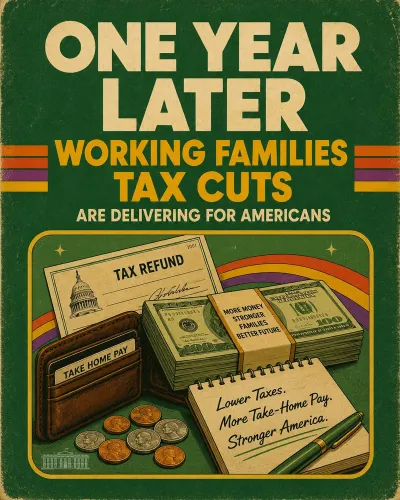
The White House reposted Representative Smith's commentary headlined 'One Year Later, the Working Families Tax Cuts Are Delivering,' signalling executive-branch endorsement of his assessment. Rep. Jason Smith, who represents Missouri's 8th Congressional District and has served in the House since 2013, has been a consistent voice on tax and budget matters in Congress.
The repost is part of a broader pattern in which the White House uses its official communications channels to amplify Republican lawmakers' claims about the economic impact of tax legislation, framing fiscal policy outcomes in terms favourable to working and middle-income households.
Policy Backdrop
The legislative lineage behind current Republican tax messaging traces back to the Tax Cuts and Jobs Act of 2017, which lowered individual income tax rates and expanded the child tax credit for millions of American families. Subsequent Republican-led efforts have sought to extend or build upon those provisions, with working families consistently cited as the primary beneficiaries.
Representative Smith, in his capacity as a senior House member focused on fiscal policy, has been vocal about the need to preserve and extend tax relief measures. The White House's decision to amplify his one-year assessment underscores the administration's interest in keeping tax policy outcomes in the public conversation.
Stakeholders and Impact
The primary stakeholders in this messaging are American working families and taxpayers, whose take-home pay, child tax credit eligibility, and overall tax burden are directly shaped by the provisions under discussion. For Indian-origin professionals and diaspora members working in the United States, changes to individual tax brackets and credits carry practical financial significance.
Economists and fiscal analysts continue to debate the distributional effects of Republican tax legislation, with supporters pointing to wage growth and increased after-tax income for lower and middle earners, while critics argue that the largest gains accrued to higher-income households and corporations.
What's Next
Congressional attention is expected to focus on whether key provisions of existing tax legislation will be extended before scheduled expiration dates. Upcoming data releases from the U.S. Treasury and the Internal Revenue Service on filing-season results will provide a clearer empirical picture of how the tax measures have affected households across income levels.
The White House's active amplification of Representative Smith's framing suggests the administration intends to keep tax relief for working families as a central pillar of its economic messaging heading into the legislative calendar's second half.
Point of View
The administration signals that tax relief for working families will remain a political priority, not merely a policy footnote. For Indian-origin observers tracking U.S. fiscal policy, this episode illustrates how the executive branch uses social media as a real-time policy advocacy tool, blurring the line between governance and political communication. The true test will come when independent fiscal data either validates or complicates the 'delivering results' claim.
NationPress
7 Oct 2026
Frequently Asked Questions
What are the Working Families Tax Cuts mentioned by the White House?
The White House reposted Rep. Jason Smith's reference to tax cuts aimed at working families, building on provisions from the Tax Cuts and Jobs Act of 2017 that lowered individual income tax rates and expanded the child tax credit. The specific legislation Rep. Smith described has not been independently verified from established public records as of this report.
Who is Rep. Jason Smith and why is he talking about tax cuts?
Rep. Jason Smith is a Republican U.S. Representative from Missouri's 8th Congressional District who has served since 2013. He has a strong focus on tax and budget issues in the House, making him a key voice on Republican fiscal policy messaging.
Why did the White House repost Rep. Smith's tax cut claim?
The White House amplified Rep. Smith's post as part of its broader communications strategy of highlighting claimed benefits of Republican-backed tax legislation, particularly around working and middle-income families, ahead of expected congressional debates on tax code extensions.
How do US tax cuts affect Indian-origin workers in America?
Indian-origin professionals working in the United States are directly affected by changes to individual income tax brackets and credits such as the child tax credit, which influence their annual tax liability and take-home pay.
What happens next with US tax policy in 2026?
Congress is expected to debate whether to extend key tax provisions before they expire. Upcoming data from the U.S. Treasury and IRS on filing-season results will provide important evidence about the real-world impact of existing tax cuts on American households.