Odisha secures ₹240 cr under PM-SETU to upgrade ITIs
Synopsis
Odisha has secured ₹240.21 crore under the PM-SETU scheme to upgrade five ITIs using a Hub and Spoke model, with Government ITI Barbil as the Hub and four district ITIs as Spokes, aiming to bridge the education-to-employment gap in the state's industrial belt.
Key Takeaways
Odisha has secured ₹240.21 crore under the national PM-SETU scheme for ITI modernisation.
The upgradation follows a Hub & Spoke model approved by the State Steering Committee .
Government ITI Barbil (Keonjhar) is designated the Hub institution.
Four Spoke ITIs — Anandapur, Koida, Karanjia, and Barkote — form the surrounding network.
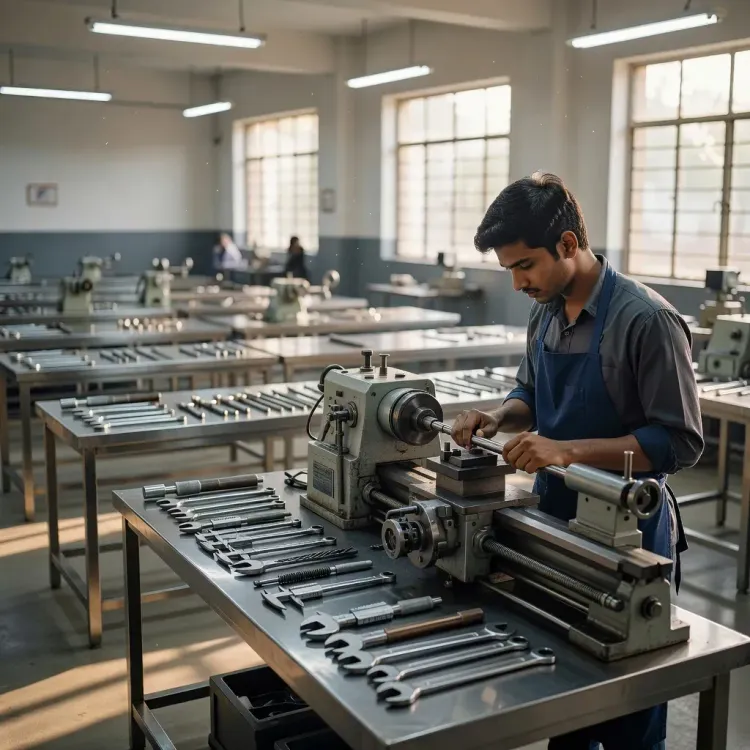
The investment targets infrastructure upgrades, modern equipment, and future-ready curricula to reduce the education-to-industry skills gap.
The cluster is located in Odisha's mining and manufacturing belt, where demand for technically skilled workers is high.
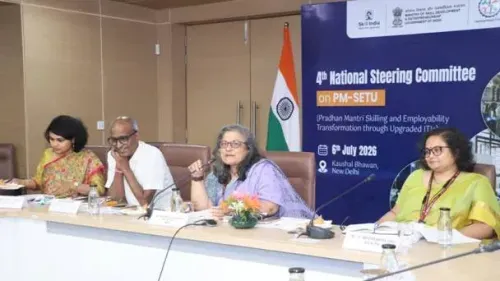
The Chief Minister's Office of Odisha announced on 8 July 2026 that the state has secured a ₹240.21 crore investment under the expanded national PM-SETU scheme to transform its Industrial Training Institutes (ITIs) into future-ready skill hubs, with the upgradation following a Hub & Spoke model approved by the State Steering Committee.
Context
The CMO posted that as 'the PM-SETU scheme goes nationwide, Odisha has secured a massive ₹240.21 crore investment to transform its ITIs into future-ready skill hubs.' The announcement identifies Government ITI Barbil as the designated Hub, with four Spoke institutions — Government ITIs at Anandapur, Koida, Karanjia, and Barkote — forming the network around it. The model is designed to bridge the gap between education and industry while modernising infrastructure and introducing future-ready curricula.
The Hub & Spoke architecture concentrates advanced equipment and specialised faculty at a central institute, which then extends resources and training pathways to surrounding Spoke ITIs. This allows smaller, district-level centres to offer upgraded courses without independently bearing the full cost of modern infrastructure.
Policy Backdrop
India's focus on formal vocational training dates to the Skill India Mission launched in 2015, which set an ambitious target of training hundreds of millions of youth through a network of ITIs, polytechnics, and short-term skilling centres. The National Policy for Skill Development and Entrepreneurship (2015) specifically prioritised modernisation of ITI infrastructure and the alignment of curricula with live industry demand. The Pradhan Mantri Kaushal Vikas Yojana (PMKVY), also initiated in 2015, added a layer of short-term, outcome-linked training to complement the longer-duration ITI programmes.
Central skill programmes have progressively shifted from standalone institutes toward networked models that share advanced facilities across districts. Odisha, as a state with significant mining and manufacturing activity — particularly in districts such as Keonjhar, where Barbil is located — represents a natural fit for this approach, given the demand for technically skilled workers in those industrial clusters.
Stakeholders and Impact
The primary beneficiaries are youth trainees and ITI students in the districts served by the five identified institutes. Barbil in Keonjhar district sits at the heart of Odisha's iron-ore belt, and an upgraded Hub ITI there is positioned to feed skilled workers directly into the mining and allied manufacturing supply chain. The Spoke ITIs at Anandapur (Keonjhar), Koida (Sundargarh), Karanjia (Mayurbhanj), and Barkote (Deogarh) extend this reach into predominantly tribal and semi-rural geographies where formal skilling access has historically been limited.
Local industries — particularly in minerals processing, fabrication, and logistics — stand to gain a more readily employable workforce, potentially reducing the skill mismatch that has long characterised hiring in these regions. The investment also signals a continued deepening of the Centre-state partnership on human capital development.
What's Next
Attention will now turn to the phased rollout of infrastructure upgrades at each of the five ITIs, and to the curriculum revision process that must accompany physical modernisation to deliver on the 'future-ready' promise. Subsequent placement rates, apprenticeship tie-ups with industry, and enrolment numbers at the upgraded centres will serve as the key metrics for evaluating the ₹240.21 crore outlay. The State Steering Committee's ongoing oversight role will be critical in ensuring that Hub-Spoke coordination translates into measurable outcomes for trainees across the cluster.
Point of View
Where industrial demand for certified tradespeople is structural and ongoing. The Hub-Spoke architecture reflects a maturing of India's central skilling strategy, moving away from isolated institute grants toward networked clusters that can sustain quality across rural and semi-urban geographies. For the Odisha government, publicising the State Steering Committee's approval signals institutional ownership of the model, which matters for accountability when placement outcomes are eventually scrutinised. The broader pattern — Centre funding, state-level framework approval, district-level delivery — is becoming the template for human capital investment across resource-rich states.
NationPress
9 Jul 2026
Frequently Asked Questions
What is the PM-SETU scheme for ITIs in Odisha?
PM-SETU is a national skill development scheme under which Odisha has secured ₹240.21 crore to modernise five government ITIs, upgrading infrastructure and curricula through a Hub and Spoke model centred on Government ITI Barbil.
Which ITIs are included in Odisha's PM-SETU Hub and Spoke model?
Government ITI Barbil serves as the Hub, with Government ITIs at Anandapur, Koida, Karanjia, and Barkote designated as the four Spoke institutions under the approved framework.
How much money has Odisha received for ITI upgradation under PM-SETU?
Odisha has secured ₹240.21 crore under the PM-SETU scheme for the upgradation of its ITIs into future-ready skill hubs.
What is the Hub and Spoke model for ITIs?
The Hub and Spoke model concentrates advanced equipment, faculty, and facilities at a central Hub ITI, which then extends resources and training pathways to surrounding Spoke ITIs, allowing smaller district-level centres to offer upgraded courses cost-effectively.
How does Odisha's ITI upgrade connect to the Skill India Mission?
Odisha's ITI modernisation under PM-SETU is part of India's long-running Skill India Mission launched in 2015, which prioritised upgrading ITI infrastructure and aligning vocational curricula with live industry demand to improve youth employment outcomes.