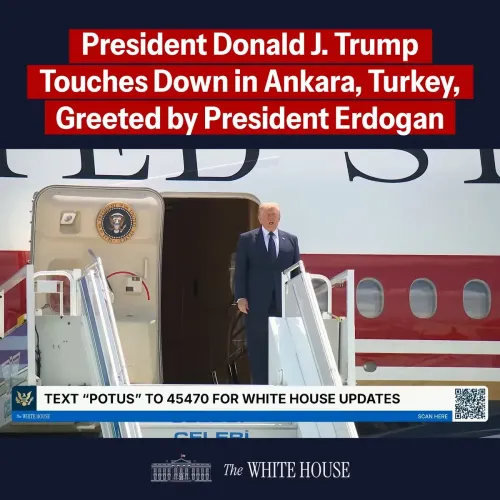
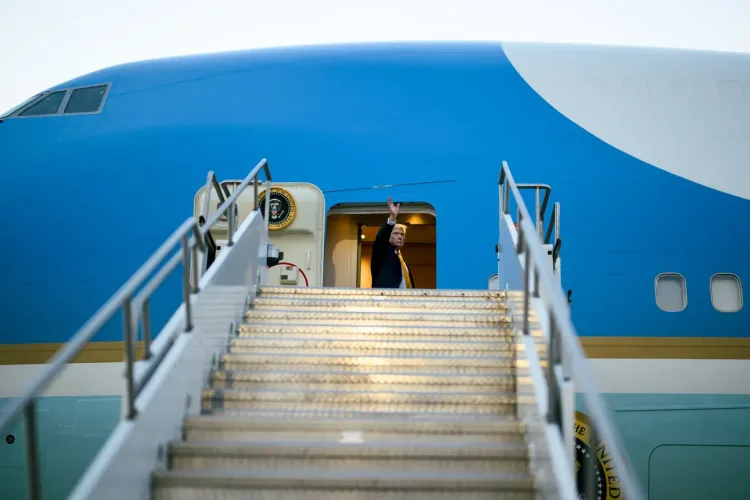
Trump Departs Turkey After 2026 NATO Summit
Synopsis
US President Donald J. Trump departed Turkey on 8 July 2026 after the White House declared the 2026 NATO Summit 'packed and successful.' The gathering addressed alliance strategy and burden-sharing amid the ongoing Russia-Ukraine conflict, continuing a pattern of US pressure on European members to meet defense-spending commitments.
Key Takeaways
President Trump departed Turkey on 8 July 2026 after the conclusion of the 2026 NATO Summit .
The White House described the summit as 'another packed and successful' meeting of the alliance.
Turkey has been a NATO member since 1952 and previously hosted a summit in Istanbul in 2004 .
NATO's 2% of GDP defense-spending target has been central to US engagement with the alliance since the 2014 Wales Summit .
The summit took place against the backdrop of Russia's 2022 invasion of Ukraine , which accelerated NATO enlargement and renewed spending pledges.
Follow-on NATO defense-ministerial meetings in 2026 are expected to operationalise summit commitments.
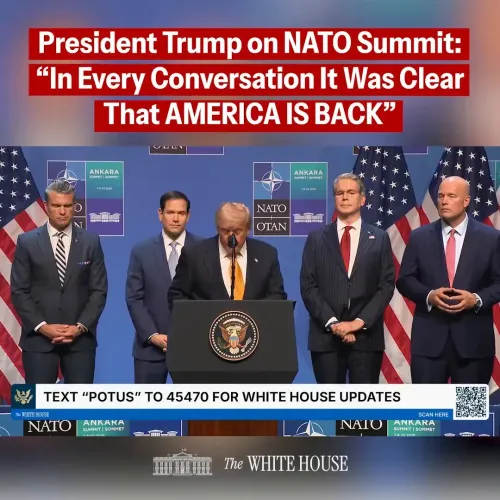
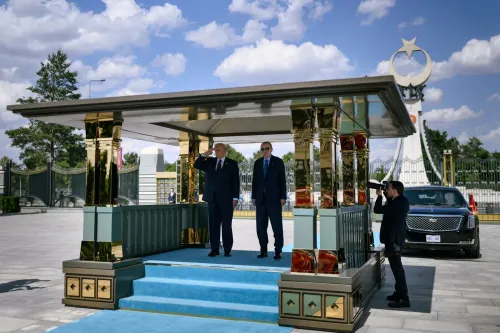
US President Donald J. Trump departed Turkey on Wednesday, 8 July 2026 following the conclusion of the 2026 NATO Summit, with the White House describing the gathering as 'another packed and successful' meeting of the alliance.
Context
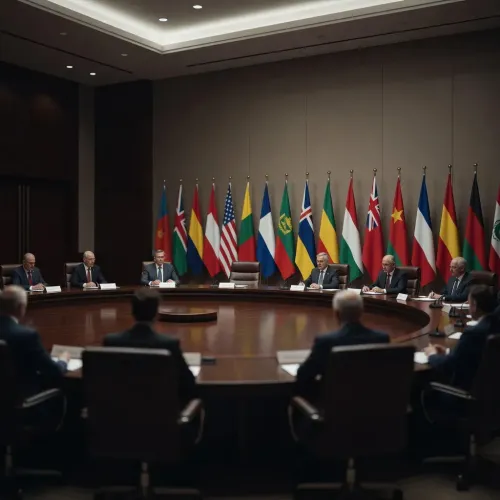
The White House confirmed Trump's departure in a post on X, stating that the President was 'wheels up following another packed and successful NATO summit in Turkey.' The announcement signals the conclusion of a high-stakes multilateral meeting that brought together leaders of the North Atlantic Treaty Organization's member states.
Turkey, a NATO member since 1952, has historically served as a strategically critical host nation for alliance deliberations, given its geography bordering both Russia and the Middle East. The country previously hosted a NATO summit in Istanbul in 2004.
Policy Backdrop
Trump's engagement with NATO has long been defined by his insistence that European allies meet the alliance's 2% of GDP defense-spending target, a benchmark first formalised at the 2014 Wales Summit. At the 2018 Brussels summit, Trump publicly confronted allied leaders over what he described as inadequate contributions, demanding immediate increases.
The broader context for the 2026 gathering includes Russia's full-scale invasion of Ukraine in 2022, which dramatically accelerated NATO enlargement and prompted renewed spending pledges across the alliance. Several European member states have since moved toward or beyond the 2% GDP threshold, partly in response to sustained US pressure across successive administrations.
Trump's return to the presidency brought a renewed 'America First' framing to alliance diplomacy. His post-summit messaging has consistently benchmarked alliance success against burden-sharing metrics and reduced US financial exposure within NATO structures.
Stakeholders and Impact
The summit's outcomes carry direct implications for NATO's 32 member states, their defense ministries, and the governments of Europe navigating both the Russia-Ukraine conflict and evolving US expectations. For India, which maintains a strategic partnership with the United States and engages with NATO members bilaterally, the alliance's cohesion and posture on Russia remain closely watched variables in New Delhi's foreign-policy calculus.
US defense contractors, allied military establishments, and Ukrainian leadership also have a direct stake in whatever commitments emerged from the Turkey meeting, particularly around materiel supply chains and collective-defense guarantees.
What's Next
Follow-on NATO defense-ministerial meetings later in 2026 are expected to translate summit-level political commitments into operational and budgetary decisions. Any shifts in US troop posture in Europe or congressional action on supplemental appropriations tied to alliance obligations will be closely monitored as indicators of how the summit's outcomes translate into policy on the ground.
The White House's characterisation of the summit as 'successful' sets a positive public baseline, though the specific agreements and deliverables from the Turkey meeting will shape how allied governments and analysts ultimately assess its significance.
Point of View
US-led alliance. The choice of Turkey as host is itself diplomatically significant, given Ankara's complex positioning between NATO obligations and its ties with Moscow. For European allies, the summit's success will ultimately be measured not by White House communiques but by the concrete defense-spending and Ukraine-support commitments that emerge in the months ahead. For India, the alliance's renewed cohesion — and any US recalibration of its European military footprint — has downstream implications for Indo-Pacific security architecture and New Delhi's own strategic partnerships.
NationPress
9 Jul 2026
Frequently Asked Questions
Where was the 2026 NATO summit held?
The 2026 NATO summit was held in Turkey , a NATO member since 1952 that has strategic importance due to its location bordering Russia and the Middle East.
What did Trump say about the 2026 NATO summit?
The White House, speaking for President Trump , described the 2026 NATO summit as 'another packed and successful' gathering, announcing his departure from Turkey on 8 July 2026 .
What is NATO's defense spending target and why does it matter?
NATO's benchmark is that member states spend at least 2% of their GDP on defense, a target formalised at the 2014 Wales Summit . The US, particularly under Trump, has repeatedly pressed European allies to meet this threshold.
Why is Turkey important to NATO?
Turkey has been a NATO member since 1952 and occupies a critical geographic position bordering both Russia and the Middle East, making it a key strategic partner within the alliance.
How does the NATO summit affect India?
India is not a NATO member but maintains close bilateral ties with several alliance members, including the United States . NATO's posture on Russia and its collective-defense commitments influence the broader Indo-Pacific security environment that shapes India's own foreign-policy calculations.