CM Yogi Reviews Law, Development in Chitrakoot
Synopsis
Chief Minister Yogi Adityanath visited Chitrakoot on 9 July 2026 to review law-and-order and development works, directing officials to fast-track a 300-bed medical college proposal, rejuvenate the Mandakini River, expand self-employment credit, complete Jal Jeevan Mission projects, and act against social media rumour-mongers.
Key Takeaways
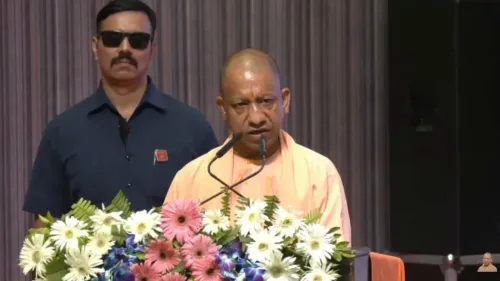
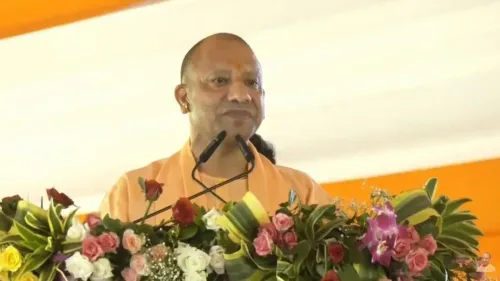
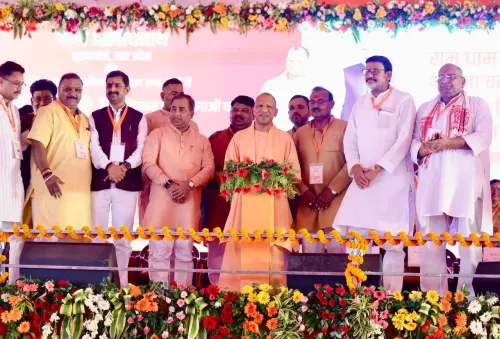
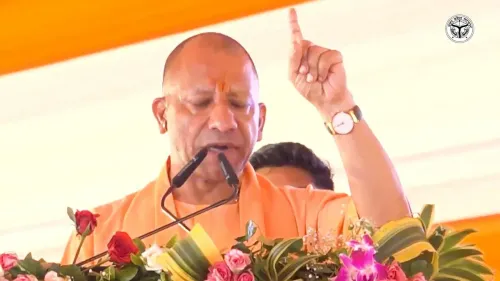
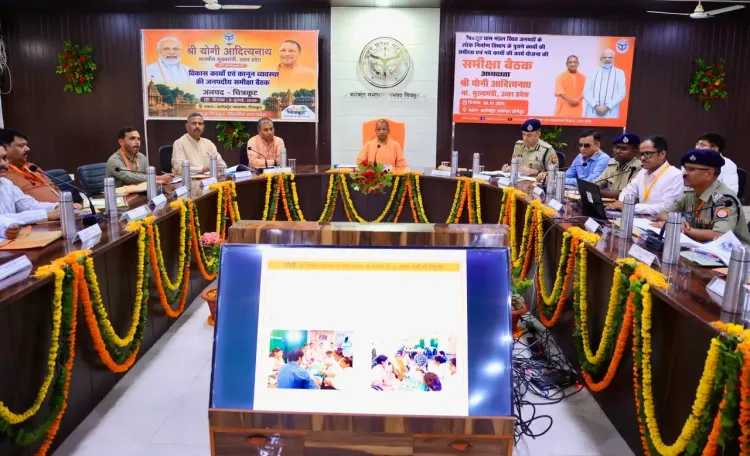
CM Yogi Adityanath conducted a district-level review of law-and-order and development in Chitrakoot on 9 July 2026 .
Officials were directed to identify land and submit a proposal for a 300-bed medical college in Chitrakoot.
The Chief Minister ordered time-bound completion of Jal Jeevan Mission projects in the district.
Directives were issued for Mandakini River rejuvenation and strengthening of cow protection measures.
Maximum credit access for farmers and youth for self-employment was emphasised.
Strict action was ordered against anti-social elements spreading social media rumours .
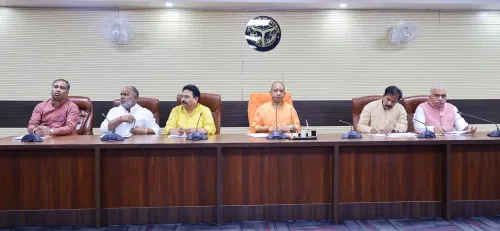
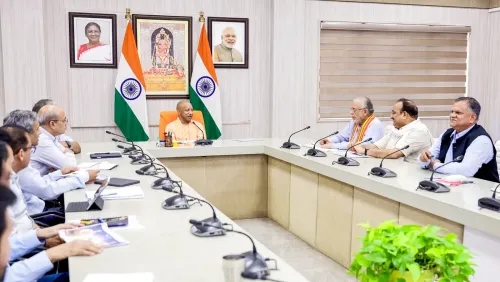
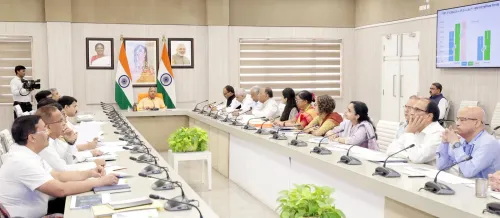
Chief Minister Yogi Adityanath conducted a comprehensive review of law-and-order and development works in Chitrakoot district on 9 July 2026, directing officials to ensure welfare scheme benefits reach every eligible resident with transparency and sensitivity, and that all infrastructure projects are completed on time and to quality standards.
What the CM Directed
The Chief Minister's Office of Uttar Pradesh stated that CM Yogi issued a range of specific directives during the Chitrakoot review. Officials were instructed to identify land and submit a proposal for the establishment of a 300-bed medical college in the district — a move aimed at addressing the region's healthcare infrastructure gap.
The Chief Minister also directed authorities to pursue the rejuvenation of the Mandakini River, which flows through Chitrakoot, and to strengthen cow protection measures in the district. On the economic front, he called for maximising credit availability to farmers and youth for self-employment ventures.
Officials were further directed to complete pending projects under the Jal Jeevan Mission in a time-bound manner, and to take strict action against anti-social elements spreading rumours on social media — ('soshyal midia par afwah failane wale asamajik tatvon ke viruddh kathor karyawahi') [strict action against anti-social elements spreading rumours on social media].
Context
Chitrakoot is a district in southern Uttar Pradesh carrying significant religious and cultural importance. It has been a focus of the state government's infrastructure and healthcare upgrade efforts, given its historically underserved status in terms of medical facilities and rural water access.
The district-level review is part of a sustained pattern under CM Yogi Adityanath — who has led Uttar Pradesh since 2017 — of periodic on-ground assessments that link law-and-order accountability with the delivery of development schemes.
Policy Backdrop
The Jal Jeevan Mission, launched nationally in 2019, aims to provide functional household tap-water connections to every rural home in India. Uttar Pradesh has pursued time-bound completion of projects under this scheme across its districts, and Chitrakoot's pending works now fall under the Chief Minister's direct oversight.
The push for a 300-bed medical college aligns with the state's broader effort since 2017 to establish new medical colleges in underserved districts to reduce the burden on tertiary-care centres in larger cities. River conservation efforts in Chitrakoot build on the state's track record of extending rejuvenation initiatives — modelled on the national Namami Gange programme — to tributaries such as the Mandakini.
Self-employment credit schemes for farmers and youth have been a recurring priority reinforced through such district reviews, reflecting the state's push to reduce unemployment and agrarian distress at the grassroots level.
Stakeholders and Impact
The directives, if implemented, stand to benefit rural households awaiting piped-water connections, farmers and youth seeking credit for self-employment, and patients who currently travel long distances for secondary and tertiary healthcare. District officials have been put on notice to deliver results transparently and within set timelines.
The directive on social media rumours signals the administration's intent to maintain public order in a district where misinformation can quickly affect communal harmony and local governance. Strict action against those spreading false information online has been a recurring theme in the state's law-and-order messaging.
What's Next
The immediate watchpoint is the submission of the land identification proposal for the 300-bed medical college, which officials have been asked to expedite. Progress on Jal Jeevan Mission works and the Mandakini rejuvenation plan in Chitrakoot will serve as measurable indicators of follow-through on these directives in the months ahead. The review reinforces the Uttar Pradesh government's approach of using district-level accountability to drive convergence between welfare delivery, infrastructure completion, and public order.
Point of View
Repeated across multiple such reviews, reflects a governance posture that treats online misinformation as a public-order issue on par with physical law-and-order. Taken together, the directives signal that Chitrakoot is being brought under tighter administrative focus ahead of what could be a politically sensitive period in the region.
NationPress
7 Oct 2026
Frequently Asked Questions
Why did CM Yogi visit Chitrakoot in July 2026?
CM Yogi Adityanath visited Chitrakoot on 9 July 2026 to conduct a review of law-and-order conditions and the status of ongoing development and welfare works in the district, issuing directives to officials on several priority areas.
What is the 300-bed medical college plan for Chitrakoot?
CM Yogi directed officials to identify suitable land in Chitrakoot and submit a formal proposal for establishing a 300-bed medical college, as part of the state's broader effort to improve healthcare infrastructure in underserved districts.
What is the Mandakini River rejuvenation project?
The Mandakini River, a tributary of the Yamuna flowing through Chitrakoot, has been targeted for rejuvenation under state conservation initiatives building on the national Namami Gange programme. CM Yogi's July 2026 review reiterated the directive to advance this effort.
How does Jal Jeevan Mission apply to Chitrakoot?
The Jal Jeevan Mission, launched in 2019 to provide piped tap-water connections to every rural household, has pending projects in Chitrakoot. CM Yogi directed officials to complete these in a time-bound manner.
What action did CM Yogi order on social media rumours in Chitrakoot?
CM Yogi directed authorities to take strict action against anti-social elements spreading rumours on social media, reflecting the state government's consistent approach of treating online misinformation as a law-and-order concern.