CM Bhajan Lal Sharma pays tribute to Nobel laureate CV Raman on death anniversary
Synopsis
Rajasthan Chief Minister Bhajan Lal Sharma honoured Dr. C.V. Raman on his death anniversary, calling the physicist's discovery of the Raman Effect a milestone that gave new direction to global scientific research and an eternal inspiration for future generations.
Key Takeaways
Rajasthan CM Bhajan Lal Sharma posted a tribute to Dr.
Raman on his death anniversary, November 21, 2026 .
Raman won the Nobel Prize in Physics in 1930 for discovering the Raman Effect — the scattering of light by molecules — becoming the first Asian to win a Nobel in science.
He was awarded the Bharat Ratna in 1954 , India's highest civilian honour.
Raman passed away on November 21, 1970 , in Bengaluru.
February 28 — the date of the Raman Effect's discovery — is celebrated annually as National Science Day in India.
Raman on his punyatithi have become a consistent tradition across Indian political leadership.
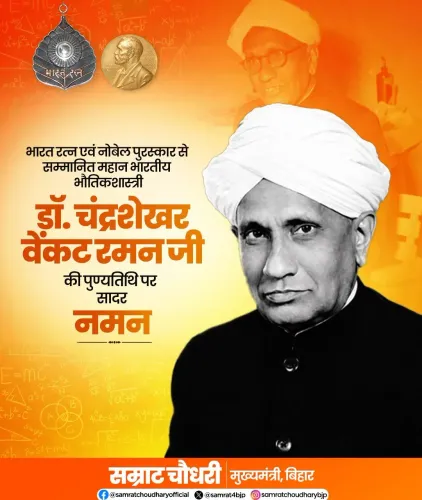
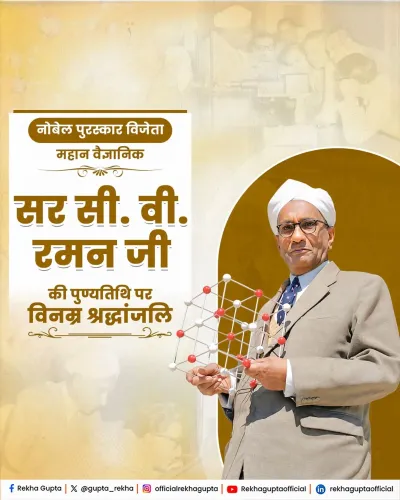
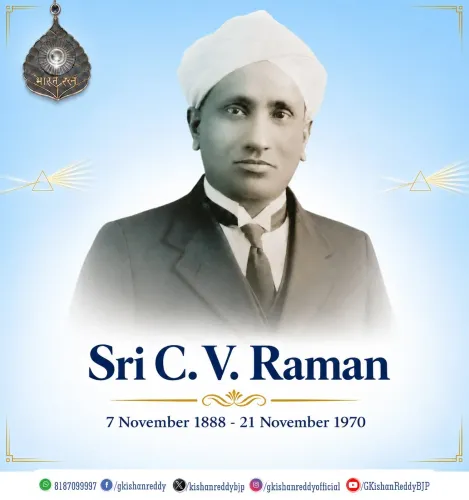
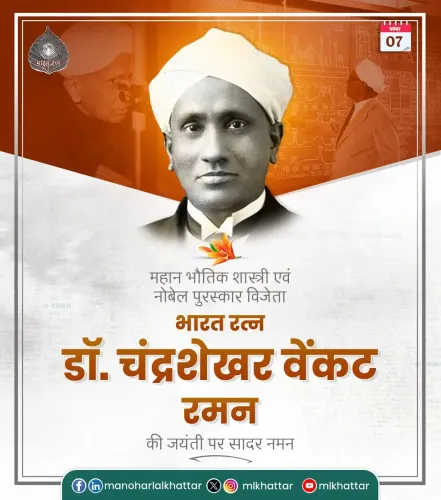
Fifty-six years after his passing, Dr. C.V. Raman — India's first Asian Nobel Prize winner in science — continues to draw reverence from across the nation's public life. Rajasthan Chief Minister Bhajan Lal Sharma marked the physicist's death anniversary on Saturday, November 21, 2026, with a heartfelt tribute on X, honouring a legacy that reshaped the global understanding of light.
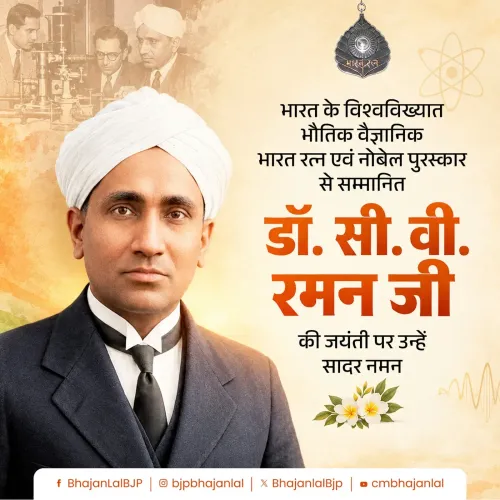
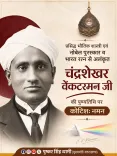
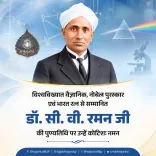
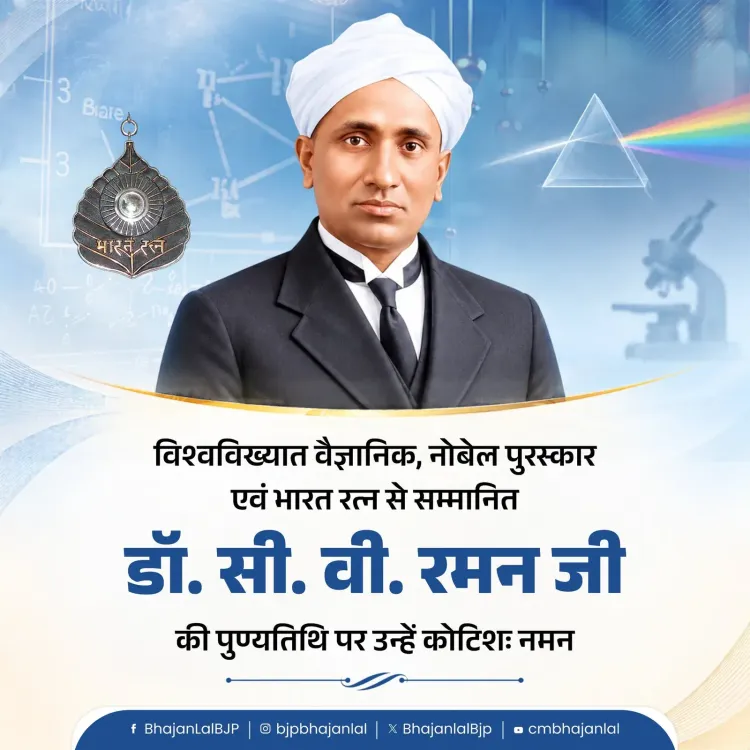
In his post, CM Sharma wrote: 'Vishwvikhyat vaigyanik evam Nobel Puraskar se sammanit Bharat Ratna Dr. C. V. Raman ji ki punyatithi par unhe kotishaha naman!' — 'Countless salutations to the world-renowned scientist and Nobel laureate, Bharat Ratna Dr. C. V. Raman, on his death anniversary!' He invoked Raman's 'unprecedented discovery of the Raman Effect, related to the scattering of light,' calling it a force that gave 'new direction to scientific research.' The CM added that Raman's 'knowledge, scientific vision, and lifelong dedication to science will forever remain a source of inspiration for generations to come.'
The Raman Effect: a discovery that changed physics
Dr. Chandrasekhara Venkata Raman made his landmark discovery on February 28, 1928 — a date India now observes every year as National Science Day. The Raman Effect describes how light changes wavelength when it scatters off molecules, a phenomenon that became a foundational tool in spectroscopy and materials science. The Nobel Committee awarded him the Nobel Prize in Physics in 1930, making him the first person from Asia to win a Nobel in science. India later conferred its highest civilian honour, the Bharat Ratna, in 1954. He passed away on November 21, 1970, in Bengaluru.
A tradition of remembrance across Indian politics
Tributes to Dr. Raman on his punyatithi (death anniversary) have become a fixture in Indian political communication — a moment where leaders across parties pause to acknowledge the scientist who put India on the global map of fundamental research. For CM Sharma, the gesture also carries a wider resonance: Rajasthan has in recent years pushed initiatives to strengthen science education and research infrastructure in the state, making tributes to scientific icons more than ceremonial. The reminder is pointed — Raman's story began in an era of limited resources, yet produced a Nobel Prize-winning breakthrough that the world still relies on today.
Point of View
Invoking Raman's Nobel legacy is also a soft signal of commitment to education and research at a time when states compete for scientific investment. The tradition of such death-anniversary homages has grown more consistent across parties, reflecting how science nationalism has become a durable pillar of mainstream political communication in India.
NationPress
21 Nov 2026
Frequently Asked Questions
When did Dr. C.V. Raman die?
Dr. C.V. Raman passed away on November 21, 1970 , in Bengaluru, India.
What is the Raman Effect?
The Raman Effect is the phenomenon by which light changes its wavelength when scattered by molecules. Discovered by Dr. C.V. Raman in 1928 , it became a cornerstone of modern spectroscopy and earned him the Nobel Prize in Physics in 1930 .
What awards did C.V. Raman receive?
Dr. C.V. Raman received the Nobel Prize in Physics in 1930 — the first Asian to win a Nobel in science — and India's highest civilian honour, the Bharat Ratna, in 1954 .
Why is February 28 celebrated as National Science Day in India?
India observes National Science Day on February 28 each year to mark the anniversary of Dr. C.V. Raman's announcement of the Raman Effect discovery in 1928 .
What did Rajasthan CM Bhajan Lal Sharma say about C.V. Raman?
CM Sharma paid tribute on X, saying Raman's discovery of the Raman Effect 'gave new direction to scientific research' and that his 'knowledge, scientific vision, and lifelong dedication to science will forever remain a source of inspiration for generations to come.'