CM Rekha Gupta pays tribute to C.V. Raman on death anniversary
Synopsis
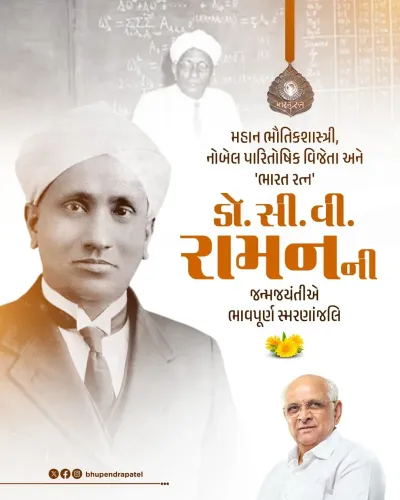
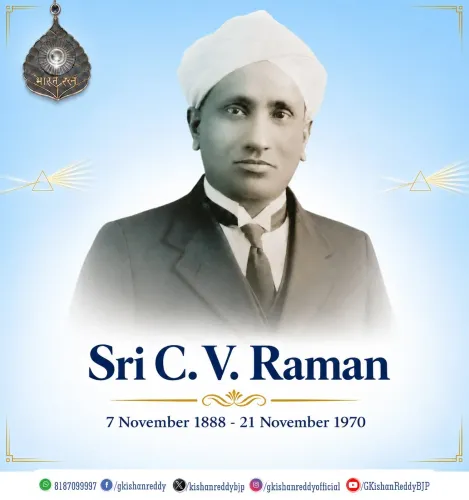
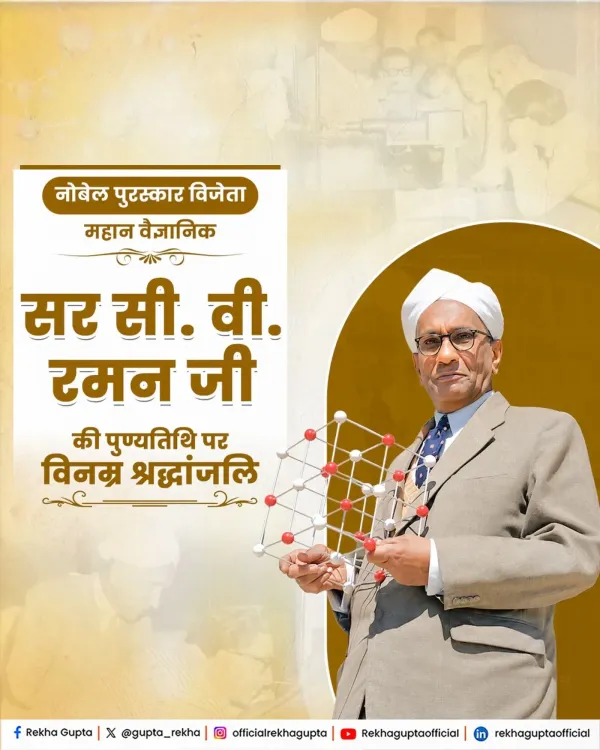
Delhi Chief Minister Rekha Gupta paid tribute to Nobel laureate Dr. C.V. Raman on his death anniversary, honouring the 1928 Raman Effect — a discovery that made India proud and laid the foundation for National Science Day observed every 28 February.
Key Takeaways
Delhi CM Rekha Gupta paid tribute to Dr.
Raman on his death anniversary on 21 November 2026 .
Raman discovered the Raman Effect in 1928 , describing inelastic scattering of light by molecules — a cornerstone of modern spectroscopy.
He became the first Indian and Asian to win a Nobel Prize in Physics in 1930 .
Raman was awarded the Bharat Ratna , India's highest civilian honour, in 1954 .
India observes National Science Day every 28 February since 1987 to commemorate the Raman Effect discovery.
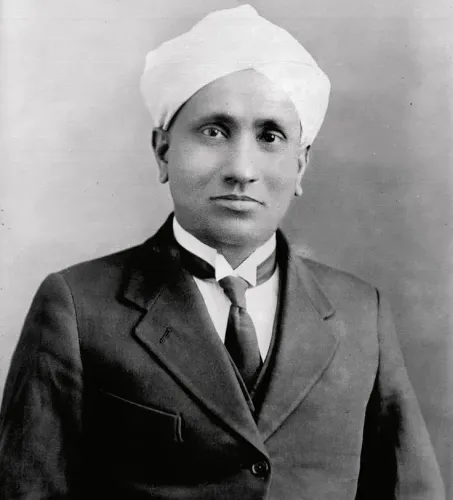
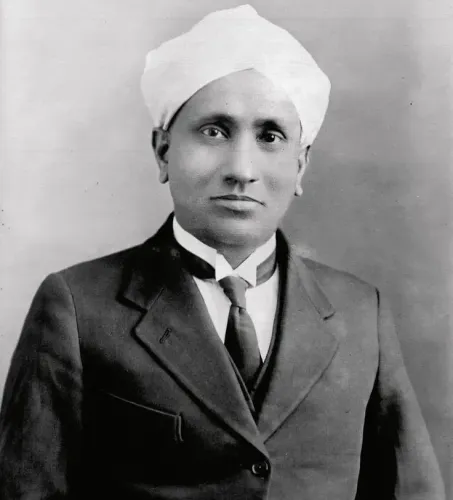
The man who proved that curiosity alone could bend light — and bend history — is remembered today. Delhi Chief Minister Rekha Gupta paid tribute to Nobel laureate and Bharat Ratna Dr. C.V. Raman on his death anniversary on Saturday, 21 November 2026, saluting a legacy that continues to illuminate India's scientific ambition.
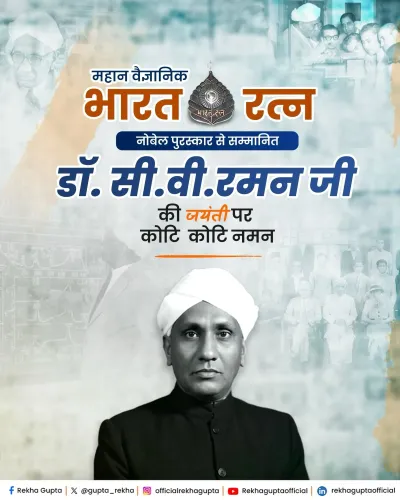
Posting on X, CM Gupta wrote: 'रमन प्रभाव की युगांतकारी खोज से उन्होंने विश्व में भारतीय मेधा का गौरव बढ़ाया' — 'Through the epoch-making discovery of the Raman Effect, he raised the glory of Indian intellect before the world.' She added that his life would continue to inspire every young scientist to dream big and dare to explore.
The discovery that changed science — and India's place in it
In 1928, working in Calcutta with minimal equipment and maximum conviction, Dr. Chandrasekhara Venkata Raman discovered that light scattered by molecules changes wavelength — a phenomenon now called the Raman Effect. The finding was foundational to modern spectroscopy and chemical analysis, reshaping fields from pharmaceuticals to materials science. Two years later, in 1930, he became the first Indian — and the first Asian — to receive a Nobel Prize in the Sciences. India conferred its highest civilian honour, the Bharat Ratna, on him in 1954.National Science Day and the living legacy
India formally institutionalised Raman's memory in 1987, declaring 28 February — the date of his famous discovery — as National Science Day, observed every year to ignite STEM aspirations across the country. It is a tradition that ties a single moment of scientific brilliance to a national commitment: that research, resolve, and curiosity are instruments of sovereignty. Indian political leaders across parties have long marked Raman's death anniversary as a moment to reaffirm that commitment, particularly to young researchers navigating an era of intense global scientific competition. A century after a beam of scattered light rewrote the textbooks, the question Raman asked is still the most powerful one a scientist can ask: why does the world look the way it does?Point of View
Homegrown achievement and signal continued state valorisation of STEM pursuits. For a government invested in projecting India as a global knowledge economy, invoking Raman connects aspirational science policy to a 1928 moment of pure intellectual triumph. It also quietly reinforces National Science Day — scheduled on 28 February — as a civic institution worth watching for policy announcements. The gesture is ceremonial, but the symbolism it draws on is anything but small.
NationPress
21 Nov 2026
Frequently Asked Questions
When did C.V. Raman die?
Dr. C.V. Raman passed away on 21 November 1970 in Bangalore, aged 82. His death anniversary is marked annually by scientific institutions and public figures across India.
What is the Raman Effect?
The Raman Effect , discovered in 1928 , describes the inelastic scattering of light when it passes through a material — the scattered light changes wavelength, revealing molecular composition. It is the basis of Raman spectroscopy, widely used in chemistry, medicine, and materials science.
Why did C.V. Raman win the Nobel Prize?
Dr. C.V. Raman won the Nobel Prize in Physics in 1930 for the discovery of the Raman Effect, making him the first Indian and the first Asian to receive a science Nobel.
What is National Science Day and why is it on 28 February?
National Science Day is observed on 28 February every year since 1987 to commemorate the date in 1928 when C.V. Raman announced the discovery of the Raman Effect. The day promotes scientific awareness and STEM education across India.
What is the Bharat Ratna awarded to C.V. Raman for?
The Bharat Ratna , India's highest civilian honour, was conferred on Dr. C.V. Raman in 1954 in recognition of his extraordinary contributions to science, most notably the discovery of the Raman Effect.