CM Yogi Pushes Chitrakoot as New Eco-Tourism Hub
Synopsis
Uttar Pradesh Chief Minister Yogi Adityanath has declared that Chitrakoot, the Bundelkhand town revered for its Ramayana links, is being developed as a new eco-tourism hub. The move extends the state's tourism push beyond Ayodhya and Varanasi into a region that combines ecological assets with deep cultural heritage.
Key Takeaways
CM Yogi Adityanath announced on 8 July 2026 that Chitrakoot is being actively developed as a new eco-tourism centre.
Chitrakoot is located in Bundelkhand , southern Uttar Pradesh , and is significant in the Ramayana tradition.
The initiative aligns with the central government's Swadesh Darshan scheme launched in 2014 for theme-based tourism circuits.
The push diversifies UP's tourism portfolio beyond established hubs like Ayodhya , Varanasi , and Mathura .
Local communities in economically lagging Bundelkhand are the primary intended beneficiaries through livelihood creation.
State budget allocations and project tenders for Chitrakoot infrastructure will be the next key indicators of progress.
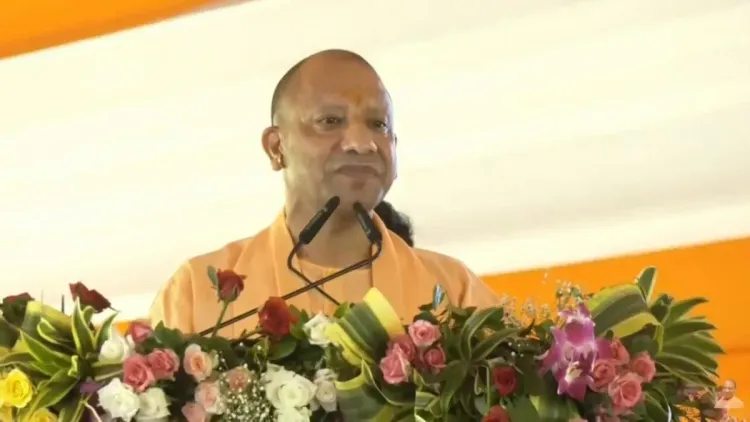
Uttar Pradesh Chief Minister Yogi Adityanath announced on Wednesday, 8 July 2026 that his government is actively developing Chitrakoot as a new centre for eco-tourism, signalling a deliberate push to expand the state's tourism footprint into the Bundelkhand region beyond its established religious destinations.
Context
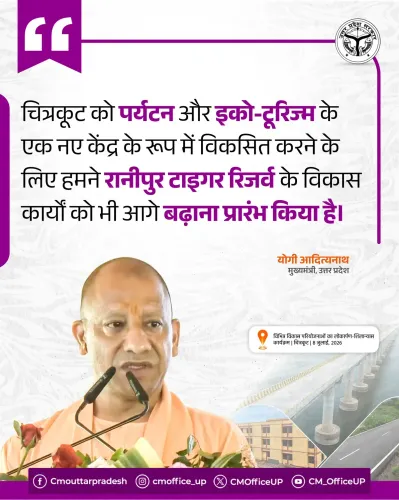
In his post on X, the Chief Minister stated, 'हम लोग चित्रकूट को Eco-Tourism के एक नए केंद्र के रूप में विकसित कर रहे हैं...' ('We are developing Chitrakoot as a new centre of eco-tourism...'), framing the initiative as an ongoing government effort rather than a future proposal. The statement underscores that work is already under way to position the town as a destination that blends its natural landscape with sustainable visitor infrastructure.
Chitrakoot, nestled in the Bundelkhand belt of southern Uttar Pradesh, holds deep significance in the Ramayana tradition as the forest where Lord Ram, Sita, and Lakshman spent a portion of their exile. Its forested hills, the Mandakini river, and a cluster of ancient temples draw pilgrims year-round, but the region's ecological assets have historically been underutilised for structured tourism.
Policy Backdrop
The announcement sits within a broader national framework: the central government's Swadesh Darshan scheme, launched in 2014, has channelled funding into theme-based tourism circuits across states, including eco-tourism components in Uttar Pradesh. Integrating Chitrakoot into a dedicated eco-tourism circuit would align state priorities with that central architecture, potentially unlocking additional grant support.
Since taking office in 2017, Yogi Adityanath has made tourism development a signature plank of his administration, investing heavily in the religious circuits of Ayodhya, Varanasi, and Mathura. Extending that model to a nature-oriented destination like Chitrakoot represents a strategic diversification — one that pairs environmental conservation with economic activity in one of the state's more economically lagging regions.
Stakeholders and Impact
Local communities in Bundelkhand stand to gain most directly. The region has long grappled with agrarian distress, water scarcity, and out-migration; eco-tourism infrastructure — trails, homestays, guided nature experiences — can generate livelihoods for residents without displacing the agricultural and forest-dependent economy. The tourism sector, from hospitality operators to transport providers, would see expanded demand if footfall grows.
Environmental groups will watch whether the development model prioritises carrying-capacity limits and habitat protection alongside visitor infrastructure. Sustainable eco-tourism requires careful zoning to prevent the very natural assets that attract visitors from being degraded by increased footfall.
What's Next
The immediate signal to watch is the Uttar Pradesh state budget for the coming fiscal cycle: specific allocations for Chitrakoot eco-tourism infrastructure — trails, interpretation centres, accommodation clusters, and road connectivity — will indicate how firmly the government intends to back the Chief Minister's statement with capital expenditure. Project tenders floated by the Uttar Pradesh Tourism Department or the Forest Department would be the next concrete marker of progress.
If the Chitrakoot model gains traction, it could serve as a template for other ecologically rich but economically underserved pockets of Bundelkhand, embedding sustainable tourism as a pillar of the region's development strategy.
Point of View
This time pivoting from temple towns to ecological assets. By framing eco-tourism as an ongoing process rather than a future promise, the Chief Minister signals institutional momentum and attempts to counter the narrative that Bundelkhand remains a neglected hinterland. The move also dovetails with national sustainable-tourism rhetoric, giving the state a stronger claim on central scheme funds. Whether the initiative translates into measurable economic uplift for local communities or remains a branding exercise will depend on the specifics of land-use planning and community participation that follow.
NationPress
7 Oct 2026
Frequently Asked Questions
What is CM Yogi Adityanath's eco-tourism plan for Chitrakoot?
Chief Minister Yogi Adityanath announced on 8 July 2026 that the Uttar Pradesh government is developing Chitrakoot as a new eco-tourism centre, combining the town's natural landscape with sustainable visitor infrastructure to attract tourists beyond its traditional pilgrim base.
Where is Chitrakoot and why is it significant?
Chitrakoot is a town in the Bundelkhand region of southern Uttar Pradesh. It is revered in the Ramayana tradition as the forest where Lord Ram, Sita, and Lakshman spent part of their exile, and it is surrounded by forested hills and the Mandakini river.
How does the Chitrakoot eco-tourism plan fit into national schemes?
The initiative aligns with the central government's Swadesh Darshan scheme, launched in 2014, which funds theme-based tourism circuits including eco-tourism components across Indian states, potentially making Chitrakoot eligible for additional central grant support.
What impact will Chitrakoot eco-tourism have on local communities?
Local communities in Bundelkhand, a region affected by agrarian distress and out-migration, stand to benefit through livelihoods in hospitality, guided nature experiences, and transport linked to increased tourist footfall.
What should we watch for next on the Chitrakoot eco-tourism project?
Key indicators to watch include state budget allocations for Chitrakoot infrastructure in the coming fiscal cycle and any project tenders issued by the Uttar Pradesh Tourism Department or Forest Department for trails, visitor centres, and accommodation.