CM Dhami Hails Double Engine Govt for Pilgrimage Push
Synopsis
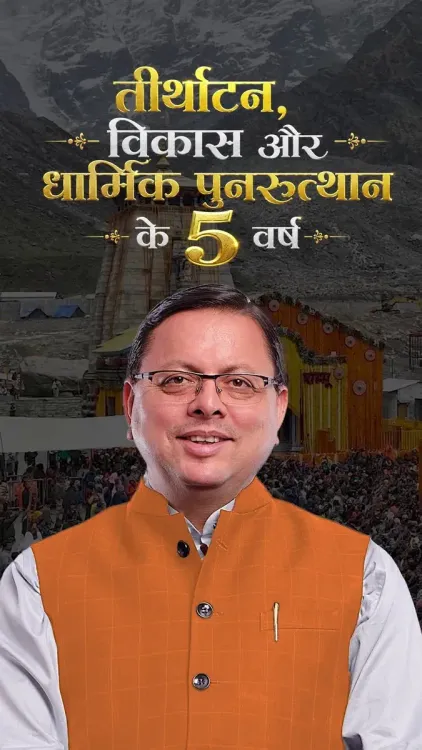
Uttarakhand CM Pushkar Singh Dhami on 8 July 2026 publicly credited the BJP's 'double engine government' for advancing pilgrimage infrastructure and cultural revival in the state, tagging PM Modi and senior central leadership in a video post on X.
Key Takeaways
CM Pushkar Singh Dhami on 8 July 2026 credited the 'double engine government' for pilgrimage development and cultural renaissance in Uttarakhand.
The post was addressed to PM Narendra Modi, Home Minister Amit Shah , and Defence Minister Rajnath Singh , signalling central-state policy alignment.
Uttarakhand hosts the Char Dham circuit — Badrinath, Kedarnath, Gangotri, and Yamunotri — drawing millions of pilgrims annually.
The central Char Dham Pariyojana (announced 2016 ) and PRASAD scheme (launched 2014-15 ) are the primary policy instruments underpinning pilgrimage infrastructure investment.
Hill communities and the broader tourism sector in Uttarakhand are key stakeholders in improved pilgrimage corridor development.
Upcoming milestones to watch include completion of Char Dham road and ropeway projects and state budget allocations for cultural programmes.
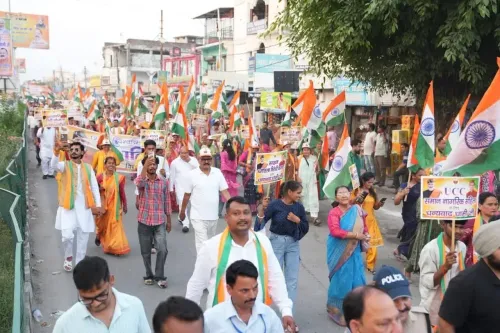
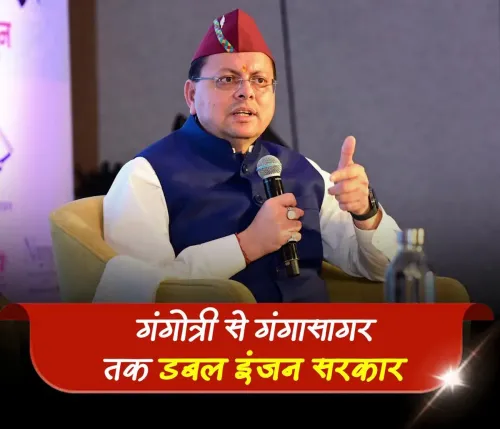
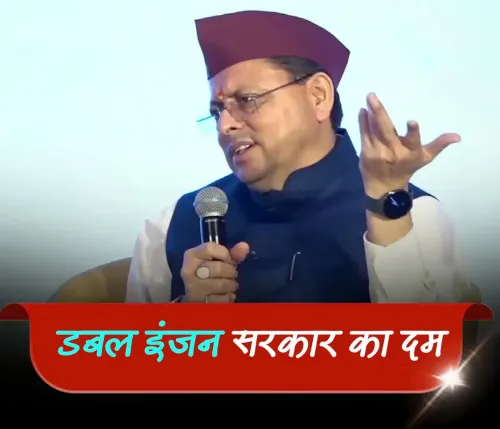
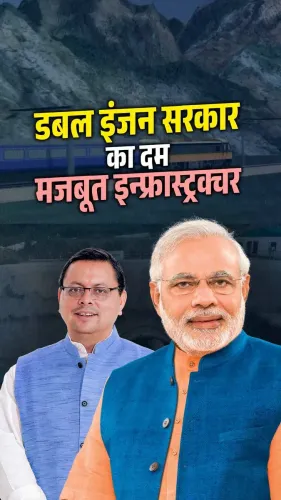
Uttarakhand Chief Minister Pushkar Singh Dhami on Wednesday, 8 July 2026, invoked the ruling coalition's 'double engine government' framework to highlight coordinated efforts toward pilgrimage development and cultural renaissance in the Himalayan state, sharing a video message on X directed at Prime Minister Narendra Modi, Home Minister Amit Shah, and Defence Minister Rajnath Singh, among other senior BJP leaders.
Context
In his post, CM Dhami wrote: 'तीर्थाटन विकास और सांस्कृतिक पुनर्जागरण को समर्पित डबल इंजन सरकार' — translated as 'the double engine government dedicated to pilgrimage development and cultural renaissance.' The message was addressed publicly to the Prime Minister's Office and BJP leadership at both the national and state levels, signalling a deliberate alignment of state and central priorities on religious tourism.
The 'double engine government' phrase is a recurring BJP formulation describing the synergy between a BJP-ruled state and the BJP-led central government, implying coordinated policy execution and funding flow for development projects.
Policy Backdrop
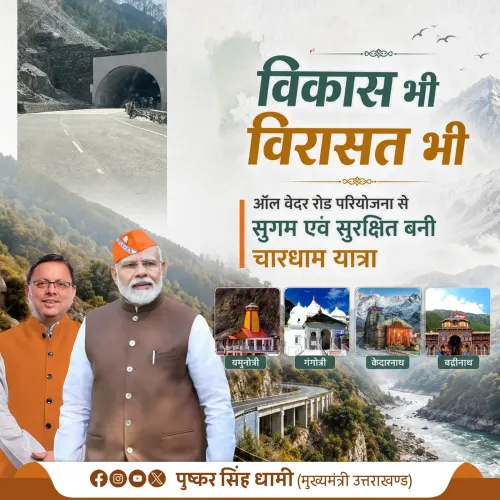
Uttarakhand is home to the Char Dham pilgrimage circuit — comprising Badrinath, Kedarnath, Gangotri, and Yamunotri — which draws millions of pilgrims annually. The central government's Char Dham Pariyojana, announced in 2016, aims to provide all-weather road connectivity to these four sites, fundamentally upgrading access that was historically seasonal and hazardous.
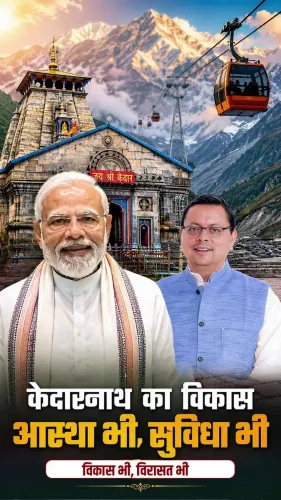
The PRASAD scheme (Pilgrimage Rejuvenation and Spiritual Augmentation Drive), launched in 2014-15, has channelled central funds toward amenity upgrades, spiritual infrastructure, and visitor facilities at designated pilgrimage centres across India, with Uttarakhand sites featuring prominently. Following the catastrophic 2013 Kedarnath floods, both central and state governments committed dedicated resources to temple precinct reconstruction and township redevelopment, a process that has continued across successive administrations.
Cultural revival programmes running alongside infrastructure investment — covering traditional festivals, heritage conservation, and promotion of local arts — form the second pillar of what Dhami describes as 'cultural renaissance.'
Stakeholders and Impact
Pilgrims travelling the Char Dham routes stand to benefit most directly from improved road and ropeway connectivity, reduced travel times, and upgraded rest and sanitation facilities. Hill communities along pilgrimage corridors depend heavily on seasonal pilgrim footfall for livelihoods in hospitality, transport, and local trade, making infrastructure investment a direct economic lever.
The tourism sector in Uttarakhand — encompassing hotels, homestays, adventure operators, and local artisans — is closely tied to pilgrimage volumes. Cultural revival initiatives, when linked to local festivals and heritage circuits, can extend visitor stays and broaden the tourism economy beyond the peak Char Dham season.
What's Next
Analysts watching Uttarakhand's development agenda will track completion milestones for the Char Dham all-weather road project and proposed ropeway corridors, as well as state budget allocations for cultural programmes in the coming fiscal cycle. The Chief Minister's public alignment with central BJP leadership ahead of potential policy announcements suggests further coordinated initiatives on pilgrimage infrastructure may be forthcoming.
As religious tourism continues to grow as a political and economic priority for BJP-governed states, Uttarakhand's model — combining central scheme funding with state-level execution — is likely to be cited as a template for comparable corridors in Uttar Pradesh and other states with major pilgrimage destinations.
Point of View
A framing that serves both state and national BJP messaging. This mirrors a broader pattern across BJP-governed states where religious tourism infrastructure is positioned as both a development deliverable and a cultural-civilisational statement. The post's timing and video format suggest it may be a precursor to a formal announcement or a milestone event tied to the Char Dham season.
NationPress
8 Jul 2026
Frequently Asked Questions
What did Uttarakhand CM Dhami say about the double engine government?
CM Pushkar Singh Dhami stated that the double engine government — referring to BJP ruling both the state and the centre — is dedicated to pilgrimage development and cultural renaissance in Uttarakhand, tagging PM Modi and senior BJP leaders in his 8 July 2026 post on X.
What is the Char Dham Pariyojana?
The Char Dham Pariyojana is a central government project announced in 2016 to build all-weather road connectivity to the four sacred Himalayan pilgrimage sites — Badrinath, Kedarnath, Gangotri, and Yamunotri — in Uttarakhand.
What is the PRASAD scheme for pilgrimage sites in India?
The PRASAD scheme, launched in 2014-15, is a central government programme that funds infrastructure upgrades, amenity improvements, and spiritual facility development at designated pilgrimage centres across India, including sites in Uttarakhand.
What does 'double engine government' mean in Indian politics?
'Double engine government' is a BJP phrase describing the political and administrative synergy when the same party governs both a state and the central government, implying faster policy execution and better access to central funds for development projects.
How does pilgrimage tourism benefit hill communities in Uttarakhand?
Hill communities along Uttarakhand's pilgrimage corridors depend on seasonal pilgrim footfall for income from hospitality, local transport, and trade; improved road and ropeway infrastructure directly expands economic opportunity for these communities.