CM Dhami Champions Double-Engine Govt for Uttarakhand
Synopsis
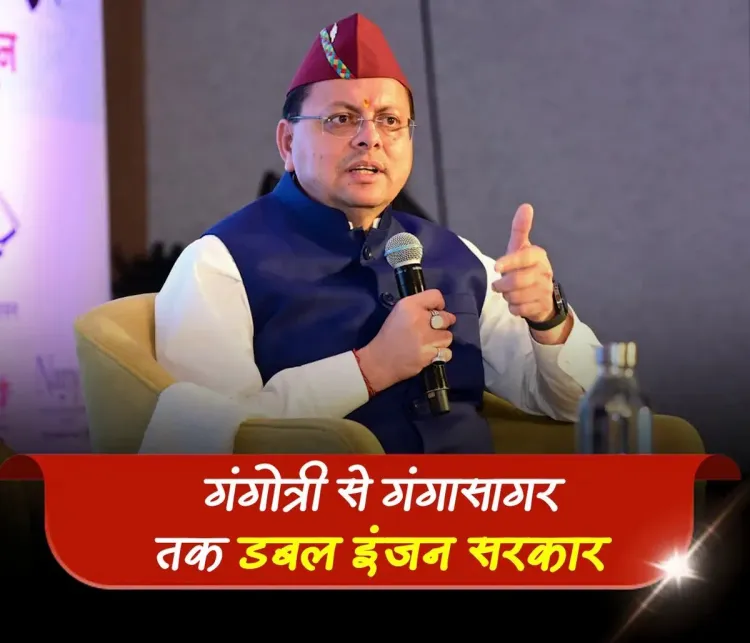
Uttarakhand Chief Minister Pushkar Singh Dhami reaffirmed the BJP's double-engine government model on 13 June 2026, calling it synonymous with development, good governance, and public welfare — a messaging push widely seen as laying groundwork for the 2027 state elections.
Key Takeaways
CM Pushkar Singh Dhami posted on 13 June 2026 reaffirming the double-engine government as a symbol of development, good governance, and public welfare.
The 'double-engine' slogan refers to aligned BJP governments at the state ( Uttarakhand ) and central ( New Delhi ) levels.
BJP first won Uttarakhand in 2017 , ending Congress rule; CM Dhami led the party to re-election in 2022 .
The narrative has been deployed across BJP -governed states including Uttar Pradesh , Madhya Pradesh , and Gujarat .
Uttarakhand assembly elections are due in 2027 , making this messaging politically significant.
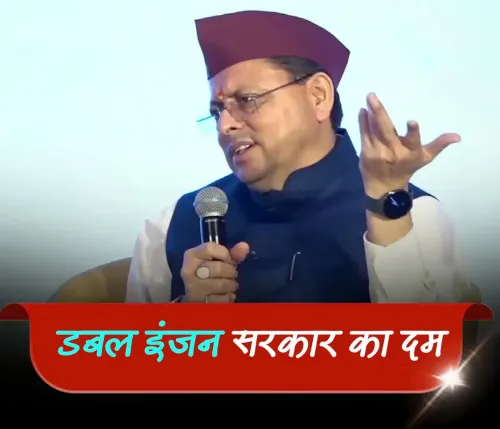
Uttarakhand Chief Minister Pushkar Singh Dhami on Saturday, 13 June 2026, invoked the BJP's signature 'double-engine government' slogan, asserting that the alignment between the state and central administrations stands as a byword for development, good governance, and public welfare.
Context
In a post on X, CM Dhami wrote: 'Vikas, sushasan aur jankalyan ka paryay hai double engine sarkar!' — translated as 'The double-engine government is synonymous with development, good governance, and public welfare!' The statement is a reaffirmation of the BJP's core electoral and governance messaging that has defined the party's communication in states where it holds power both at the centre and in the state capital.
The phrase encapsulates the party's argument that a BJP-governed Uttarakhand paired with a BJP-led central government in New Delhi produces faster policy execution, smoother fund flows, and more effective welfare delivery for residents of the hill state.
Policy Backdrop
The 'double-engine' slogan entered mainstream political vocabulary during the 2014 Lok Sabha campaign, when BJP began arguing that states with aligned central and state governments would enjoy a decisive advantage in infrastructure investment and scheme implementation. Uttarakhand came under this framework when BJP ended Congress rule in the 2017 assembly elections.
CM Dhami has led the state since July 2021, and steered the party to re-election in the 2022 assembly polls with development and welfare delivery as central planks. The double-engine narrative has since been deployed across multiple BJP-governed states — including Uttar Pradesh, Madhya Pradesh, and Gujarat — to contrast coordinated governance with what the party describes as delays caused by political friction under opposition administrations.
Stakeholders and Impact
For Uttarakhand's residents — particularly in remote hill districts dependent on central transfers for road connectivity, tourism infrastructure, and welfare schemes — the double-engine model is presented as a guarantee of uninterrupted project approvals and fund disbursements. State administrators point to alignment on schemes such as hill road development, disaster resilience investment, and rural welfare programmes as evidence of the model's practical benefits.
The messaging also carries weight for the state's business and investment community, which looks to Centre-state coordination for clearances on large infrastructure and tourism projects. BJP's political base in Uttarakhand views the slogan as a consolidation signal ahead of the 2027 assembly elections.
What's Next
With Uttarakhand assembly elections due in 2027, CM Dhami's renewed emphasis on the double-engine narrative is likely to intensify as the party builds its campaign around the governance record of the past decade. Announcements of new joint central-state projects — particularly in hill infrastructure, tourism, and disaster management — will be closely watched as tangible proof points for the slogan. Parliamentary discussions on federal fund allocation mechanisms will also shape how effectively the double-engine argument lands with voters on the ground.
Point of View
The party frames any development outcome as proof of ideological alignment rather than routine federal process. With Uttarakhand's 2027 elections on the horizon, this kind of high-frequency messaging is designed to make the double-engine model the default reference point for voters evaluating the state's progress. The consistency of the slogan across BJP-governed states also suggests a coordinated national communications strategy rather than a standalone state-level statement.
NationPress
14 Sept 2026
Frequently Asked Questions
What is the double-engine government concept in India?
The double-engine government concept refers to BJP's argument that states governed by BJP simultaneously at the state and central levels benefit from faster policy execution, smoother fund flows, and better welfare delivery due to political alignment between the two governments.
Who is Pushkar Singh Dhami?
Pushkar Singh Dhami is the Chief Minister of Uttarakhand and a BJP leader who has held the post since July 2021, leading the party to re-election in the 2022 state assembly elections.
When did BJP first come to power in Uttarakhand?
BJP first won the Uttarakhand assembly elections in 2017, ending a period of Congress rule and beginning what the party describes as the double-engine governance phase in the state.
What did CM Dhami say about the double-engine government in June 2026?
CM Dhami posted on X on 13 June 2026 stating that the double-engine government is synonymous with development, good governance, and public welfare, reaffirming the BJP's core governance narrative.
When are the next Uttarakhand assembly elections?
The next Uttarakhand assembly elections are due in 2027, making CM Dhami's renewed emphasis on the double-engine governance model politically significant as pre-election messaging.