CM Dhami credits Modi's leadership for Uttarakhand's growth
Synopsis
Uttarakhand Chief Minister Pushkar Singh Dhami praised PM Narendra Modi's 'visionary leadership' on 13 June 2026, saying the double-engine government has delivered unprecedented development momentum to the Himalayan state under aligned BJP rule at the centre and state since 2017.
Key Takeaways
CM Pushkar Singh Dhami posted on 13 June 2026 crediting PM Narendra Modi with providing unprecedented development pace to Uttarakhand .
The post invokes the 'double-engine government' model — a BJP framework describing coordinated centre-state governance under the same party.
Uttarakhand has been governed by the BJP continuously since 2017 , with the party returning to power in the 2022 assembly elections .
CM Dhami has held office since 2021 and has consistently positioned state progress as a product of alignment with New Delhi .
The double-engine model has also been promoted by BJP in states such as Uttar Pradesh and Madhya Pradesh to accelerate infrastructure and welfare delivery.
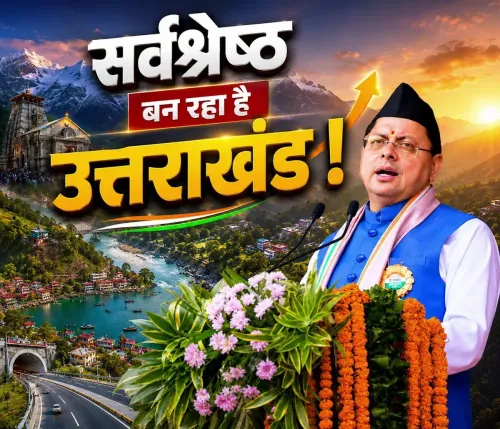
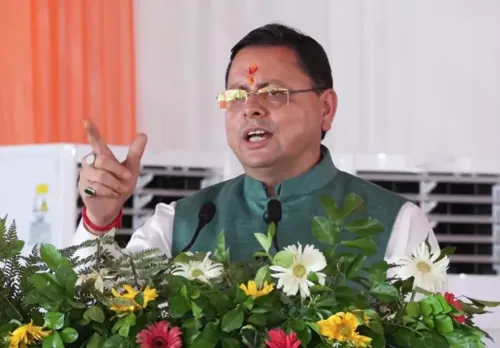
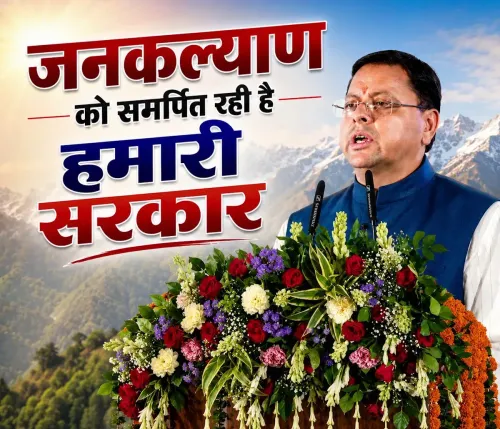
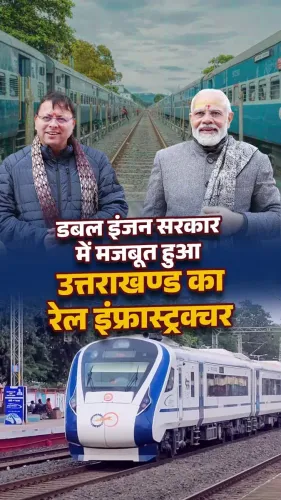
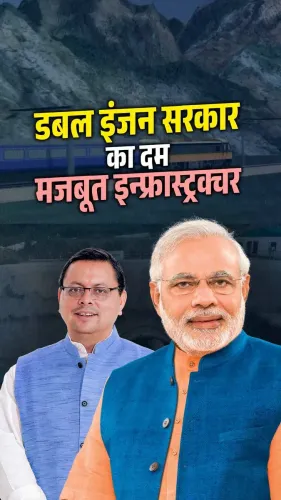
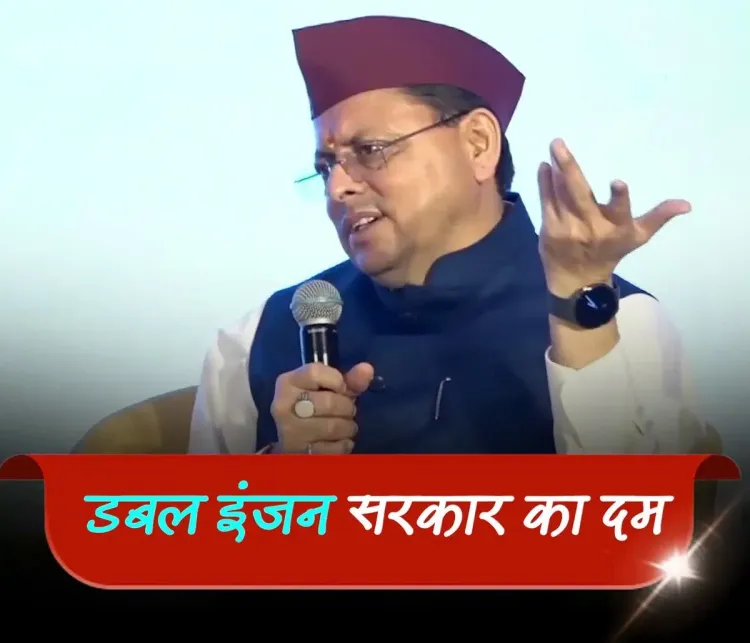
Uttarakhand Chief Minister Pushkar Singh Dhami on Saturday, 13 June 2026, credited Prime Minister Narendra Modi's leadership for what he described as unprecedented momentum in the state's development, attributing the progress to the coordinated functioning of the 'double-engine government' at the centre and in Uttarakhand.
Context
In his post on X, CM Dhami wrote — 'aadarniya Pradhan Mantri Shri Narendra Modi ji ke kushal evam doordarshi netritva mein hamaari double engine sarkar ne Uttarakhand ke vikas ko abhootpoorv gati pradan ki hai' — translating to: 'Under the able and visionary leadership of respected Prime Minister Shri Narendra Modi, our double-engine government has provided unprecedented momentum to the development of Uttarakhand.' The statement was accompanied by a video, though no specific project or scheme was named in the post text.
The remark comes as the BJP continues to govern Uttarakhand for a second consecutive term following its victory in the 2022 assembly elections, reinforcing the same political alignment with the National Democratic Alliance government at the centre that has been in place since 2017.
Policy Backdrop
The 'double-engine government' formulation is a recurring BJP political framework describing the advantage of having the same party in power at both the state and central levels. The model is premised on faster project approvals, smoother fund disbursements, and tighter coordination between state machinery and central ministries.
Uttarakhand, a hill state with significant infrastructure challenges, has been a prominent showcase for this model. The state has received central funding across sectors including road connectivity, tourism infrastructure, and disaster-resilient construction — areas of particular relevance given its Himalayan geography. BJP has championed the same approach in states such as Uttar Pradesh and Madhya Pradesh.
Stakeholders and Impact
The primary beneficiaries of any accelerated development in Uttarakhand are the state's residents, particularly those in remote hill districts who depend on central and state government schemes for connectivity, employment, and public services. The state administration, which coordinates implementation of centrally-sponsored programmes, also stands at the centre of this governance narrative.
CM Dhami, who has been in office since 2021, has consistently positioned his tenure as one of active partnership with New Delhi, framing central scheme inflows and infrastructure investment as outcomes of political alignment rather than routine inter-governmental transfers.
What's Next
Observers will watch upcoming Uttarakhand state budget sessions and central scheme disbursements for hill-state infrastructure as concrete indicators of the development pace CM Dhami references. The broader test of the double-engine model in Uttarakhand will lie in measurable outcomes on connectivity, employment, and public welfare delivery in the state's more inaccessible regions — benchmarks that will shape the political narrative ahead of future electoral cycles.
Point of View
The statement prioritises political branding over policy detail. This pattern typically intensifies ahead of budget cycles or electoral milestones, serving both to consolidate the party's governance image and to signal loyalty to the central leadership. The absence of specific metrics in the post, however, leaves the claim open to scrutiny from opposition parties and independent assessors tracking Uttarakhand's development indicators.
NationPress
13 Sept 2026
Frequently Asked Questions
What did Uttarakhand CM Pushkar Singh Dhami say about PM Modi on 13 June 2026?
CM Dhami credited PM Narendra Modi's 'able and visionary leadership' for giving unprecedented development momentum to Uttarakhand through the double-engine government model, where BJP governs both the state and the centre.
What is the double-engine government model in India?
The double-engine government is a BJP political framework describing the coordination advantage when the same party governs both the central government and a state government, enabling faster approvals, fund flows, and policy implementation.
How long has BJP been in power in Uttarakhand?
BJP has governed Uttarakhand continuously since 2017, when it won the state assembly elections, and returned to power again after the 2022 assembly elections.
Who is Pushkar Singh Dhami?
Pushkar Singh Dhami is the Chief Minister of Uttarakhand and a BJP leader who has held the post since 2021. He leads the state government that is politically aligned with the BJP-led central government.
Which other states use the BJP double-engine government model?
The BJP has promoted the double-engine model in several states where it holds power at both the central and state level, including Uttar Pradesh and Madhya Pradesh, to accelerate infrastructure and welfare delivery.