CM Dhami Credits Double Engine Govt for Uttarakhand Infra Push
Synopsis
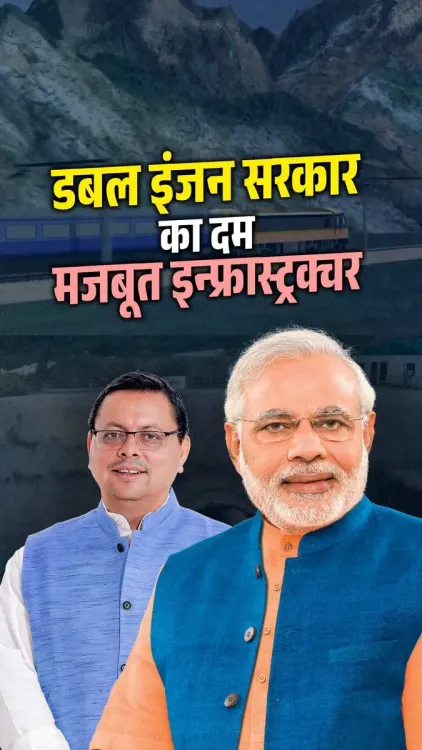
Uttarakhand Chief Minister Pushkar Singh Dhami credited the 'double engine' government with delivering unprecedented pace in the state's infrastructure development, tagging PM Narendra Modi and the BJP. The post comes amid ongoing Char Dham highway works, rail extension projects and a broader push to position connectivity as the state government's flagship governance achievement.
Key Takeaways
CM Pushkar Singh Dhami says Uttarakhand's infrastructure is moving at 'unprecedented pace' under the double engine government.
The post on 4 June 2026 tagged PM Narendra Modi, the BJP and the state unit.
Key projects in the pipeline include the Char Dham Pariyojana, approved in 2016 with over Rs 12,000 crore outlay.
Uttarakhand was prioritised under the 2019 National Infrastructure Pipeline for roads, airports and power.
Hill terrain, ecological concerns and border logistics shape the pace and design of these projects.
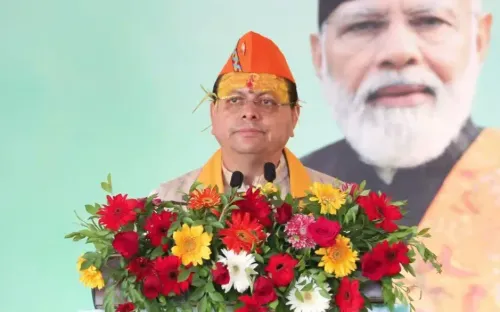
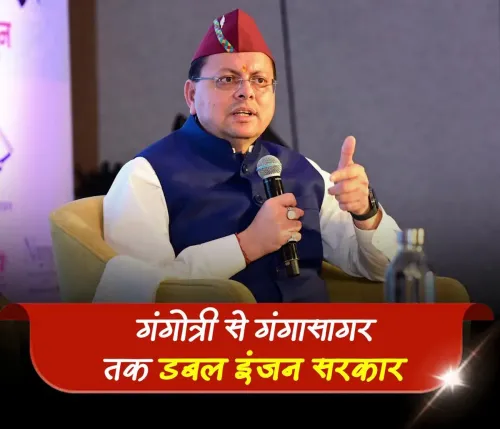
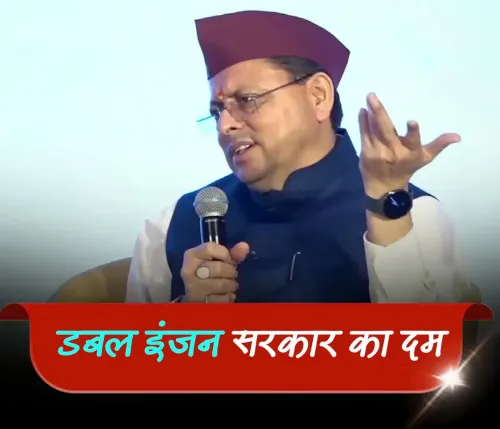
Uttarakhand Chief Minister Pushkar Singh Dhami on Thursday, 4 June 2026, asserted that the state's infrastructure build-out is gathering 'unprecedented pace' under what he described as the 'double engine' alignment between the Centre and the state government. In a post on X tagging Prime Minister Narendra Modi, the BJP and its Uttarakhand unit, the Chief Minister linked the momentum directly to coordinated central-state efforts.
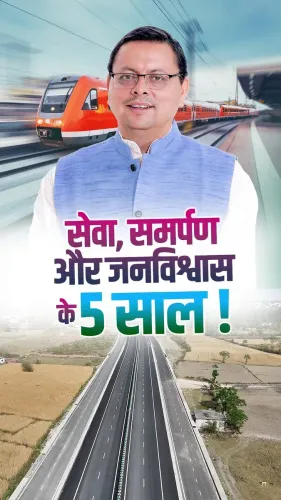
'Through the effective efforts of the double engine government, infrastructure development in Uttarakhand is gaining unprecedented pace,' Dhami wrote in Hindi (डबल इंजन सरकार के प्रभावी प्रयासों से उत्तराखण्ड में इंफ्रास्ट्रक्चर विकास को मिल रही अभूतपूर्व रफ्तार). The post was accompanied by a video showcasing project visuals.
Context
The 'double engine' framing has been a recurring theme in BJP messaging since the party returned to power in Uttarakhand in 2017 and retained office in 2022. The pitch argues that when the same party governs both the Union and a state, central clearances, funding tranches and inter-ministerial coordination move faster — a claim particularly emphasised in hill and border states where projects depend heavily on Union ministries.
Dhami, who took over as Chief Minister in 2021, has consistently used the formulation to frame state announcements, positioning Uttarakhand's development trajectory as intertwined with the Modi government's national programme.
Policy backdrop
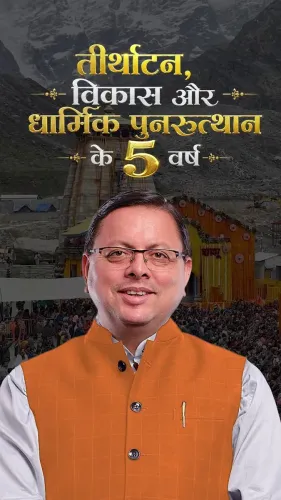
Infrastructure has been a flagship governance plank for the BJP in Uttarakhand, anchored by the Char Dham Pariyojana — the all-weather highway initiative approved in 2016 with an outlay exceeding Rs 12,000 crore to connect the shrines of Kedarnath, Badrinath, Yamunotri and Gangotri.
The state was also identified as a priority geography under the National Infrastructure Pipeline unveiled in 2019, which earmarked investment across roads, airports and power through 2025. Allied schemes such as Bharatmala have pushed national highway upgrades, while railway extension to Rishikesh-Karnaprayag and tunnel works have been positioned as transformative for hill connectivity.
The state's Himalayan terrain makes such projects both critical for residents, pilgrims and defence logistics, and technically demanding — involving landslide-prone slopes, ecologically sensitive zones and long monsoon disruptions.
Stakeholders and impact
The direct beneficiaries of accelerated infrastructure in Uttarakhand include hill-state residents who depend on road links for healthcare, schooling and markets; pilgrims travelling annually to the Char Dham circuit; and the tourism economy that underpins large parts of state employment.
Faster connectivity is also strategically significant for the armed forces given Uttarakhand's long border with China, with several Border Roads Organisation projects running parallel to civilian highway upgrades.
At the same time, environmental groups and Supreme Court-appointed committees have flagged concerns over slope stability, deforestation and the carrying capacity of pilgrimage towns — debates that continue to shape how projects are sequenced and reviewed.
What's next
Attention now turns to completion milestones across the remaining stretches of the Char Dham highway, progress on the Rishikesh-Karnaprayag rail link and proposed regional airport upgrades referenced in recent state budget documents. Union Ministry of Road Transport review meetings and forthcoming central allocations will be key markers of whether the pace Dhami invokes translates into dated handovers.
For the BJP, sustained delivery on visible infrastructure remains central to its electoral pitch in the state, and posts such as Thursday's are part of a steady drumbeat aimed at keeping that narrative in public view ahead of the next round of civic and assembly contests.
Point of View
Designed to bind state-level delivery to the Modi government's national infrastructure narrative. For Dhami, infrastructure remains the safest political ground — visible, photogenic and broadly popular across hill constituencies. The framing also pre-empts criticism over project delays by attributing momentum to central alignment, a useful electoral cushion. Watch for whether tangible completions in the next budget cycle match the rhetorical pace claimed here.
NationPress
18 Oct 2026
Frequently Asked Questions
What is the double engine government?
The 'double engine' phrase refers to the BJP's pitch that governance is faster when the same party controls both the Union and the state government. It is invoked to argue that central clearances, funding and coordination move more smoothly under aligned regimes.
Who is the current Chief Minister of Uttarakhand?
Pushkar Singh Dhami has been Chief Minister of Uttarakhand since 2021. He retained the post after the BJP's 2022 assembly win in the state.
What is the Char Dham Pariyojana?
The Char Dham Pariyojana is an all-weather highway project approved in 2016 to upgrade connectivity to the four Himalayan shrines of Kedarnath, Badrinath, Yamunotri and Gangotri, with an initial outlay exceeding Rs 12,000 crore.
Why is infrastructure development challenging in Uttarakhand?
Uttarakhand's Himalayan terrain involves landslide-prone slopes, ecologically sensitive zones and long monsoon disruptions, making road, tunnel and rail projects both critical and technically demanding.
Which major infrastructure projects are underway in Uttarakhand?
Major ongoing works include the Char Dham highway, the Rishikesh-Karnaprayag rail link, national highway upgrades under Bharatmala, and proposed regional airport projects referenced in state budget documents.