CM Dhami Credits Modi Govt for New Push in Uttarakhand Rail Connectivity
Synopsis
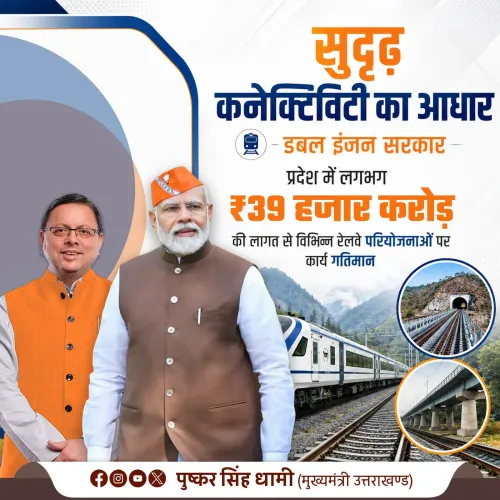
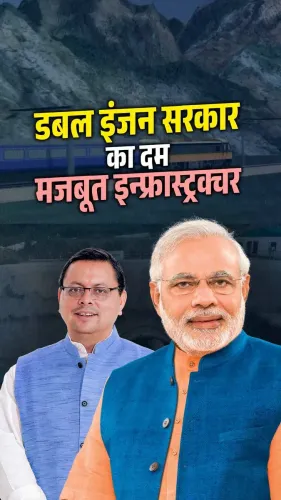
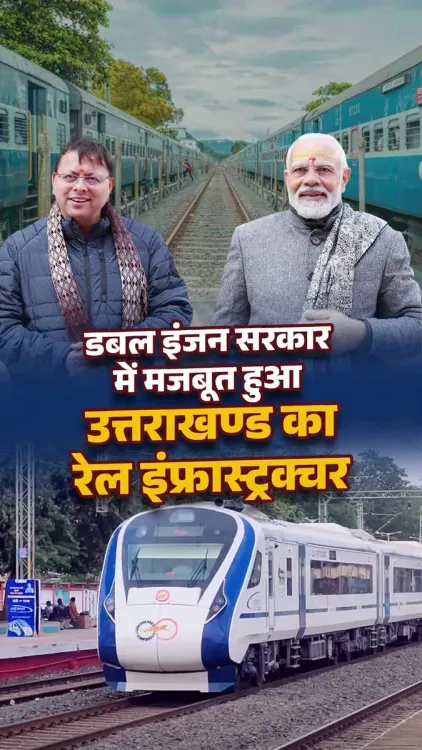
Uttarakhand Chief Minister Pushkar Singh Dhami on 24 June 2026 credited PM Narendra Modi's 'double engine' government for accelerating railway connectivity in the Himalayan state, flagging infrastructure momentum in a video post on X.
Key Takeaways
CM Pushkar Singh Dhami posted on 24 June 2026 crediting the 'double engine' BJP government for new momentum in Uttarakhand railway connectivity.
The post tagged PM Narendra Modi , Home Minister Amit Shah , and BJP's official handles, indicating coordinated central-state messaging.
The Rishikesh-Karnaprayag rail line is the flagship connectivity project for the state, with funding accelerated after 2014 .
Improved rail access benefits pilgrims, tourists, and local businesses across the Char Dham region.
Progress on pending Char Dham corridor rail segments and future Railway Budget allocations remain key indicators to watch.
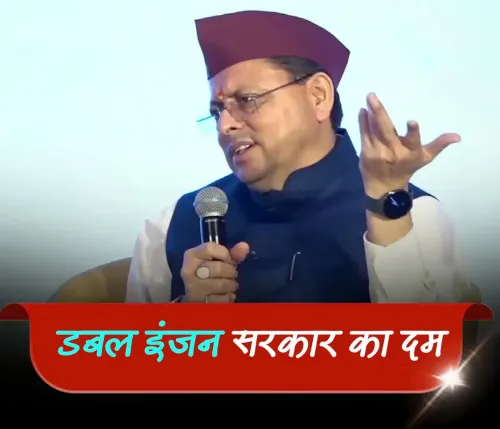
Uttarakhand Chief Minister Pushkar Singh Dhami on Wednesday, 24 June 2026, credited the central government's 'double engine' model for accelerating railway connectivity across the hill state, sharing his remarks on X and tagging Prime Minister Narendra Modi, Union Home Minister Amit Shah, and the BJP's official handles.
Context
In the post, written in Hindi, CM Dhami stated: 'Aadaraniya Pradhanmantri Shri Narendra Modi ji ke kushal netritva mein hamari double engine sarkar ki pratibaddhataa se pradesh mein railway connectivity ko nayi gati mili hai' — ('Under the able leadership of respected Prime Minister Narendra Modi, the commitment of our double engine government has given new momentum to railway connectivity in the state.')
The post was accompanied by a video, the contents of which elaborate on rail infrastructure progress in Uttarakhand. The chief minister tagged @PMOIndia, @AmitShah, @BJP4India, and @BJP4UK, signalling a coordinated messaging effort between state and central BJP leadership.
Policy Backdrop
Railway expansion in Uttarakhand has been a long-standing challenge owing to the state's difficult Himalayan terrain. The Rishikesh-Karnaprayag new rail line, considered the most significant connectivity project for the state, received revised sanctions and funding acceleration from the central government after 2014.
Multiple railway budget cycles between 2015 and 2019 allocated resources for track doubling and new alignments in the state under the National Infrastructure Pipeline. The broader Char Dham rail corridor concept has remained a centrepiece of BJP's development promise for the region, linking pilgrimage centres that draw millions of visitors annually.
The 'double engine' formulation — referring to the same party governing both at the Centre and in the state — has been a recurring BJP argument that alignment between the two governments enables faster project clearance, fund release, and on-ground execution.
Stakeholders and Impact
Improved rail access in Uttarakhand directly benefits pilgrims visiting the Char Dham circuit, tourists heading to hill stations, and local businesses dependent on visitor footfall. Easier rail connectivity is also seen as reducing road congestion on mountain highways that are vulnerable to seasonal landslides and weather disruptions.
Local communities in interior districts stand to gain from better freight access, potentially lowering the cost of essential goods. For the state government, demonstrable infrastructure progress ahead of future electoral cycles carries significant political weight.
What's Next
Attention will now turn to the pace of completion of pending rail links, particularly segments tied to the Char Dham corridor, and whether the next Union Railway Budget carries fresh allocations for Uttarakhand. CM Dhami's public attribution of progress to central leadership suggests the BJP intends to keep railway development at the forefront of its governance narrative in the state — a signal of how infrastructure delivery is expected to feature in upcoming political communication from Dehradun.
Point of View
The communication is designed as much for a national audience as for Uttarakhand voters. Railway expansion in the Himalayas carries strategic and economic weight beyond politics, but the timing and framing signal that the party intends to keep infrastructure progress central to its electoral identity in the state. The emphasis on connectivity also pre-empts opposition criticism about the pace of Char Dham corridor completion.
NationPress
23 Sept 2026
Frequently Asked Questions
What did CM Pushkar Singh Dhami say about railway connectivity in Uttarakhand?
CM Dhami stated that under PM Narendra Modi's leadership, the 'double engine' government's commitment has given new momentum to railway connectivity in Uttarakhand, sharing the remarks in a Hindi post on X on 24 June 2026.
What is the 'double engine' government model referred to by CM Dhami?
The 'double engine' model is the BJP's term for having the same party in power at both the central government and the state government, which the party argues enables faster project approvals, fund releases, and infrastructure execution.
What is the key railway project for Uttarakhand?
The Rishikesh-Karnaprayag new rail line is the most significant railway connectivity project for Uttarakhand, linking the plains to the Char Dham pilgrimage region, with funding accelerated by the central government after 2014.
Who benefits from improved railway connectivity in Uttarakhand?
Pilgrims visiting the Char Dham circuit, tourists, local businesses, and interior district communities stand to benefit from better rail access, which also reduces dependence on mountain roads prone to landslides.
What should we watch for next on Uttarakhand railway development?
Key indicators include the pace of completion of Char Dham corridor rail segments and any fresh allocations for Uttarakhand in the next Union Railway Budget.