CM Dhami: ₹39,000 Cr Rail Push to Transform Uttarakhand
Synopsis
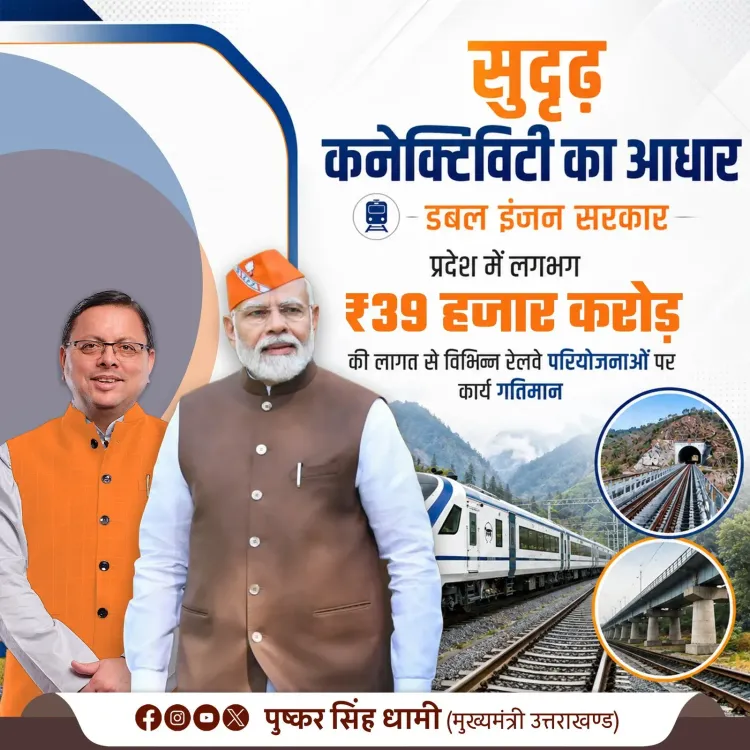
Uttarakhand CM Pushkar Singh Dhami says railway projects worth approximately ₹39,000 crore are progressing rapidly across the state, promising better connectivity, a tourism boost, and new jobs under the BJP's 'double engine' governance model.
Key Takeaways
CM Pushkar Singh Dhami announced on August 3, 2026 that multiple railway projects worth approximately ₹39,000 crore are actively underway in Uttarakhand.
The projects are being advanced under the BJP's 'double engine government' framework, aligning state and central administrations for faster execution.
Completion is expected to improve travel convenience for residents and reduce dependence on road transport vulnerable to landslides.
Key beneficiaries include the pilgrimage and adventure tourism sectors — critical drivers of Uttarakhand's economy.
Dhami cited new employment creation and a boost to local trade and commerce as additional outcomes of the rail expansion.
Specific project completion timelines remain a key variable to watch in upcoming railway budget and assembly session announcements.
A ₹39,000 crore railway expansion is quietly rewriting Uttarakhand's future — and Uttarakhand Chief Minister Pushkar Singh Dhami wants the state to know it. On Monday, August 3, 2026, the Chief Minister took to X to underscore the scale of rail infrastructure work now underway across the Himalayan state, framing it as the direct dividend of coordinated governance between Dehradun and New Delhi.
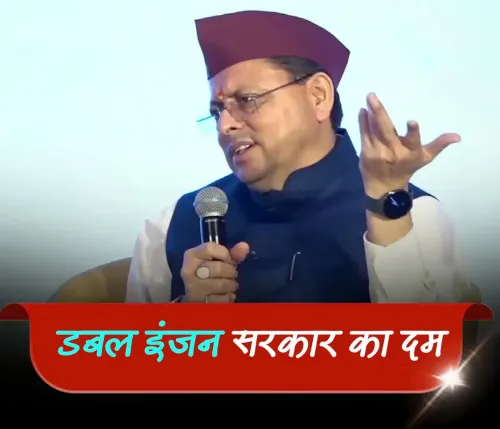
Dhami wrote that the 'double engine government' — the BJP's shorthand for aligned state and central administrations — is 'continuously strengthening rail connectivity in Uttarakhand,' with multiple railway projects moving at speed under an outlay of approximately ₹39,000 crore. He added that once completed, these projects will make travel 'more convenient,' give fresh momentum to tourism and trade, and generate new employment opportunities alongside a boost to the local economy.
What ₹39,000 Crore Looks Like in the Mountains
Laying rail in the Himalayas is among the most technically demanding infrastructure work in the world — tunnels through unstable geology, bridges over gorges, and alignments that must respect seismic zones. Uttarakhand, a state whose economy leans heavily on pilgrimage circuits — Char Dham, Haridwar, Rishikesh — and adventure tourism, has historically suffered from connectivity gaps that throttle visitor numbers and raise costs for residents and businesses alike.
Indian Railways has been the executing arm for multiple hill-state rail projects under the broader national infrastructure push that accelerated after 2014. The 'double engine' framing, a consistent BJP campaign and governance motif, argues that states with BJP governments at both levels unlock faster approvals, matching funds, and smoother coordination — cutting the bureaucratic drag that has historically stalled large projects in difficult terrain.
Tourism, Trade, and the Jobs Equation
Dhami's post ties the rail push to three concrete outcomes: easier movement for residents, a growth catalyst for tourism and commerce, and new jobs in a state where youth employment remains a persistent challenge. Better rail access to pilgrimage towns and hill districts would reduce dependence on road transport — which is vulnerable to landslides and seasonal closures — and could meaningfully expand the tourist season beyond its current weather-dependent window.
For local businesses and small traders, reliable rail freight and passenger links to the plains translate directly into lower logistics costs and a wider market reach — gains that road connectivity alone has not been able to deliver at scale.
Timelines and the Budget Watch
The political signal is clear; the delivery timeline is the open question. Large rail projects in hill terrain routinely face cost revisions and schedule overruns, and Uttarakhand's projects are no exception to that national pattern. Observers will be watching upcoming Union Railway Budget allocations and the Uttarakhand state assembly session for fresh funding confirmations and revised completion targets.
If the projects land on schedule, Uttarakhand's connectivity story changes fundamentally — a mountain state plugged into India's rail grid at a scale it has never seen before.
Point of View
000 crore figure, even if aspirational in its totality, anchors a tangible infrastructure story that is harder to contest than abstract policy promises. Rail connectivity in Himalayan states also carries a strategic subtext: faster links to border districts serve defence logistics as much as tourism. The real test will be whether completion timelines hold — in hill-terrain rail projects, the gap between announcement and inauguration has historically been the BJP's most exposed flank.
NationPress
17 Sept 2026
Frequently Asked Questions
What railway projects are underway in Uttarakhand in 2026?
Multiple railway projects with a combined outlay of approximately ₹39,000 crore are currently in progress across Uttarakhand, aimed at improving connectivity in the Himalayan state. Specific project names and completion timelines are expected to be detailed in upcoming railway budget and state assembly announcements.
What is the 'double engine government' model CM Dhami refers to?
The 'double engine government' is a BJP political framework that argues having the same party in power at both the state and central levels enables faster infrastructure approvals, coordinated funding, and smoother project execution — particularly relevant for large rail projects requiring central Railways Ministry involvement.
How will better rail connectivity benefit Uttarakhand's tourism sector?
Improved rail links to pilgrimage towns like Haridwar and Rishikesh and hill districts would reduce dependence on roads prone to landslide closures, extend the effective tourist season, lower travel costs, and open Uttarakhand's Char Dham circuit and adventure tourism destinations to a wider visitor base.
When will Uttarakhand's new railway projects be completed?
CM Dhami's post does not specify completion dates. Timelines are expected to become clearer through upcoming Union Railway Budget allocations and Uttarakhand state assembly sessions. Hill-terrain rail projects in India have historically faced schedule revisions due to geological and logistical challenges.
How does rail expansion create jobs in Uttarakhand?
Railway construction directly employs engineers, labourers, and contractors, while completed rail links lower logistics costs for local businesses, expand market access for traders, and drive higher tourist footfall — all of which generate downstream employment in hospitality, retail, and services.