Puri hosts 1984 massacre survivors, calls killings 'inhuman genocide'
Synopsis
Union Petroleum Minister Hardeep Singh Puri hosted widows and survivors of the 1984 anti-Sikh massacre at his Delhi residence on 7 November 2026, calling the killings an 'inhuman genocide' and noting survivors' gratitude toward PM Modi for pursuing justice against perpetrators.
Key Takeaways
Hardeep Singh Puri hosted survivors and widows of the 1984 anti-Sikh massacre at his residence on 7 November 2026 .
Puri explicitly called the 1984 violence an 'inhuman genocide,' not riots — language also used by the Delhi High Court , which termed it a 'crime against humanity.' Survivors expressed gratitude toward PM Narendra Modi for measures that brought several perpetrators to justice over the past decade.
Renowned jurist and activist H.S.
Phoolka , who has campaigned for 1984 justice for decades, attended the gathering.
Delhi CM Rekha Gupta , Lt Governor Taranjit Sandhu , and Delhi Minister M.S.
Sirsa were among senior officials who joined the remembrance.
The Nanavati Commission , appointed in 2000 and reporting in 2005 , remains a key reference point in the long legal accountability process for the 1984 killings.
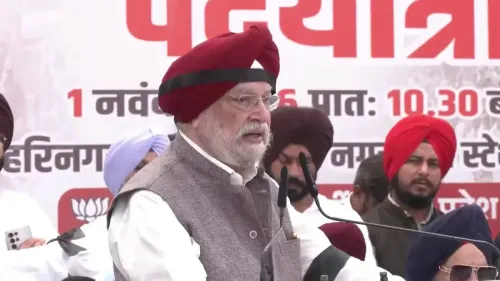
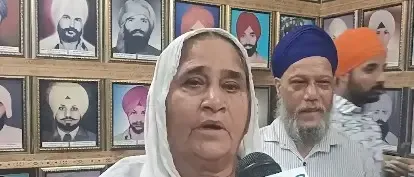
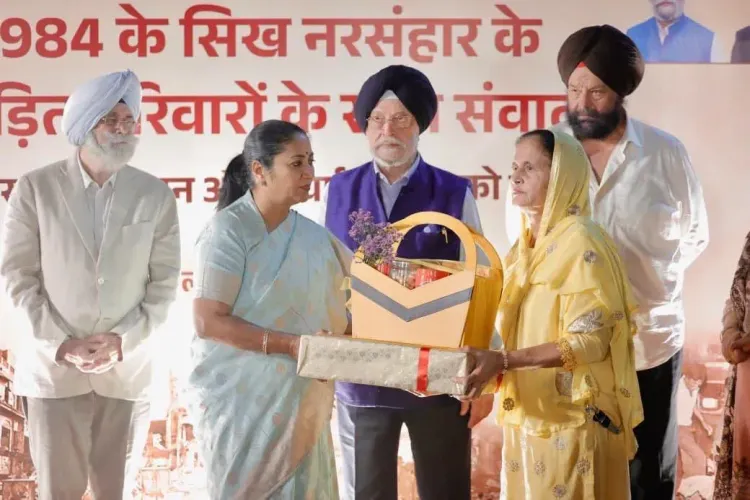
Forty-two years after one of independent India's darkest chapters, the widows and children of those slaughtered in the 1984 anti-Sikh massacre gathered on Saturday, 7 November 2026, not in a courtroom or a protest ground, but at the residence of Union Petroleum Minister Hardeep Singh Puri — to remember, to grieve, and, for many, to finally speak of lives rebuilt from the rubble of loss.
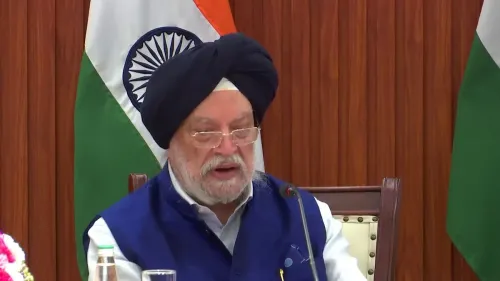
Puri, posting on X alongside photographs from the gathering, was unambiguous in his framing: '1984 में जो सिखों के साथ जो हुआ वो दंगे नहीं थे बल्कि एक अमानवीय नरसंहार था' — 'What happened to the Sikhs in 1984 was not riots, but an inhuman genocide.' That word choice — genocide, not riots — carries deliberate legal and moral weight, and it echoed a characterisation the Delhi High Court itself has used, describing the killings as a 'crime against humanity.'
What the survivors carried into that room
The violence of November 1984, triggered by the assassination of Prime Minister Indira Gandhi on 31 October 1984, left thousands of Sikh men dead across Delhi and other cities, their families torn apart by mobs that survivors and courts have repeatedly linked to political leadership of the time. Puri described the memories as 'deeply etched' — the premeditated, preplanned nature of the killings, the innocence of the victims, the decades of waiting for accountability.
Yet the minister also noted something quieter and harder to quantify: resilience. 'Many have gone on to build good and fulfilling lives with courage,' he wrote — a detail that shifted the gathering from pure mourning toward something closer to acknowledgement of survival itself.
Gratitude toward Modi and the long road to justice
Several survivors at the event expressed gratitude toward Prime Minister Narendra Modi, crediting him with taking 'strong measures' that eventually brought many perpetrators to justice. This is a claim the BJP has made consistently: that the current government pursued long-stalled cases with greater urgency than its predecessors. The Nanavati Commission, appointed in 2000 and reporting in 2005, laid out findings that fed into prosecutions spanning multiple decades. Convictions in high-profile cases did accelerate in the years following 2014, though rights groups have argued the full arc of accountability remains incomplete.
Renowned jurist and longtime 1984 justice campaigner H.S. Phoolka was among those present — a significant presence given that Phoolka has spent decades in courtrooms fighting for exactly the accountability survivors referenced on Saturday.
Who stood in the room
The gathering drew a notably cross-institutional lineup. Delhi CM Rekha Gupta attended, as did MLA Tarvinder Singh Marwah and Councillor Yogita Singh. Later in the evening, Lt Governor Taranjit Sandhu and Delhi Minister M.S. Sirsa also joined. The research flags that the specific current titles of Delhi officials reflect 2026 appointments and cannot be independently verified from earlier records — the post itself names them, and NationPress reports accordingly.
The minister's wife, Lakshmi Puri, co-hosted the remembrance — a personal detail that underscored this was as much a human act of solidarity as a political one.
Forty-two years is a long time to carry grief. That survivors are still being invited into official spaces to tell their stories — and that the word 'genocide' is now spoken plainly by a sitting Union Minister — signals how far the public language around 1984 has shifted, even as the final chapter of legal accountability has yet to be written.
Point of View
Puri reinforces the BJP's sustained narrative that it — unlike the Congress — has treated 1984 as a crime demanding accountability rather than a tragedy to be managed. The presence of jurist H.S. Phoolka, who has spent decades in adversarial legal battles, lends civic credibility that goes beyond party optics. The gathering also signals that 1984 remains a live political and moral issue ahead of any future electoral cycle in Punjab and Delhi, where Sikh voters are a significant constituency. Whether the language of 'genocide' accelerates any remaining legal proceedings or remains primarily rhetorical is the question that will define the event's longer legacy.
NationPress
7 Nov 2026
Frequently Asked Questions
What was the 1984 anti-Sikh massacre?
The 1984 anti-Sikh massacre refers to widespread violence against Sikh communities, primarily in Delhi, following the assassination of Prime Minister Indira Gandhi on 31 October 1984. Thousands of Sikhs were killed by mobs, and multiple courts and commissions have linked the violence to political leaders who were in power at the time.
Why did Hardeep Singh Puri call 1984 a genocide and not riots?
Puri used the word 'genocide' — rather than 'riots,' which implies spontaneous communal clashes — to emphasise the premeditated and organised nature of the killings. The Delhi High Court has also described the 1984 violence as a 'crime against humanity,' a characterisation Puri cited in his post.
What did PM Modi do about 1984 justice?
Survivors at Puri's gathering credited PM Narendra Modi with taking strong measures that resulted in several perpetrators of the 1984 massacre eventually being convicted. Convictions in high-profile cases accelerated after 2014, though rights groups argue full accountability is still pending.
Who is H.S. Phoolka and why was he at the event?
H.S. Phoolka is a renowned jurist and longtime activist who has spent decades fighting legal battles to secure justice for victims of the 1984 anti-Sikh massacre. His presence at Puri's remembrance gathering underscored the event's focus on legal accountability alongside personal mourning.
What was the Nanavati Commission on 1984?
The Nanavati Commission was appointed by the Indian government in 2000 to investigate the 1984 anti-Sikh riots. It submitted its report in 2005, and its findings fed into subsequent prosecutions and court proceedings over the following decades.