Hardeep Singh Puri calls 1984 anti-Sikh killings 'genocide', blames Congress
Synopsis
Union Minister Hardeep Singh Puri publicly labelled the 1984 anti-Sikh violence a 'genocide' at a BJP-organised protest march on 1 November, citing pre-planned targeting of victims and an official death toll of 3,325 nationwide. He also questioned why the opposition INDIA bloc chose the same date for a rally at Ramlila Maidan — sharpening a political confrontation over one of independent India's most contested historical wounds.
Key Takeaways
Union Minister Hardeep Singh Puri called the 1984 anti-Sikh violence a 'genocide' at a BJP-backed protest march on 1 November in New Delhi .
Official figures cited by Puri: 2,733 killed in Delhi; approximately 3,325 killed across India.
Puri argued the killings were pre-planned, with attackers allegedly supplied with names and addresses of Sikh targets in advance.
He recounted that a mob reached Manmohan Singh's residence but was turned away by Singh's Hindu son-in-law.
Puri criticised the INDIA bloc for scheduling a rally at Ramlila Maidan on 1 November , calling it 'inappropriate'.
He said Congress had not offered an adequate apology to the victims in over 42 years .
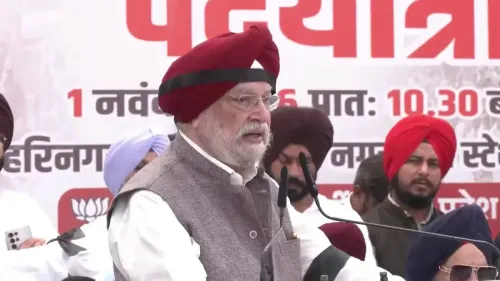
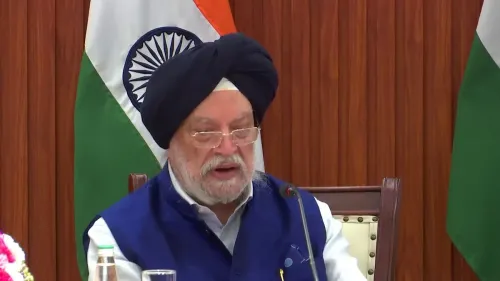
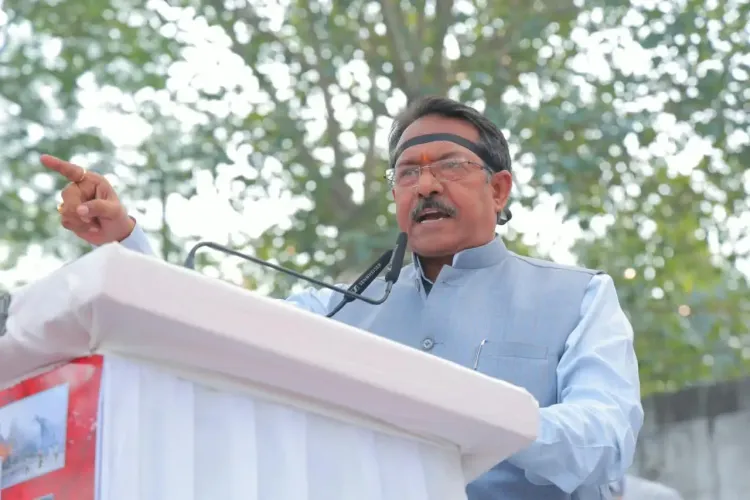
Union Minister Hardeep Singh Puri on Sunday, 1 November 2026, declared that the 1984 anti-Sikh violence was not a riot but a genocide orchestrated by the Congress government of the time, stating that at least 2,733 people were killed in Delhi alone and approximately 3,325 across the country according to official figures.
Key Remarks at the Protest March
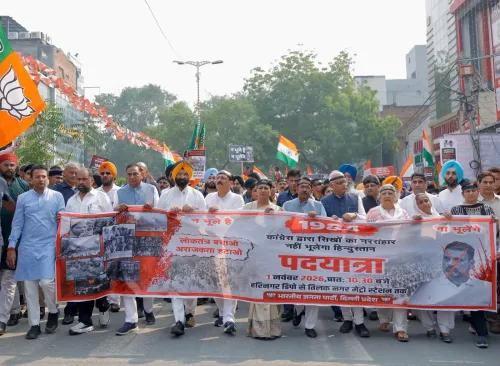
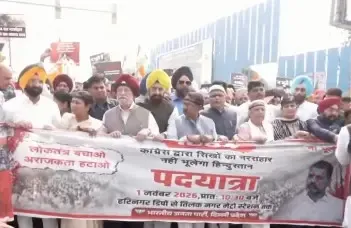
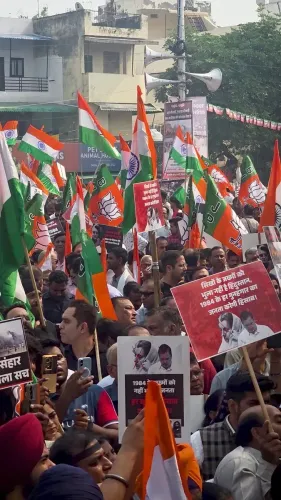
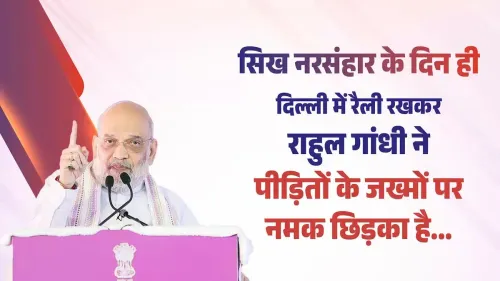
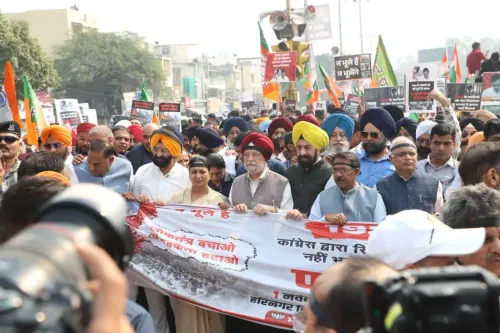
Puri was addressing a gathering organised under the banner of the '1984 Sikh Genocide Protest March', convened by the Bharatiya Janata Party (BJP) in association with Sikh organisations to mourn the victims. He argued that the scale and one-sided nature of the killings — where two groups did not clash but Sikh individuals were systematically targeted — disqualified the standard use of the word 'riot'.
'The appropriate term for this was genocide. The Delhi High Court, as far as he recalled, had also used terms such as 'Crime Against Humanity' to describe these incidents,' Puri said.
Evidence of Pre-Planning, Says Puri
The Minister drew on personal and documented accounts to argue that the violence was not spontaneous. He pointed out that attackers appeared to possess detailed information about their targets in advance — going beyond electoral rolls to identify Sikh residents by name and address.
'A person named Harnam Singh could belong to Madhya Pradesh or Haryana and could be a Jat, a Rajput or any other individual wearing a turban. However, the attackers appeared to have been provided with the identities and details of their targets in advance. This clearly indicated that the violence was not the result of spontaneous anger but had been meticulously planned,' Puri said.
He also recounted that mobs had reached the residence of then-Prime Minister Manmohan Singh in Delhi. According to Puri, Singh's son-in-law, who was Hindu, stood at the door and informed the mob it was his home; the mob reportedly countered that their list showed a Sikh lived there, but eventually moved on after he insisted otherwise.
Personal Connection to the Events
Puri recalled that in 1984 he was posted in Geneva while his parents lived in Delhi's GDA Colony. He credited Hindu neighbours and friends who drove his parents to safety when the violence broke out — a personal memory he shared to underscore both the horror and the individual acts of courage that occurred alongside it.
Political Barb at Opposition Rally
Puri also took aim at the timing of the INDIA bloc rally at Ramlila Maidan, which was scheduled for 1 November — the anniversary of the violence. He questioned why the opposition could not have chosen a different date, calling the choice 'inappropriate'. He added that Congress had never offered an adequate apology to the victims and urged the party's leaders to reflect seriously on their legacy in connection with the events of 1984.
This comes amid recurring political flashpoints over the 1984 violence, with the BJP having consistently used the anniversary to press the Congress on accountability, particularly ahead of electoral cycles. Notably, courts and commissions over four decades have reached differing conclusions on culpability, and several convictions and acquittals remain contested.
Call for Remembrance and Prevention
Puri concluded by asserting that neither the Sikh community nor the nation had fully reckoned with what occurred in 1984. He called it both an individual and collective responsibility to ensure the events are never forgotten and that such violence never recurs — 'either in India or anywhere else in the world,' he said.
Point of View
But saying it from a ministerial platform at a formally organised march sharpens the political charge considerably. The timing — on the anniversary, with an opposition rally scheduled the same day at Ramlila Maidan — suggests a calculated effort to dominate the news cycle and corner Congress on an accountability question it has never cleanly answered. What mainstream coverage tends to underplay is that the 'genocide versus riot' debate has real judicial history: the Delhi High Court has used 'Crime Against Humanity' language, lending Puri's framing partial institutional backing. The more searching question — why convictions have remained so few relative to the scale of the violence — goes unasked at such events, on either side of the aisle.
NationPress
1 Nov 2026
Frequently Asked Questions
What did Union Minister Hardeep Singh Puri say about the 1984 anti-Sikh violence?
Hardeep Singh Puri stated that the 1984 violence was not a riot but a genocide carried out by the Congress government, citing official figures of 2,733 killed in Delhi and approximately 3,325 across India. He argued that the attacks were pre-planned, with perpetrators allegedly given advance details of Sikh residents' identities and addresses.
What is the '1984 Sikh Genocide Protest March'?
It is a commemorative march organised by the BJP in association with Sikh organisations to mourn the victims of the 1984 anti-Sikh violence, held on 1 November — the anniversary of the killings that followed the assassination of Prime Minister Indira Gandhi.
Why did Puri criticise the INDIA bloc rally on 1 November?
Puri questioned why the opposition INDIA bloc chose 1 November — the anniversary of the 1984 violence — for a political rally at Ramlila Maidan in New Delhi, calling the timing 'inappropriate' when another date could easily have been selected.
Has Congress apologised for the 1984 violence?
According to Puri, Congress has not appropriately apologised to the victims of the 1984 killings in over 42 years. While individual Congress leaders have at various points expressed regret, Puri argued the party has never offered a full and formal reckoning with its responsibility.
What legal characterisation has the Delhi High Court used for the 1984 violence?
Puri recalled that the Delhi High Court has used the phrase 'Crime Against Humanity' in connection with the 1984 incidents — language that lends some institutional weight to arguments that the violence exceeded the scope of an ordinary communal riot.