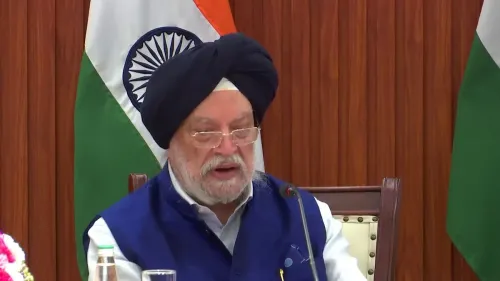
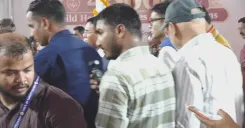
Puri joins 1984 Sikh massacre remembrance Padyatra in Hari Nagar
Synopsis
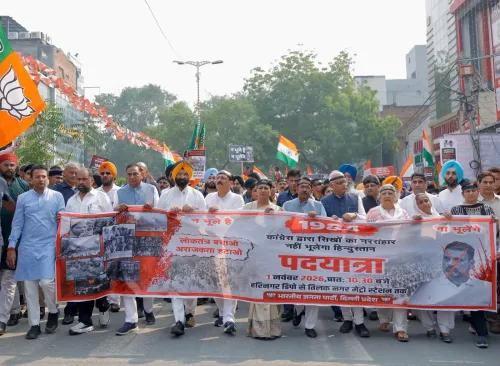
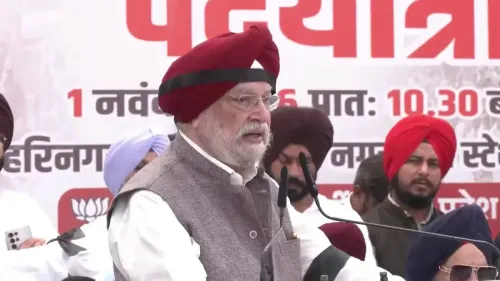
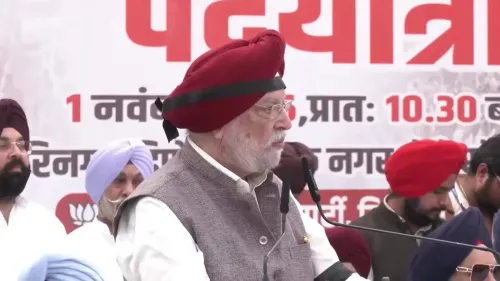
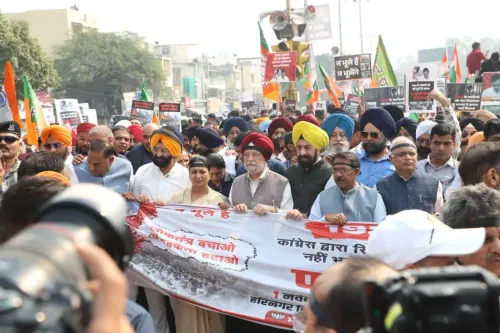
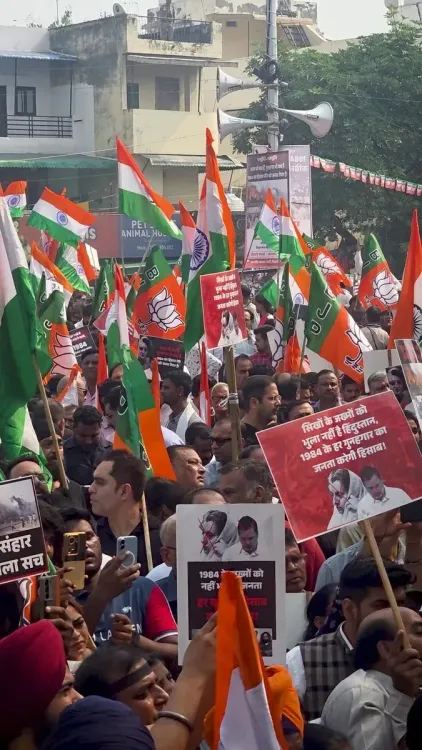
Union Petroleum Minister Hardeep Singh Puri joined a Sikh Sangat Padyatra at Hari Nagar, Delhi on 1 November 2026, marking 42 years since the anti-Sikh carnage of 1984 and directly accusing Congress leaders of perpetrating and abetting the violence.
Key Takeaways
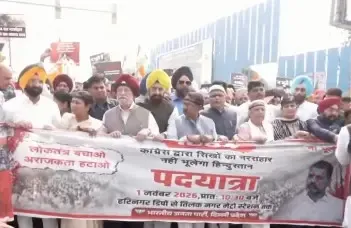
Hardeep Singh Puri participated in a Padyatra at Hari Nagar, West Delhi on 1 November 2026 to honour victims of the 1984 anti-Sikh riots .
Puri described victims as being 'dragged out of their homes and burnt alive' and their properties 'looted and set afire.' He directly accused the Indian National Congress party's 'goons and leaders' of openly perpetrating and aiding the violence on Delhi's streets.
The anti-Sikh riots erupted on 31 October 1984 , immediately following the assassination of Prime Minister Indira Gandhi , and resulted in thousands of Sikh deaths across Delhi.
Puri closed with the phrase ना भूले हैं, ना भूलेंगे — 'We have not forgotten.
We will not forget' — a longtime Sikh community refrain on 1984.
Multiple judicial inquiries have pointed to Congress workers' involvement in the 1984 violence, though convictions have remained few and delayed.
Forty-two years on, the wounds of November 1984 remain raw enough to draw thousands onto the streets of Delhi. Union Petroleum Minister Hardeep Singh Puri joined members of the Sikh Sangat on Sunday, 1 November 2026, for a Padyatra — a solemn march on foot — through Hari Nagar in West Delhi, paying homage to Sikh men and women killed in some of the worst communal carnage independent India has witnessed.
What Puri said — and what those words carry
Puri described the violence in unsparing terms: members of his Sangat 'dragged out of their homes and burnt alive while their homes, shops, offices and establishments were looted and set afire.' He directly named the Indian National Congress party, accusing its 'goons and leaders' of openly perpetrating, encouraging, and aiding the killings on the streets of Delhi in 1984. He closed with a Hindi phrase that has become a refrain for the community — ना भूले हैं, ना भूलेंगे — 'We have not forgotten. We will not forget.'
The words are a political charge as much as a personal grief. Puri is himself a member of the Sikh community, and his framing — 'members of my Sangat' — places the statement squarely in lived memory, not just party rhetoric.
The violence of 1984 and the accountability question
The anti-Sikh riots erupted within hours of the assassination of Prime Minister Indira Gandhi on 31 October 1984. Over the days that followed, thousands of Sikhs were killed across Delhi and other cities in coordinated mob attacks. Multiple judicial inquiries and commissions over the following decades pointed to the involvement of Congress workers and local leaders in organising or enabling the violence, though convictions have been few and long-delayed.
The question of accountability — never fully resolved — has kept 1984 alive as a live political fault line, particularly around the anniversary window of 31 October to 3 November each year.
BJP's annual reckoning with Congress on 1984
For the BJP, commemorations of the 1984 riots serve a dual purpose: genuine community solidarity and a sharp electoral reminder of Congress's most damaging historical liability. Senior BJP leaders — and especially those from the Sikh community — have made the November anniversary a fixture of the political calendar. Puri, a career diplomat-turned-minister who has held some of India's most consequential cabinet positions, lends particular moral weight to this year's Padyatra.
The march through Hari Nagar, a locality in West Delhi that saw significant violence in 1984, chose geography deliberately. These are not abstract numbers — they are specific streets, specific addresses, and families who still live nearby.
Forty-two years and a government later, the march continues. The demand, encoded in those five Hindi words, has not changed: ना भूले हैं, ना भूलेंगे.
Point of View
The distinction between sincere mourning and partisan messaging has always been blurry here, and both parties know it. What gives Puri's participation particular weight is biography: as a Sikh minister invoking 'my Sangat,' he collapses the distance between state power and personal grief, making the accountability demand harder to dismiss as mere electioneering. As long as comprehensive judicial accountability for 1984 remains incomplete, these marches will continue to carry both moral and electoral voltage.
NationPress
1 Nov 2026
Frequently Asked Questions
What happened in the 1984 anti-Sikh riots?
The anti-Sikh riots erupted across Delhi and other Indian cities immediately after the assassination of Prime Minister Indira Gandhi on 31 October 1984. Thousands of Sikh men and women were killed in coordinated mob attacks over several days, with homes, shops, and gurudwaras looted and burned. Multiple official inquiries found evidence of Congress workers and local leaders organising or enabling the violence.
What is a Padyatra and why was one held at Hari Nagar?
A Padyatra is a march or procession on foot, often held for religious, political, or commemorative purposes. Hari Nagar is a locality in West Delhi that witnessed significant violence during the 1984 anti-Sikh riots, making it a symbolically significant site for annual remembrance marches.
What did Hardeep Singh Puri say about the 1984 riots?
Puri described the violence as 'one of the worst and most brutal carnage,' stating that Sikh men and women were dragged from their homes and burnt alive while their properties were looted. He directly accused Congress party leaders and workers of perpetrating, openly encouraging, and aiding the killings on Delhi's streets in 1984.
What does 'na bhoole hain, na bhoolenge' mean?
The Hindi phrase ना भूले हैं, ना भूलेंगे translates to 'We have not forgotten. We will not forget.' It has become a widely used refrain within the Sikh community and among those demanding accountability for the 1984 anti-Sikh riots.
Has anyone been convicted for the 1984 anti-Sikh riots?
Convictions for the 1984 violence have been few and long-delayed despite multiple judicial commissions and investigations over the decades. Several Congress-linked individuals have faced legal proceedings, with a small number of convictions secured in later years, but survivors and victims' families have consistently maintained that justice remains incomplete.