Puri calls 1984 Sikh killings a massacre, not a riot
Synopsis
Union Petroleum Minister Hardeep Singh Puri, marking the 1984 November anniversary, declares the organised killing of thousands of Sikhs a massacre — not a riot — and argues accurate remembrance is the only safeguard against recurrence.
Key Takeaways
Hardeep Singh Puri posted on 1 November 2026 , the anniversary period of the 1984 anti-Sikh violence.
He defines a riot as mutual clashing of two groups and argues 1984 does not qualify — calling it instead one-sided, organised violence.
He explicitly states that calling 1984 'merely a riot' diminishes the gravity of the tragedy.
The Nanavati Commission and court records have documented the targeted, organised nature of the killings, in which thousands of Sikhs died in Delhi alone.
Puri frames accurate remembrance as a preventive tool — so such inhumanity 'never occurs again on Indian soil.' Legal and compensation cases for 1984 victims' families remain ongoing in Indian courts.
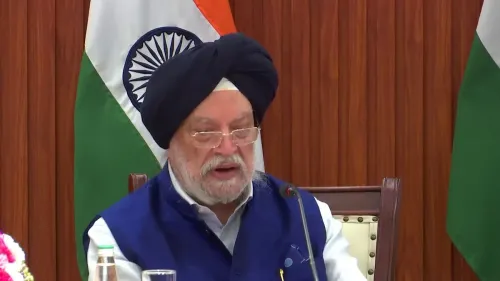
Forty-two years after Delhi burned, Union Petroleum Minister Hardeep Singh Puri has drawn a sharp, unflinching line: what happened to thousands of innocent Sikhs in November 1984 was not a riot — it was organised, one-sided, and catastrophic, and calling it anything less dishonours every victim.
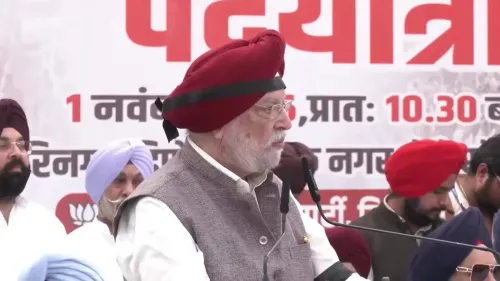
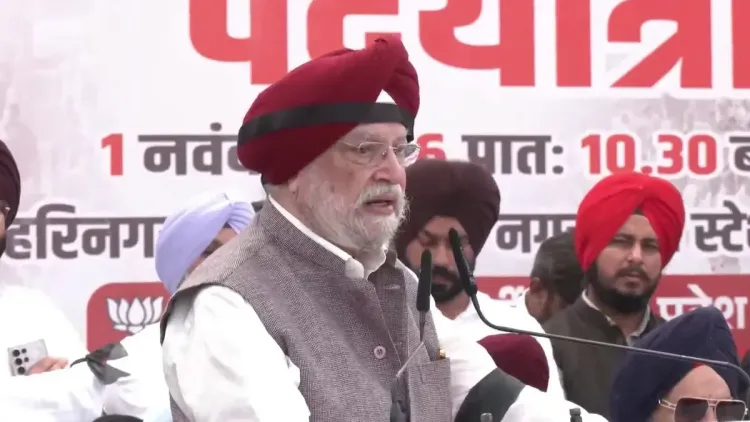
Posting on Sunday, 1 November 2026 — the anniversary period of the violence — Puri wrote in Hindi: 'दंगा तब होता है, जब दो समूह आपस में टकराते हैं' ('A riot happens when two groups clash with each other.'). He then stated plainly that the targeted killing, burning of homes, and destruction of families that unfolded across Delhi in 1984 was a harrowing example of one-sided, organised violence — and that describing it merely as a riot would be to minimise the gravity of that horrific tragedy. 'That massacre must be remembered,' he wrote, 'so that such inhuman violence never occurs again on Indian soil.'
Why the word 'massacre' carries legal and historical weight
The terminological distinction Puri insists on is not merely rhetorical. Multiple official commissions of inquiry — including the Nanavati Commission — have documented that the violence following Prime Minister Indira Gandhi's assassination on 31 October 1984 bore the hallmarks of organised targeting: Sikh households were identified using voter rolls, mobs were transported, and the killing was concentrated rather than spontaneous. Court records and civil-society documentation place the death toll in Delhi alone at several thousand.
Using the word 'massacre' instead of 'riot' reflects that evidentiary record. A riot implies mutual combat. What survivors and inquiry reports describe was systematic — men pulled from homes, children orphaned, entire neighbourhoods reduced to ash over three to four days while the state's response remained, at best, critically delayed.
A senior BJP voice on a wound that cuts across party lines
Puri's statement carries particular political weight because of who he is: a BJP cabinet minister, a former career diplomat who served at the United Nations, and himself a member of the Sikh community. The BJP has historically invoked 1984 to draw contrast with the Congress, whose government was in power during the violence. But Puri's framing here steps past partisan score-keeping — he does not name a party or a leader; he names a crime and demands its accurate remembrance.
Indian political leaders across the spectrum have periodically issued statements on 1984, particularly around November anniversaries, and calls for justice for victims' families and pending compensation cases have never fully left the public discourse. Puri's post lands in that continuing conversation with unusual directness.
Memory as prevention: the argument Puri is making
The closing lines of his post carry the sharpest edge: the massacre must be remembered precisely so that it does not happen again. That is a forward-looking moral argument, not just a historical lament. It frames accurate nomenclature — massacre, not riot — as itself a form of protection: if a society understates what happened, it loses the tools to prevent recurrence.
For the families of victims who have waited decades for full accountability, the words of a sitting Union Minister affirming the scale and nature of that violence — unambiguously, in public — remain significant. The legal and compensation cases linked to 1984 continue to wind through courts; the anniversary arrives each year as a reminder of how much still remains unresolved.
Forty-two years on, the argument over a single word — riot versus massacre — is still, at its core, an argument about justice.
Point of View
During the anniversary period, reinforces pressure on the state to treat 1984 as a singular category of state-proximate violence rather than communal disorder. It also signals that the BJP's long-standing political use of 1984 as a contrast with Congress is now being supplemented — at least in some quarters — by a rights-based framing centred on victims rather than on partisan point-scoring. Whether that shift translates into accelerated judicial or compensatory action for survivors remains the real test.
NationPress
1 Nov 2026
Frequently Asked Questions
What did Hardeep Singh Puri say about 1984?
Puri said the 1984 violence against Sikhs was not a riot but organised, one-sided mass killing — a massacre — and that calling it a mere riot minimises the tragedy. He said it must be remembered to prevent recurrence.
Why is calling 1984 a 'massacre' instead of a 'riot' significant?
A riot implies two groups fighting each other. The 1984 violence was documented by official commissions as targeted, one-sided attacks on Sikhs — making 'massacre' the legally and historically accurate term, with implications for accountability and justice.
How many Sikhs were killed in 1984?
Official inquiries and court records place the death toll in Delhi alone at several thousand. The violence erupted after Prime Minister Indira Gandhi's assassination on 31 October 1984 and continued for three to four days.
What is the Nanavati Commission and what did it find about 1984?
The Nanavati Commission was a government-appointed inquiry into the 1984 anti-Sikh violence. It documented that the attacks bore hallmarks of organisation — including use of voter rolls to identify Sikh households — supporting the characterisation of massacre over spontaneous riot.
Are there still pending court cases related to the 1984 anti-Sikh violence?
Yes. Legal cases and compensation claims filed by survivors and victims' families continue to be heard in Indian courts, and the November anniversary each year renews public attention to unresolved accountability.