Assam signs MoU for India's first public Proton Beam Therapy Centre
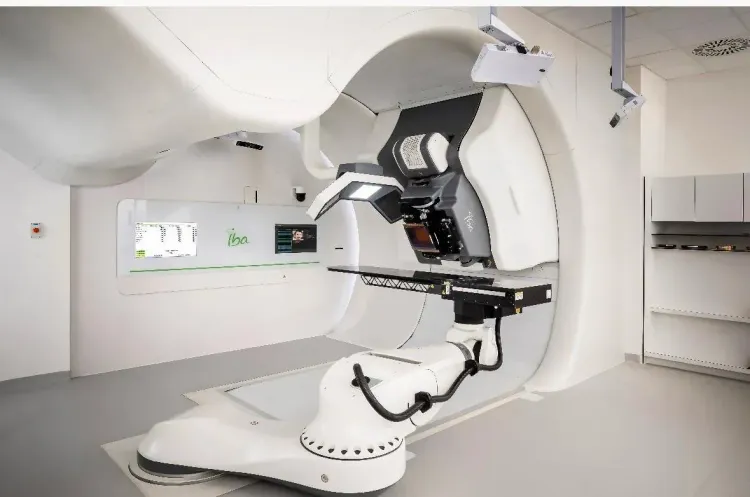
Synopsis
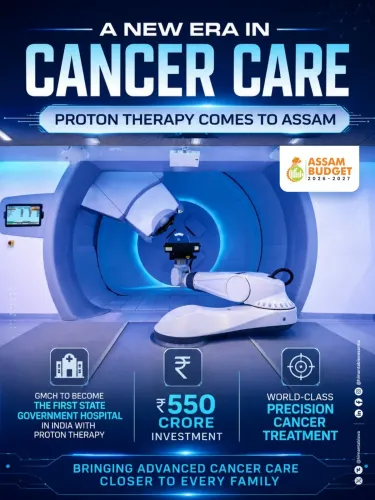
Assam has signed an MoU to build India's first public-sector Proton Beam Therapy Centre at ₹600 crore, advancing its network of 12 operational cancer hospitals and positioning the Northeast as a global cancer care hub.
Key Takeaways
Assam signed an MoU on November 1, 2026 to establish India's first public-sector Proton Beam Therapy Centre .
The investment is ₹600 crore , making this among the largest state-level healthcare commitments in the Northeast.
Proton therapy delivers precise tumour-targeted radiation with significantly fewer side effects than conventional radiotherapy.
Assam has already made 12 of 17 planned cancer hospitals operational across the state.
The centre is part of Assam's stated goal to become a global hub for cancer care , potentially serving patients from neighbouring countries.
Site selection and construction timeline for the centre are the immediate next milestones to watch.
A single MoU just rewrote the map of cancer care in India. Assam has signed an agreement to establish India's first public-sector Proton Beam Therapy Centre at an investment of ₹600 crore, the Chief Minister's Office of Assam announced on Sunday, November 1, 2026 — a landmark that places the Northeast at the frontier of advanced oncology rather than its periphery.
Why proton therapy — and why this changes everything
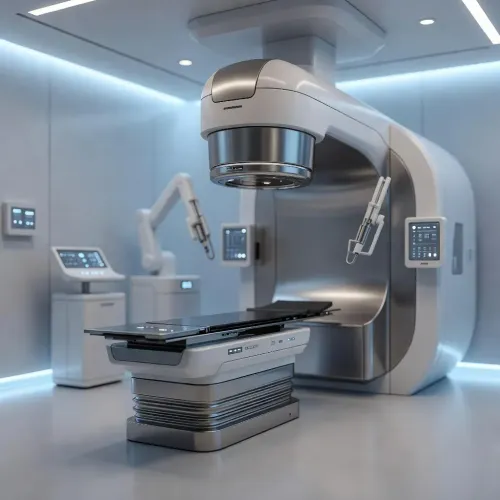
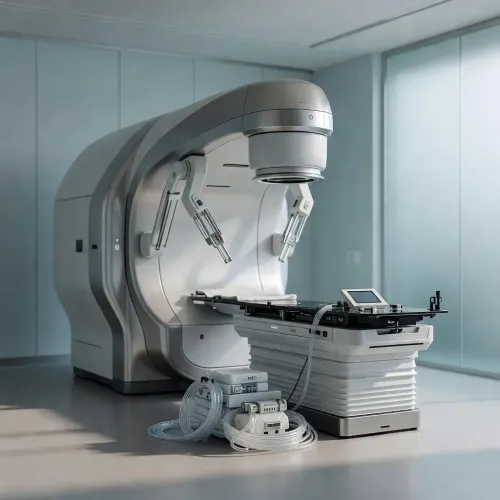
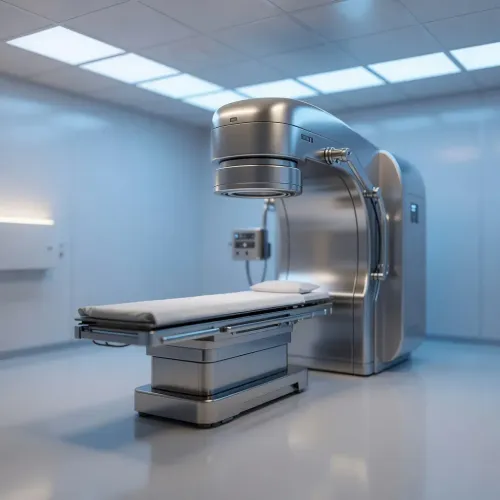
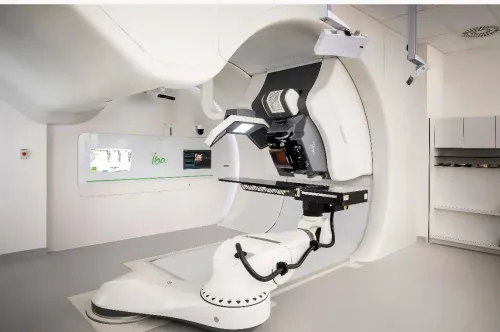
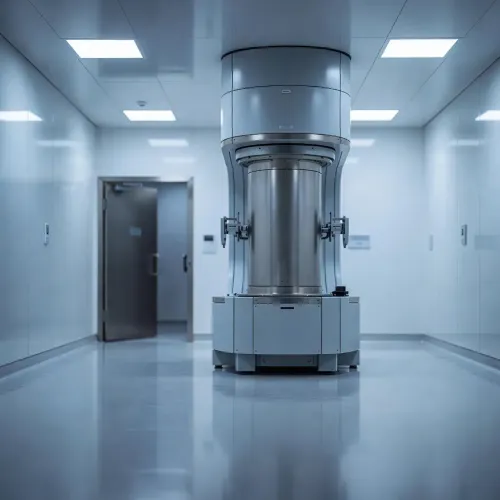
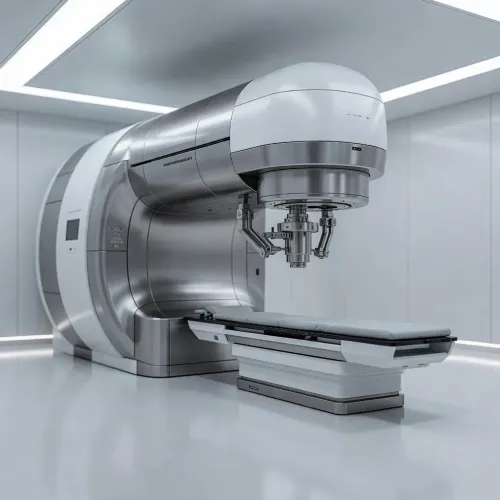
Proton Beam Therapy is not an incremental upgrade. Unlike conventional radiotherapy, which exposes surrounding healthy tissue to radiation as beams pass through the body, proton therapy delivers a precise, concentrated dose directly at the tumour and stops. The result: fewer side effects, lower secondary cancer risk, and meaningfully better outcomes — particularly for paediatric patients, brain tumours, and cancers near critical organs.
Until now, this technology has existed exclusively in private-sector facilities in India, placing it financially out of reach for the vast majority of patients. A public-sector centre changes that calculus entirely, making the treatment accessible to patients who could never have considered it before.
Northeast's long journey from medical exile to regional hub
For decades, a cancer diagnosis in the Northeast meant a journey — to Kolkata, Delhi, or Mumbai — a gruelling, expensive odyssey layered on top of an already devastating illness. The region's geography and historically thin healthcare infrastructure left patients with no local recourse for advanced oncological care.
Assam has been dismantling that reality systematically. The state has already made 12 of its planned 17 cancer hospitals operational, building a district-level network that brings baseline oncology services closer to patients across the state. The Proton Beam Therapy Centre now crowns that network with a facility that rivals the best anywhere in the world.
The ₹600 crore bet on becoming a global cancer care destination
The investment figure — ₹600 crore — signals ambition well beyond serving Assam alone. The Chief Minister's Office framed the MoU explicitly as a step toward making Assam 'a global hub for cancer care,' a positioning that would attract patients from across the Northeast, neighbouring Bangladesh, Bhutan, and Myanmar — countries that currently send their most complex oncology cases to distant metros or abroad.
The broader pattern here is unmistakable: as national policy has pushed specialized healthcare decentralization beyond traditional metros, Assam is moving fastest and furthest in the Northeast, anchoring a regional medical ecosystem that could eventually rival established centres elsewhere in the country.
Site, timeline, and the five remaining hospitals
The next phase of scrutiny will focus on where the centre is built, how fast construction begins, and whether the remaining five cancer hospitals in the planned network come online in parallel. The MoU is the commitment; execution is the test. For patients waiting today, that timeline is not an abstraction — it is the distance between treatment and the lack of it.
Assam has set the benchmark. The Northeast now watches to see how fast the promise becomes a building, and a building becomes a lifeline.
Point of View
Positioning Guwahati as a medical destination for South and Southeast Asia's underserved populations. It accelerates a decade-long national pattern of decentralizing specialized care beyond Delhi-Mumbai-Chennai, but at a technology tier no other state government has yet matched in the public sector. The political dividend for the state administration is substantial: advanced oncology has historically been the starkest symbol of what ordinary citizens in the Northeast could not access. Converting that gap into a global-standard facility rewrites the narrative of regional disadvantage into one of deliberate ambition.
NationPress
1 Nov 2026
Frequently Asked Questions
What is Proton Beam Therapy and how is it different from normal radiation treatment?
Proton Beam Therapy uses proton particles instead of X-rays to target tumours, delivering a precise dose that stops at the tumour site and minimises damage to surrounding healthy tissue — significantly reducing side effects compared to conventional radiotherapy.
Where will India's first public-sector Proton Beam Therapy Centre be located?
The centre will be located in Assam, though the specific site has not yet been announced. The Government of Assam signed the MoU on November 1, 2026, with construction location and timeline forming the next key milestone.
How much is Assam investing in the Proton Beam Therapy Centre?
Assam has committed an investment of ₹600 crore for the establishment of the Proton Beam Therapy Centre, making it one of the largest state-level healthcare infrastructure investments in the Northeast.
How many cancer hospitals does Assam currently have?
As of November 2026, Assam has made 12 out of 17 planned cancer hospitals operational across the state, with the Proton Beam Therapy Centre set to serve as the apex facility of this network.
Why is this significant for cancer patients in Northeast India?
Northeast India has long lacked advanced oncology infrastructure, forcing patients to travel to distant metros for specialized treatment. A public-sector Proton Beam Therapy Centre in Assam would make world-class cancer care accessible and affordable locally for the first time.