Amit Shah Flags Off 141 Vehicles at Chandigarh Police Diamond Jubilee
Synopsis
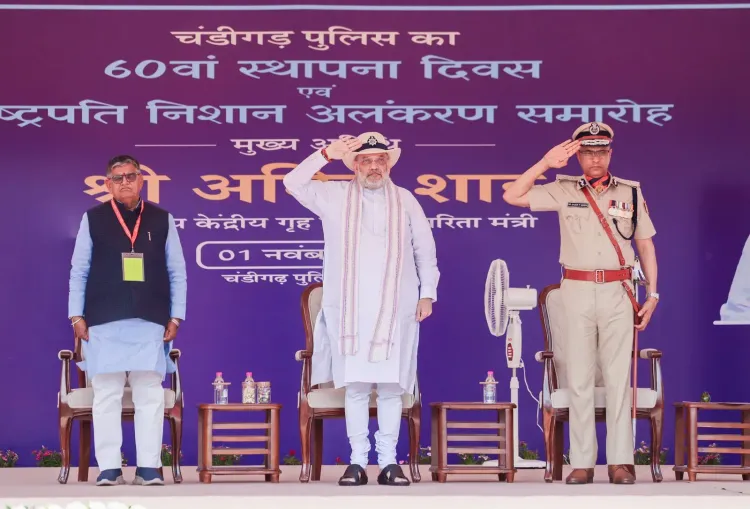
Union Home Minister Amit Shah attended the Chandigarh Police Diamond Jubilee on 1 November 2026, awarding medals to officers and flagging off 141 new vehicles worth ₹5 crore to strengthen rapid response and patrolling across the Union Territory.
Key Takeaways
141 new vehicles procured at approximately ₹5 crore were flagged off for the Chandigarh Police fleet by Union Home Minister Amit Shah .
The vehicles are designated to enhance rapid response, intensive patrolling, and modern policing capabilities in the Union Territory.
Shah conferred medals on police personnel recognised for maintaining security and peace in Chandigarh.
The ceremony marks Chandigarh Police's Diamond Jubilee — 60 years since the UT's formation under the Punjab Reorganisation Act of 1966 .
An exhibition on the force's history was also inaugurated, framed as a lasting source of inspiration for discipline and national service.
The procurement aligns with the Ministry of Home Affairs' Modernisation of Police Forces framework for Union Territory law enforcement upgrades.
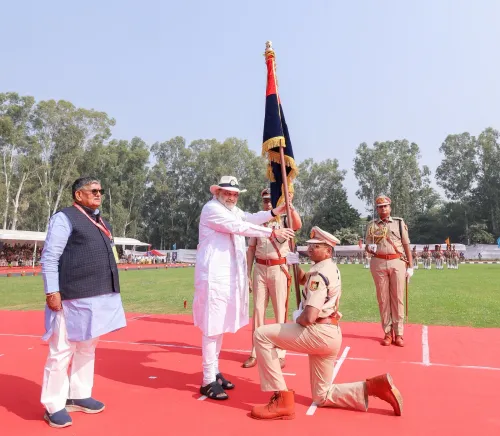
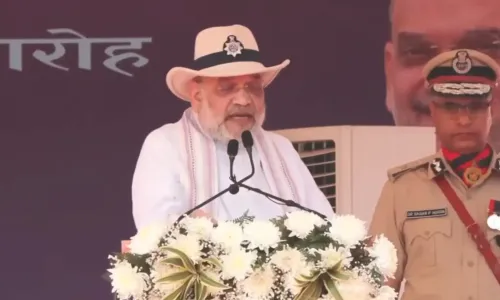
Sixty years of policing a city carved from scratch — and Union Home Minister Amit Shah marked the occasion by sending a fleet of new muscle onto Chandigarh's streets. At the Chandigarh Police Diamond Jubilee ceremony on Sunday, 1 November 2026, Shah flagged off 141 new vehicles procured at a cost of approximately ₹5 crore, then decorated officers whose work has kept the Union Territory among India's more orderly urban centres.
141 Vehicles, One Clear Message on Rapid Response
Shah described the new fleet as a direct boost to three operational pillars: rapid response, intensive patrolling, and modern policing. The vehicles — flagged off in a single ceremonial send-off — are intended to close the gap between a distress call and a police presence on the ground. For a compact Union Territory that punches above its weight in governance metrics, the infusion matters.
The procurement fits squarely inside the Ministry of Home Affairs' Modernisation of Police Forces framework, under which the Centre periodically funds equipment upgrades for UT police departments. Chandigarh, administered directly by the Centre, draws its policing budget and policy direction from MHA — making Shah's presence at the jubilee both ceremonial and supervisory.
Medals, an Exhibition, and a Force's Six Decades Recalled
Before the fleet rolled out, Shah conferred medals on personnel recognised for their contributions to keeping the city secure and peaceful — a rare public moment of institutional acknowledgement for a force that operates quietly in a city more accustomed to headlines about the Punjab and Haryana high courts next door than its own law-and-order record.
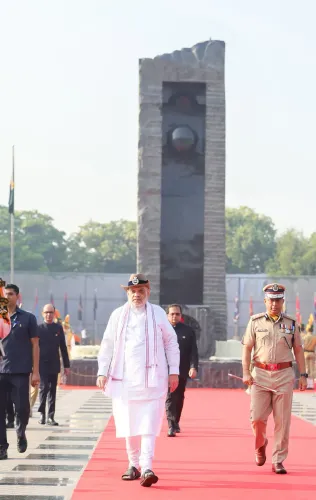
The ceremony also featured an exhibition tracing the Chandigarh Police's journey across its sixty-year history. Shah, who inspected the display, noted that it stood as a source of inspiration on discipline and national service for generations to come — 'anushasan aur rashtra-seva ki prerna' (inspiration for discipline and national service), as he put it in his post.
Why Chandigarh's Policing Story Is a UT Governance Benchmark
Chandigarh was carved out as a Union Territory in 1966 under the Punjab Reorganisation Act, simultaneously serving as the joint capital of Punjab and Haryana. Its dedicated police force has since operated under direct central oversight — a model distinct from state police forces that answer to elected state governments. That structural clarity has historically translated into relatively swift administrative responsiveness.
As the Centre sharpens its focus on UT governance, events like this Diamond Jubilee double as public accountability checkpoints: who gets recognised, what gets funded, and how the Union government signals its expectations for law enforcement on territory it directly controls.
With the fleet on the road and medals pinned, the next test is whether the hardware translates into measurable improvement in response times — the metric that ultimately answers for all the ceremony.
Point of View
Not just a budgetary line item. For Shah, whose Home Ministry portfolio covers all seven UTs, the appearance also sets a public benchmark: Chandigarh's relatively stable law-and-order record becomes a model to project. Watch whether similar fleet and recognition events follow in other UTs ahead of the next Union Budget cycle.
NationPress
1 Nov 2026
Frequently Asked Questions
What happened at the Chandigarh Police Diamond Jubilee ceremony?
Union Home Minister Amit Shah flagged off 141 new police vehicles worth approximately ₹5 crore, awarded medals to distinguished officers, and inaugurated an exhibition on the force's 60-year history at the Diamond Jubilee ceremony on 1 November 2026.
Why does Chandigarh have its own separate police force?
Chandigarh is a Union Territory and the joint capital of Punjab and Haryana. When it was constituted as a UT under the Punjab Reorganisation Act of 1966, it was given its own dedicated police force that operates under direct central government oversight through the Ministry of Home Affairs.
What is the Modernisation of Police Forces scheme?
It is a Ministry of Home Affairs framework under which the central government periodically funds equipment, technology, and infrastructure upgrades for both state and Union Territory police forces to improve their operational capabilities.
How many vehicles were added to the Chandigarh Police fleet?
According to Union Home Minister Amit Shah's post, 141 new vehicles were inducted into the Chandigarh Police fleet at a cost of approximately ₹5 crore, aimed at improving rapid response and patrolling.
What is the Diamond Jubilee of Chandigarh Police?
The Diamond Jubilee marks 60 years of the Chandigarh Police force, which was established following Chandigarh's constitution as a Union Territory in 1966 after the Punjab Reorganisation Act.