Doda women SHGs boost incomes with commercial floriculture in J&K
Synopsis
On barren land in Sartingal village, Bhaderwah, five women decided to try marigold farming — and it worked. With CSIR-IIIM backing and Ministry of Science and Technology support, Doda's SHGs are now selling flowers to Jammu traders and one member alone has clocked over ₹3 lakh in sales, turning a rural floriculture experiment into a replicable model for women's economic independence in J&K.
Key Takeaways
Women-led Self-Help Groups (SHGs) in Sartingal village, Bhaderwah, Doda are cultivating ornamental crops under the National Rural Livelihood Mission (NRLM) .
The initiative is backed by the Ministry of Science and Technology's Floriculture Mission with technical support from CSIR-IIIM .
Five women initially joined on a trial basis; the group has been supplying marigolds to traders in Jammu for over one-and-a-half months .
Local farmer Rani , associated with the Umeed Scheme for eight years , has reportedly sold marigold flowers worth more than ₹3 lakh .
The model has generated steady incomes, entrepreneurial skills, and leadership opportunities for rural women in Jammu and Kashmir .
Commercial floriculture is emerging as a transformative livelihood tool for women in the rural pockets of Jammu and Kashmir, with Doda district emerging as a standout example of how organised agriculture can drive economic independence at the grassroots level.
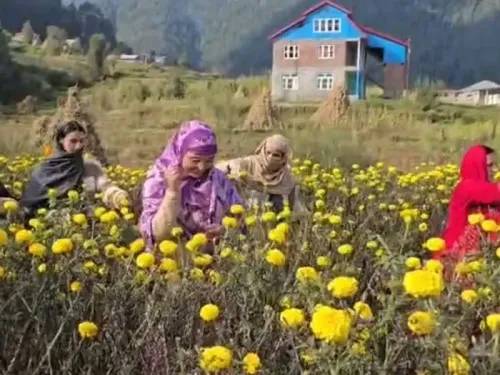
In Sartingal village of Bhaderwah, Doda, women-led Self-Help Groups (SHGs) operating under the National Rural Livelihood Mission (NRLM) are growing, harvesting, and adding value to a range of ornamental crops — converting barren land into productive agricultural plots and generating steady household incomes in the process.
How the Floriculture Mission Took Root
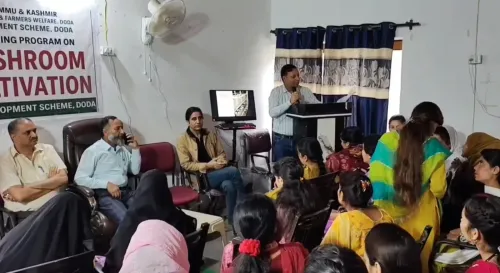
The initiative draws its momentum from the Ministry of Science and Technology's Floriculture Mission, implemented on the ground with technical support from the CSIR-Indian Institute of Integrative Medicine (CSIR-IIIM). The mission provided participating women with quality planting material, agro-technology training, and sustained handholding to get the venture off the ground.
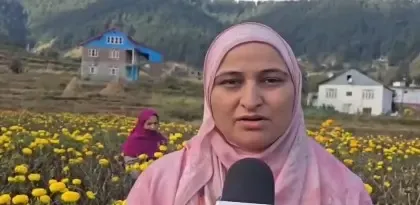
Cluster Coordinator Nadia Farooq, who leads one such SHG in Sartingal, said the initiative changed the trajectory of farming on land that had long sat idle. 'I'm thankful to Ministry of Science and Technology, who encouraged us to start marigold farming and provided us with the quality planting material besides giving us training to learn the latest practices in agro-technologies,' Farooq said.
About five women from the cluster initially joined the Floriculture Mission on a trial basis, cultivating marigold on a barren patch of land. The venture proved profitable, and the group has been supplying flowers to traders in Jammu for over one-and-a-half months, according to reports.
Eight Years of Marigold Farming — and Over ₹3 Lakh in Sales
One of the most visible success stories from the region is Rani, a local resident associated with the Umeed Scheme for the past eight years. Beginning with a modest entrepreneurial venture, she has cultivated marigold flowers for nearly a decade and has reportedly sold produce worth more than ₹3 lakh in the open market — generating a meaningful additional income stream for her family.
Rani credited the Floriculture Department for consistent support, including seed provision and awareness programmes that help farmers improve cultivation practices year on year.
Broader Impact on Women's Empowerment
The floriculture push has yielded outcomes beyond income generation. Women in the SHGs have developed entrepreneurial skills, secured leadership roles in local agricultural clusters, and built confidence in navigating supply chains — from cultivation through to commercial sales. This comes amid a wider national effort under NRLM to integrate rural women into productive economic activity through targeted livelihood missions.
Notably, the Doda model demonstrates how barren or underutilised land can be converted into economically viable plots through a combination of government support, scientific input from institutions like CSIR-IIIM, and community organisation via SHGs.
What Comes Next
With early results from the marigold cultivation experiment proving commercially viable, there is scope to scale the model to other villages in Bhaderwah and beyond. Continued support from the Floriculture Department in terms of seed supply, training, and market linkage will be critical to sustaining and expanding these gains for rural women across Jammu and Kashmir.
Point of View
Yet post-Article 370 administrative shifts have created institutional uncertainty in agriculture extension. If the Floriculture Mission wants durable impact, it needs a market linkage infrastructure — cold chains, aggregation centres, formal buyer contracts — not just seed kits and training sessions.
NationPress
1 Nov 2026
Frequently Asked Questions
What is the Floriculture Mission supporting women in Doda, J&K?
The Ministry of Science and Technology's Floriculture Mission, implemented with support from CSIR-IIIM, provides rural women in Doda with quality planting material, agro-technology training, and guidance to cultivate ornamental crops commercially. Women SHGs in Sartingal village, Bhaderwah, have used this support to grow marigolds on previously barren land and sell the produce to traders in Jammu.
How much have the women SHGs earned from marigold farming in Doda?
Local farmer Rani, associated with the Umeed Scheme for eight years, has reportedly sold marigold flowers worth more than ₹3 lakh in the market. The broader SHG cluster has also been selling flowers to Jammu suppliers for over one-and-a-half months, generating steady incomes for multiple households.
What is the National Rural Livelihood Mission (NRLM) and its role here?
The National Rural Livelihood Mission (NRLM) is a Government of India programme aimed at reducing rural poverty by building strong grassroots institutions for the poor, particularly women. In Doda, NRLM provides the organisational framework through which women SHGs are mobilised, trained, and supported to take up commercial agricultural activities like floriculture.
Who is Nadia Farooq and what is her role in this initiative?
Nadia Farooq is the Cluster Coordinator of NRLM in Sartingal village, Bhaderwah, Doda. She leads a women SHG that embraced marigold farming on barren land with assistance from CSIR-IIIM and has credited the Ministry of Science and Technology's Floriculture Mission for providing planting material and training in modern agro-technologies.
Can the Doda floriculture model be replicated elsewhere in Jammu and Kashmir?
The early results from Sartingal village suggest the model is commercially viable, with barren land converted into productive marigold plots supplying urban markets. Scaling it would require expanded support from the Floriculture Department — including seed supply, regular training, and stronger market linkages — across other villages in Bhaderwah and the wider Jammu and Kashmir region.