CM Bhajan Lal Sharma meets Kayamkhani samaj leaders at residence
Synopsis
Rajasthan Chief Minister Bhajan Lal Sharma hosted Kayamkhani samaj representatives at his Jaipur residence on 1 November 2026, engaging with their concerns under the BJP's 'Sabka Saath, Sabka Vikas' framework. Possible policy follow-through is expected.
Key Takeaways
Bhajan Lal Sharma met Kayamkhani samaj representatives at his official residence in Jaipur on 1 November 2026 .
The Chief Minister listened to community concerns, aspirations and suggestions on a range of social issues.
Sharma invoked PM Narendra Modi 's 'Sabka Saath, Sabka Vikas' framework to frame the government's inclusive development commitment.
The Kayamkhani samaj is a community with a Muslim Rajput identity, making its inclusion in BJP outreach politically significant.
Rajasthan's BJP government has historically followed such dialogues with targeted welfare or scheme announcements for the communities involved.
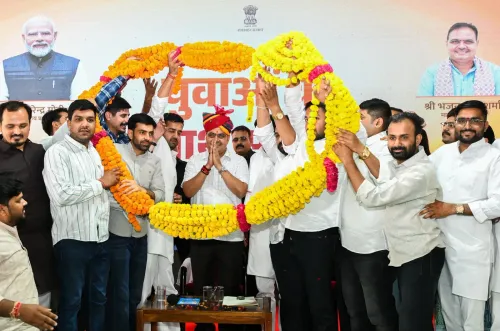
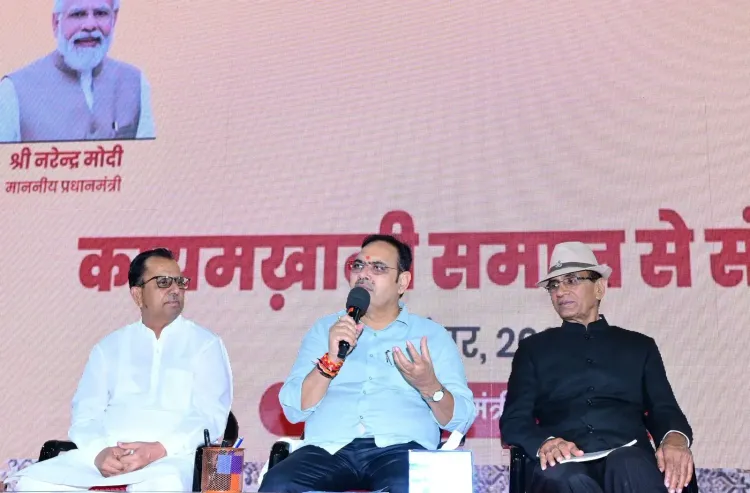
At his official residence in Jaipur on Sunday, 1 November 2026, Rajasthan Chief Minister Bhajan Lal Sharma sat down with representatives and dignitaries of the Kayamkhani samaj — listening, he said, to the community's concerns, aspirations, and suggestions on a range of issues affecting their social and civic life.
What the Chief Minister heard at the table
Sharma described the dialogue as an opportunity to understand 'various subjects, expectations and suggestions' connected to the Kayamkhani community — a Muslim Rajput group with a significant presence in Rajasthan. The meeting was held at Mukhyamantri Niwas, the Chief Minister's official residence, signalling a deliberate outreach rather than a routine administrative call.
Invoking Prime Minister Narendra Modi's 'Sabka Saath, Sabka Vikas' ('Together with all, development for all') framework, Sharma reaffirmed that his government is 'committed to the social uplift, empowerment and all-round development of all sections of the state' — language that pointedly positions this community meeting as part of a wider, non-discriminatory welfare agenda rather than narrow vote-bank outreach.
The 'Sabka Saath' playbook in Rajasthan
The slogan 'Sabka Saath, Sabka Vikas' has been a cornerstone of BJP governance messaging since 2014, when Prime Minister Modi introduced it as the ideological frame for inclusive development. Rajasthan's BJP government, which assumed office in December 2023 under Sharma, has carried that template to the state level — conducting periodic dialogues with caste and community organisations to gather ground-level inputs on welfare delivery.
These interactions serve a dual purpose: they feed into policy calibration on community-specific needs, and they demonstrate visible, documented outreach to social groups that BJP governments have historically needed to woo. The Kayamkhani samaj sits at an interesting intersection — a community whose identity blends Muslim faith with Rajput lineage — making its inclusion in such a forum a politically layered gesture.
What could follow the Jaipur meeting
Meetings of this kind in Rajasthan have typically been precursors to targeted announcements — whether welfare scheme extensions, scholarship programmes, or infrastructure commitments directed at the community involved. Sharma gave no specific policy commitment in his post, but the public framing of the meeting sets an expectation of follow-through. Watch for similar outreach sessions with other Rajasthan social groups in the weeks ahead, a pattern that has historically preceded the state's budget cycle deliberations.
The conversation has started. Whether it translates into concrete steps for the Kayamkhani samaj — or remains a goodwill moment in the political calendar — will be the real measure of the Chief Minister's commitment.
Point of View
Sabka Vikas' promise at the grassroots level. The choice of an identity-layered community — Muslim Rajput — also signals the Rajasthan government's intent to broaden its social coalition ahead of future electoral cycles. If concrete welfare announcements follow, this meeting becomes a data point in a credible pattern; if they do not, it risks being read as performative inclusion. The test, as always, is in the follow-through.
NationPress
1 Nov 2026
Frequently Asked Questions
Who are the Kayamkhani samaj in Rajasthan?
The Kayamkhani samaj is a Muslim Rajput community found predominantly in Rajasthan, tracing lineage to the Chauhan Rajput clan. They hold a distinctive cultural identity that blends Islamic faith with Rajput heritage and have historically been politically significant in parts of the state.
Why did CM Bhajan Lal Sharma meet the Kayamkhani community?
CM Sharma met Kayamkhani samaj representatives at his Jaipur residence on 1 November 2026 to hear their concerns, expectations and suggestions on social and welfare issues, framing the outreach under the BJP's 'Sabka Saath, Sabka Vikas' inclusive development philosophy.
What is 'Sabka Saath, Sabka Vikas' and who introduced it?
'Sabka Saath, Sabka Vikas' — meaning 'Together with all, development for all' — is a governance slogan introduced by Prime Minister Narendra Modi during the 2014 election campaign. It has since become the ideological frame for BJP governments' community welfare and outreach programmes at both the central and state levels.
When did Bhajan Lal Sharma become Chief Minister of Rajasthan?
Bhajan Lal Sharma assumed office as Chief Minister of Rajasthan in December 2023, following the BJP's victory in the state assembly elections.
What welfare steps might follow the Kayamkhani samaj meeting?
Based on the pattern of similar community outreach dialogues by the Rajasthan BJP government, such meetings have often been followed by targeted welfare announcements, scholarship extensions or infrastructure commitments for the community involved, though no specific measures have been officially announced yet.